Posts by Aparna Govil Bhaskar

When failure is not an option

My husband and I recently binge-watched “Made in India- A Titan Story”. The eloquently told six-episode series chronicles the journey of Titan and its visionary leader, Xerxes Desai. It takes you through the highs and lows of building one of India’s most iconic watch brands and keeps you gripped till the very end.

It is a story of innovation, risk-taking and institutional patience.

But most of all, it is a story about having the “freedom to fail”.

Every time Xerxes Desai failed, he celebrated that freedom. Failure wasn’t an embarrassment; it was a stepping stone to the next breakthrough.

Since then, I have been thinking about- the freedom to fail.

Almost every profession is given the luxury of failure.

Entrepreneurs are encouraged to “fail fast.”

Scientists spend years failing before they finally discover something.

ISRO learnt invaluable lessons from the failures of Chandrayaan-2 before Chandrayaan-3 scripted history.

Historically, politicians have failed with astonishing regularity. I mean look at the world around us today. Do we need anymore evidence for their failures?

And then there is medicine…
It is probably the only profession in the world where failure is not an option.

Not because doctors are superhuman.
Not because we never make mistakes.
But because the consequences of failure are measured on a very different scale.

In business, failure may cost money.

In politics, it may cost votes.

In sport, it may cost a trophy.

But in medicine, it can leave behind unbearable pain, a permanent disability, a grieving family and sometimes, a tombstone.

That is a burden every doctor carries from day one.

People often ask me whether surgery becomes easier after nearly two decades.

Technically, yes.

Emotionally, never.

I still pause before every operation. I still prepare obsessively. I still replay difficult cases in my mind. I still pray every time before a surgery.

Because when someone lies unconscious on an operating table, they have surrendered complete control with absolute trust. They have placed their life in our hands.

That privilege can never become routine.

We are never given the freedom to fail. And yet, as doctors we obsessively devote our lives to studying failure.

We learn from our own mistakes, and from those of others. We continuously question, refine, teach and learn—because everything we do in medicine is ultimately aimed at reducing failure.

We spend our entire careers trying to prevent something we can never completely eliminate.

Perhaps that is the paradox of medicine.

And perhaps that relentless pursuit is both the privilege and burden of being a doctor!

Happy Doctors Day!
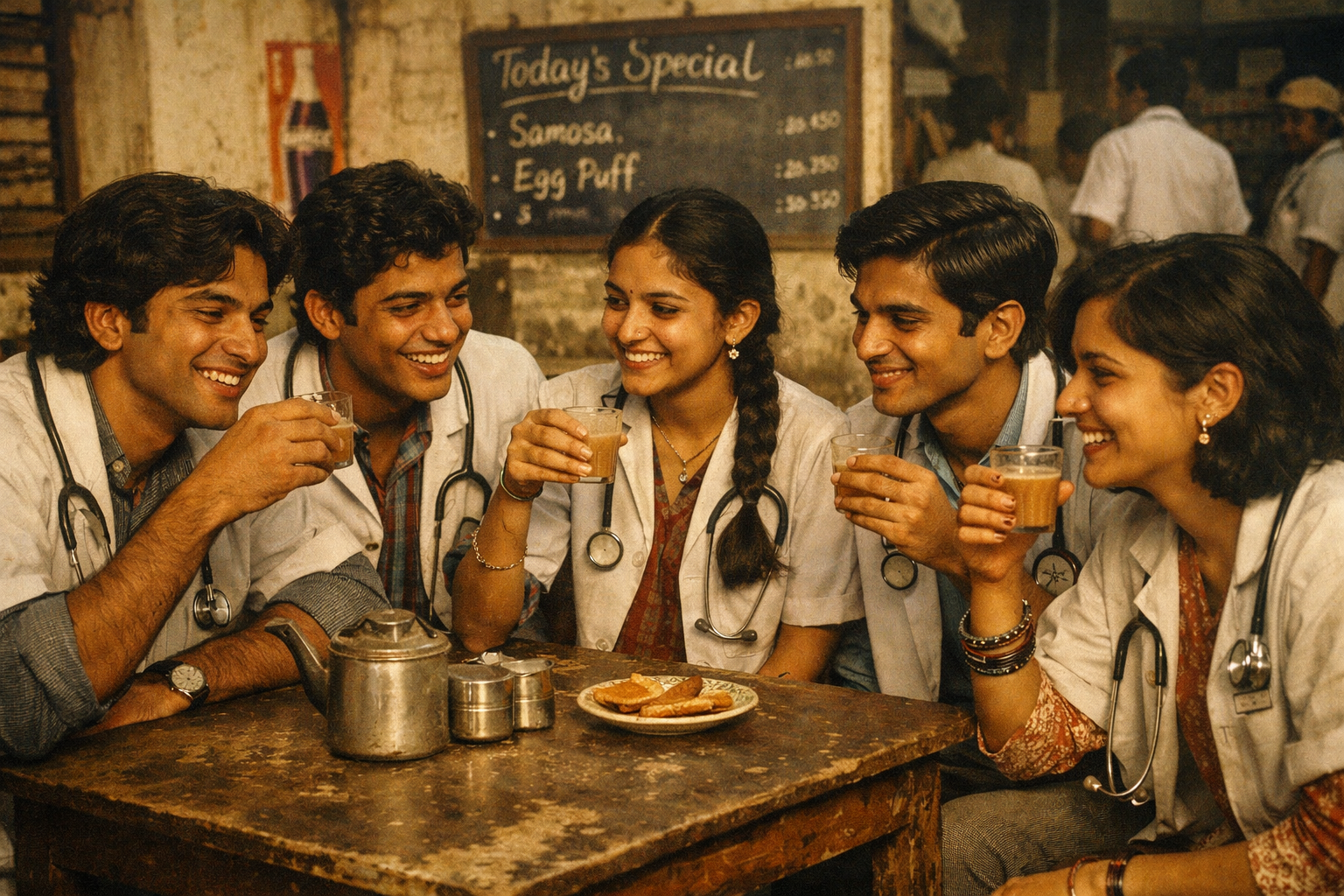
एक कटिंग चाय ☕

बहुत सालों पहले, एक कटिंग चाय के बुलावे पर, चार यार चुटकियों में मिल जाते थे,
बैठकर साथ उस कैंटीन में, किसी भी बात पर खुलकर हँस जाते थे।

जोक चाहे लैंड हो या ना हो, हम इतना हँसते कि दिल के सारे तार खुल जाते थे,
कटिंग चाय तो सिर्फ एक बहाना था, दिल से दिल के कनेक्शन का वो ज़माना था।

साल गुजरते गए, चाय के दाम बढ़ते गए, और दोस्त बिखरते गए,
पता ही नहीं चला कि कब हमारी चाय मीठी से शुगरफ्री, और फिर बिलकुल ही फीकी हो गई।

उम्र का तकाज़ा कुछ ऐसा हुआ, कि शैतानियाँ नादानियाँ लगने लगीं,
हँसना तो दूर की बात है, हम मुस्कुराना भी भूल गए।

अब तो ये हाल है जनाब, कि चाय दोस्ती नहीं, कब्ज़ और सर दर्द का इलाज है,
अब हम काली और कड़वी ही पसंद करते हैं, कुछ और पीने से डरते हैं।

पर चाय पर हमारा दिल आज भी निसार है, हमारे लिए वो यादों का भंडार है,
ज़रूरत है एक चुटकी दोस्ती की, जो बढ़ा दे इसकी मिठास,

एक ऐसी टपरी की जो मिला दे हमें फिर एक बार।

आज सुबह उठी तो वो ज़माना और उस वक्त के दोस्त याद आ गए,

चलो यार, एक बार फिर…………..एक कटिंग चाय हो जाए…

चलो यार, एक बार फिर………….. एक कटिंग चाय हो जाए…

©Dr. Aparna Govil Bhasker

THE CADBURY GIRL

Well, I have been meaning to write this since the passing of Mr. Piyush Pandey, the advertising wizard of Ogilvy. Over the past few days, social media has been flooded with the unforgettable ads he created—each one a reminder of how he shaped our collective nostalgia.

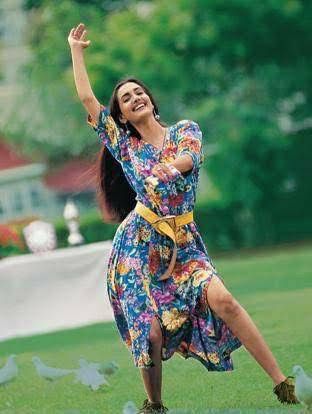
For me they tugged on a distant memory from about three decades ago. The Cadbury girl! She adorned the wall of my dull and drab hostel room. I had bought the poster from the local co-operative store for 60 bucks (quite a fortune at that time). That was my first year in the hostel. We put up all kinds of posters to cheer up the room and also to cover hundreds of nail holes created by the previous occupants of our rooms (the nail holes could be so many that sometimes it felt like the Count of Monte Cristo was trying to dig a tunnel out of the hostel). The poster added much-needed color to the dull walls. Anyone who walked into my room would instantly get fascinated by this girl who had the ability to break into a dance in a stadium full of people.

The Cadbury Girl in the poster was everything that I was not. Probably that’s why she was on my wall. I had grown up in a very small town, then moved to Mumbai for a couple of years, and then again moved to a very small town for my medical education. While the Cadbury girl was the epitome of “carefree,” I think at that time I was the antithesis of it. I was alone (read single), unsure, underconfident, and cash-strapped. I was still trying to find friends. The academic pressure was high. The nights felt long and dreary without the comfort of having my family around me. I missed my old life, and I was anxious about the future. The weight of expectations was bearing me down in those initial days. The adjustment was more difficult than I had thought.

But then, as always, life goes on. Over time, I added to the number of nail holes in the walls of my room (I was stung by the Count of Monte Cristo syndrome too). And then covered the walls with many other posters to cover those additional nail holes. I even tried filling the holes with M-seal and managed some wall art by sneaking in some paint without the permission of our warden.

The Cadbury girl on my wall eventually faded, and the corners of the posters gradually got rumpled. By then I had completed my MBBS and was ready to move back to the big city from the small town. I was a little bit surer of myself, and the doctor tag added a dash of confidence. I had started earning a stipend, so I wasn’t cash-strapped anymore. Most importantly in those five years, I found friends for a lifetime. Friends who are my extended family and friends with whom I intend to live through my old age. Also, I am not single anymore.

The Cadbury Girl was my companion throughout my hostel days. I will be honest in saying that even today I am not truly “carefree” like her, but somewhere along the way, I think I absorbed a part of her spirit—a reminder to find joy in the little moments and to dance through life, even when the music isn’t playing.

Perhaps that’s what growing up really is—learning to carry a bit of that light and dance with you through the years. Maybe at the end of the day, it’s all about finding the Cadbury girl inside us!

PS: Image credit- Google

A PAGE FROM A DOCTOR’S DIARY

Blessings alone are not enough to keep the lights on

She entered my cabin with a bright smile, reminding me of our acquaintance from years ago.

She thanked me profusely for changing her daughter’s life—this time, it was her son she had brought along.

Between every sentence came a blessing, every pause filled with praise—you are so kind, you are so nice—it was truly overwhelming.

And then they walked out—without paying the consultation fee, despite being politely reminded.

As doctors, kindness is stitched into our DNA.
We don’t treat people for money—but kindness alone doesn’t pay the bills or the rent or the staff salaries.

My colleagues say, “Write it off—there’s not much you can do.”
Because the moment you ask for your dues, the society will turn you into a greedy and money-minded villain.

That’s the paradox—doctors are villainized in headlines and shortchanged so often in reality.
Where empty words of gratitude flow easily, but people’s hands hesitate to shell out a simple consultation fee.

Ironically, it’s not the truly poor who ask for discounts.
It’s the well-to-do, even the ones stepping out of luxury cars, dressed in designer labels, who do.
While those with little often pay in full—with dignity and grace.

It’s never about the money. It’s about attitude and respect.

Blessings are divine and always appreciated—but blessings alone are not enough to keep the lights on, my friends.

©️Dr. Aparna Govil Bhasker

WHEN A CHILD IS PUNISHED FOR HER WEIGHT

She is just 13 years old.
Six months ago, she weighed 153 kilos. Today, after 6 months of bariatric surgery, she weighs 112 kg.

She has lost 25% of her total body weight—a remarkable achievement by any medical standard. Physically, she’s doing better than ever. Emotionally, she’s struggling.

Because no school wants to take her in.

She hasn’t been to school since Grade 3. Her weight—and the judgement that came with it—forced her into homeschooling. Now, even after making such incredible progress, she finds herself rejected again. Every admission form, every interview, every polite refusal chips away at her self-worth.

She is a bright, curious, and articulate girl. But instead of celebrating her courage and recovery, the system is punishing her for a disease she never chose to have.

Obesity is not a failure of willpower. It’s a complex medical condition—one that affects the body, mind, and social identity. Yet, even when a child fights back with everything she has, stigma continues to stand in her way.

Schools need to do better.
Education is not just about marks—it’s about inclusion, empathy, and growth. A young girl’s potential must not be limited solely by her weight.

It breaks my heart that even after winning the battle against her body, she still has to fight one against society.

A PAGE FROM A DOCTOR’S DIARY

The Uterus Dialogues

Iska “uterus” to thik hai na? (Is her uterus alright?)

I am not a gynecologist. So, it took me a few moments to digest this question. It was thrown at me by a young patient’s mother who had accompanied her. For a few seconds, I was stumped and could not comprehend what exactly was being asked.

I paused for some time, still failing to understand.

I asked her again, “What do you mean?”

“I mean, is the uterus in good condition?” she reiterated.

As I looked at her, the person vanished, and a uterus replaced her in the chair across the table. I imagined a uterus with two dainty feet sitting cross-legged with a delicate bag and sunglasses, demanding a check-up from me. I guess her mother saw her the same way.

From her perspective, the uterus was the main character. The uterus would determine the future prospects of her daughter in our society. The uterus was not just a uterus; it was a guarantee of security, almost a status symbol.

If anything needed to be preserved with care in her daughter’s body, it was the uterus.

More than her heart, for what does the heart matter in practicality?

More than her mind, for women with their own mind are not an asset but a liability.

More than her soul, because who cares about it?

Now, most of you must be thinking that it is such an innocuous statement. Why am I making a big deal about it? What is so abnormal about a mother wanting to know about the condition of her marriageable daughter’s uterus? That is so normal.

But I guess nowadays the definition of normal has changed.

The abnormal has become so normal that it is almost abnormal to question it!

The uterus, as it appears, is a great equalizer in our society. It does not matter whether one is fair or dark, rich or poor, educated or uneducated, a working woman or a homemaker, financially dependent or independent; the uterus seems to take precedence irrespective of everything.

But should it?

Perhaps it is time we adjust that lens. A woman can not be defined by one organ. She is her mind, her spirit, her dreams, her compassion, and her contribution. The uterus is just a part of her story, but how can it be the whole?

I wish I could tell my patient’s mother that the uterus is the great paradox of a woman’s life. It is both the crown and the chain—hailed as her liberator, yet binding her in the very same breath.

The saddest part is that I know that deep down she probably knows it too.

©️Dr. Aparna Govil Bhasker

A PAGE FROM A DOCTOR’S DIARY

God does His bit too!

As surgeons, we are trained to give nothing but our best. In surgery, striving for perfection is a given- It is the ultimate non-negotiable aim. From the very beginning of our training, we are taught that the first time is the only time—the best time.

We are told that second chances are rare. The instinct is always to fix everything , to make things right, to find a way forward.

Yet, now and then, there are moments in the operating room when we feel horribly stuck—when every option seems to have been exhausted, and defeat stares us squarely in the eye.

In those moments, doubt creeps in, time seems to stretch, and the weight of responsibility feels heavier than ever.

In the early years of our careers, the urge is to fight for control, to act, to do something—anything—that will “fix” the situation.

But as time goes by and we gain experience, we realize that not everything needs to be forced into place. Many times, if left alone, things have a way of settling themselves.

Sometimes, not trying too hard is the best thing we can do for our patients.

Just as in life and relationships, many a time the wisest choice is to let it be, to accept, and to trust.

Better surgeons are those who have the maturity to know when to act and the wisdom to know when to wait.

Often, nature has its own plan. The body has a remarkable and an almost magical ability to heal, sometimes slowly, but almost always surely. And when science reaches its limits, faith steps in.

Doctors are not God, but we realize with time that every now and then, God does His bit too.

©️Dr. Aparna Govil Bhaskerr

The Ladies’ Doctor

As a lady doctor/surgeon, I end up having amusing experiences on some days.

Today, a lady came in with a rectal prolapse.

She’d already seen a male doctor but now wanted to consult a “lady doctor.”

We spoke, I examined her, explained the condition, and gave her my advice.

Then I said, “You should also see a gynecologist.”

She paused. “What’s a gynecologist? Is that a ladies’ doctor?”

“Yes,” I said, “the ladies’ doctor. That’s who you need to see next.”

She looked a bit confused.

“Oh… but we thought you were the lady doctor.”

I smiled. “Well, yes—I am a lady, and I am a doctor…
But I’m not the ladies’ doctor. I’m just a lady who’s a doctor.”

She wasn’t convinced. “So… you’re not the ladies’ doctor?”
“I mean, I am a lady doctor,” I said, “but not a ladies’only doctor.

“Ohh…” she said, “we came because we wanted to see the ladies’ doctor.”

By this point, I was in splits! ????
“Well, you saw the gentleman doctor. Now you’ve seen the lady doctor.
Just not the one you expected.”

THE SILENT STRUGGLES

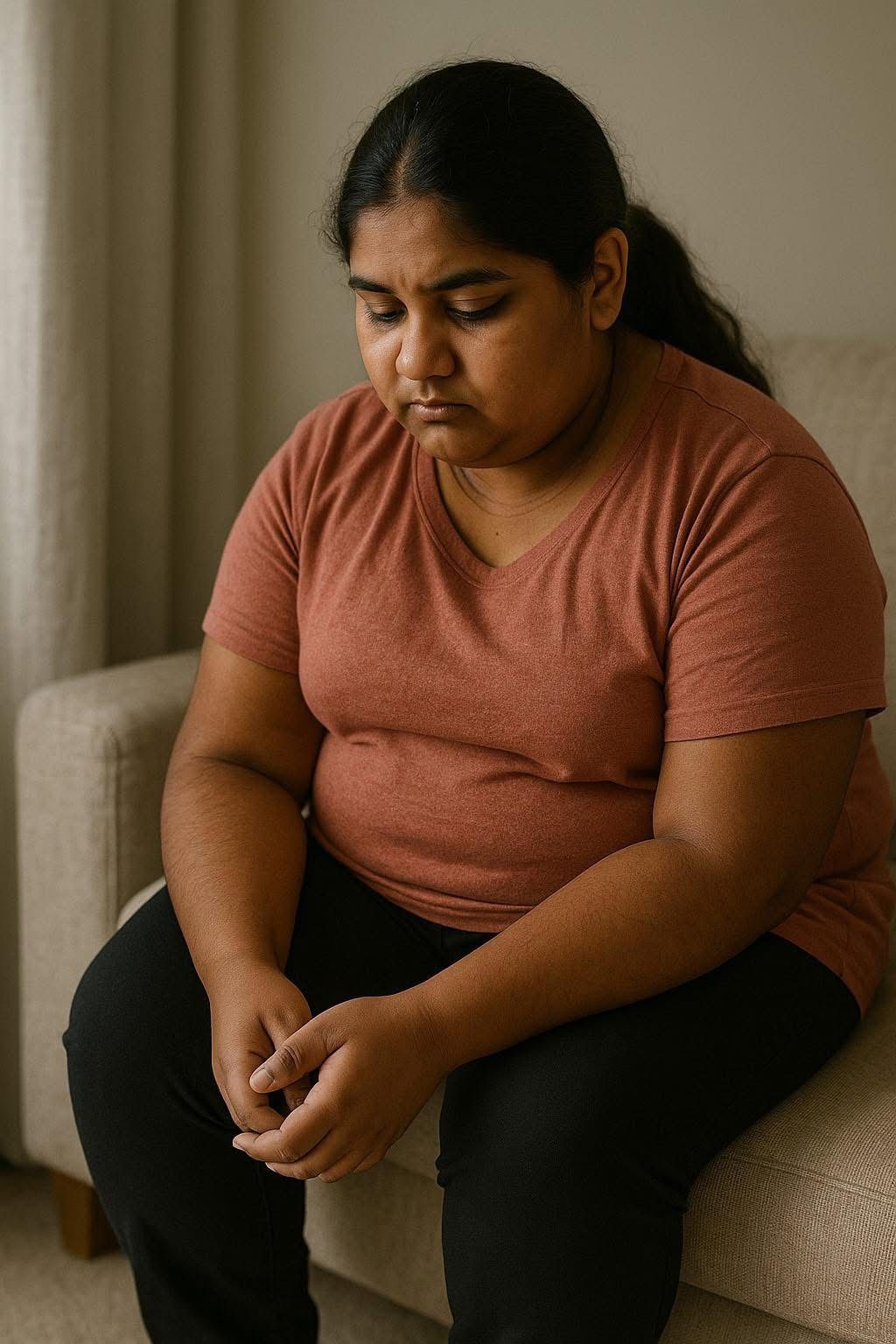
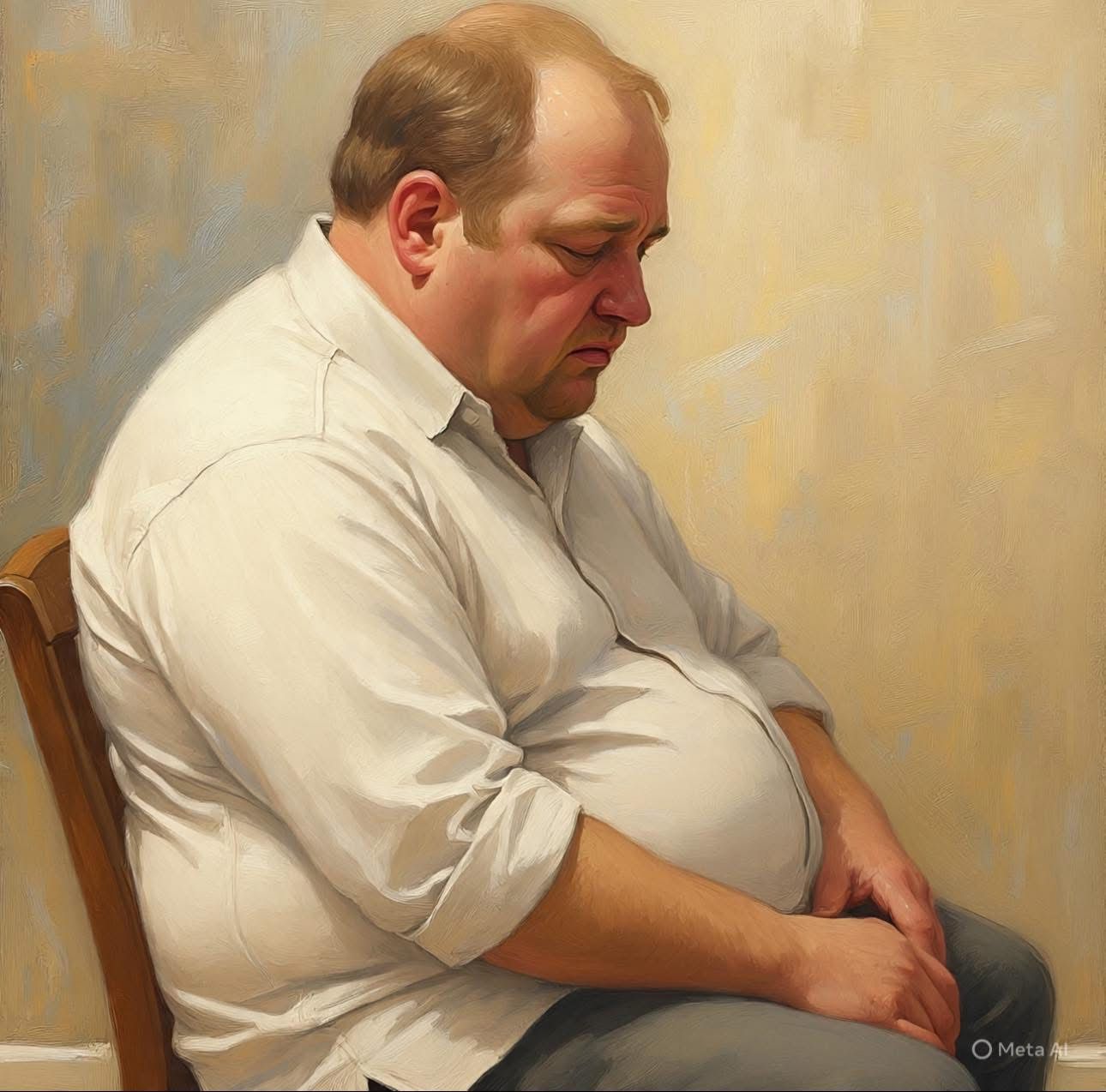
Yesterday, a 44-year-old man living with a weight of 182 kg broke down in tears during the consultation.

He did not cry because he was in any kind of physical pain. He cried because he felt utterly helpless—and scared. He cried because he could no longer breathe easily or walk without difficulty. Breathing and walking are basic, right? He cried because he felt he was failing as a father and as a husband, unable to support his wife and children the way he wanted to.

Every attempt to lose weight had ended in defeat. He felt like he was a burden on everyone. He felt that his life was over.

This is the hidden weight of obesity. It’s the part no one sees.

People living with obesity carry years of silent suffering. They are constantly mocked, judged, and dismissed. They are labelled as lazy, irresponsible, or lacking willpower. They live an entire lifetime with smirks, unsolicited advice, or silent disdain.

And yet what we see in our clinic is that most of them have tried—tried harder than we can imagine.

Here lies the paradox: society expects them to “do something” about their weight but offers little understanding of the disease or support. Instead, it adds layers of #shame, making an already difficult journey even more difficult.

It expects them to fight a complex battle alone and also pins the blame on them at every step of the way.

Obesity is more than a physical condition—it’s a complex and deeply emotional experience. What people with obesity often need is not more advice, but more #empathy.

Sometimes, just being treated with kindness and understanding can lift more weight than any scale ever could.

©️Dr. Aparna Govil Bhasker

PS- Image is AI generated

BEYOND THE BALANCE SHEET

“How old are you?” I asked.
“42,” he said.
“What do you do for a living?”
“I used to work for one of the Big Fours. Now I’m retired.”
At 42?
Curious, I asked why.
“I couldn’t handle the #stress. I’ve lived with #depression for years.”

This wasn’t the first time I’d heard something like this.

Over the past few years, we’ve seen global business leaders glorify the 70- to 90-hour workweek.

They want the employees to relentlessly push the envelope, burn the midnight oil, and get the job done.

The bottom line is to meet the target and cross that ridiculous number on the balance sheet.

Work-life balance? That’s for the weak and soft. In today’s testosterone-charged corporate culture, #burnout is worn like a badge of honor.

Add to that the constant fear of being handed a pink slip or losing your job to the next round of cost cutting. Afraid to pause, employees are locked in a constant cycle of overwork and stress.

But here’s the truth we don’t want to hear:

Nearly 1 in 10 Indians live with depression, anxiety, or chronic stress.

Work-related stress is the leading cause of poor employee health.

It not only affects performance—it spills into families, communities, and long-term well-being.

Ten years ago, poor mental health was already costing companies an estimated $100 million annually. Imagine what that number looks like today.

Now add another layer— “obesity.”
Stress, long working hours, sleep deprivation, and poor food habits are all well-documented contributors to #weightgain.

Obesity, in turn, worsens mental health, increasing the risk of a dangerous vicious cycle.

And it doesn’t stop there. With rising obesity and stress levels, we are seeing a disturbing trend—an increase in early-onset #heartdisease.

Heart attacks in the 30s and 40s are no longer rare headlines; they’re becoming alarmingly common.

We often talk about performance, productivity, and passion—but not the price we pay for them.

It’s time we redefine what success truly means. Because no matter how impressive the balance sheet looks, it won’t matter if the numbers on your medical report are telling a different story.

Burnout isn’t a badge of honor—it’s a warning sign we can no longer afford to ignore.

©️Dr. Aparna Govil Bhasker

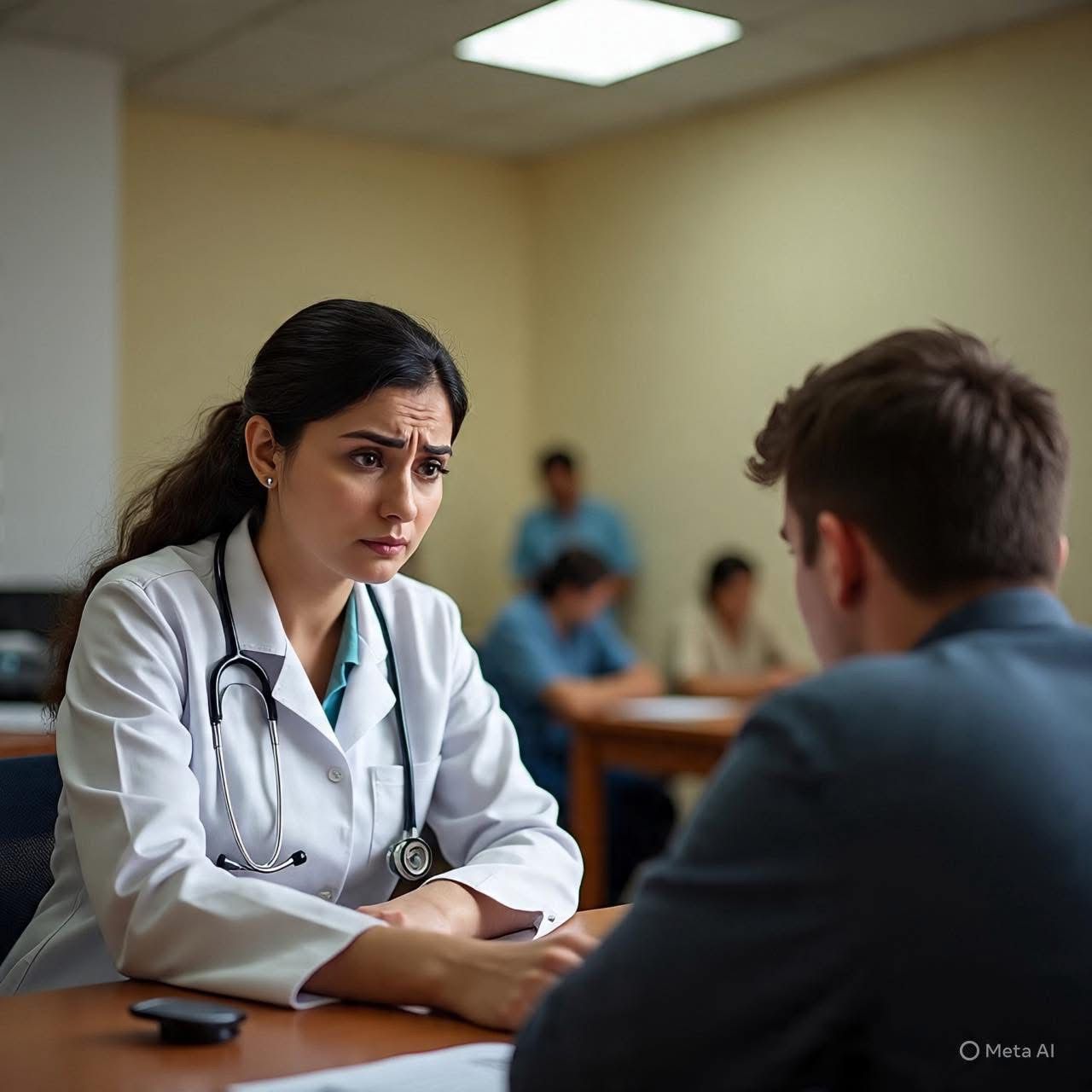
PS- The image is AI generated

A PAGE FROM A DOCTOR’S DIARY

The Power of Communication

Don’t come to see me again if you do not stop smoking and drinking alcohol!

Seven years ago, I had said this to one of my patients. At that time, it came from good intent (and probably a little bit of entitlement). Smoking can cause serious complications after any surgery. For us doctors, it’s a no-brainer.

I had meant it as lighthearted advice, hoping it would serve as negative motivation. But what I said in passing, was taken to heart by my patient. I never imagined he would take it so seriously.

Soon after, he was lost to follow-up. Our repeated calls went unanswered. Then COVID struck, and a few more years slipped by.

Last week, out of the blue, I received a desperate message from him: “Doctor, I really need your help! Can I see you?” He was suffering from multiple complications.

When he finally walked into my clinic, my first question was, “Why didn’t you reach out to us in all these years?”

“His reply stunned me: “Doctor, you had told me not to come back if I could not quit smoking and drinking….. And I couldn’t.”

In that moment, my heart sank as I realized the weight of my words. What I had dismissed as a casual remark had kept a patient away from care for years.

I had underestimated the power of addiction, and overestimated the impact of reprimand. Despite years of medical training, I had failed to acknowledge that addiction is not just a habit—it is a disease.

Patients don’t need ultimatums for their disease; they need guidance, empathy, and support. That day I learned an important lesson. Communication is as powerful as any prescription we write. The right words can inspire change, while careless ones can close doors for years.

As doctors, perhaps the best medicine we can offer is the ability to guide with compassion rather than judge with authority.

Despite years of experience, we sometimes falter. Time and again we are reminded that medicine is not just about science and skill, but also about humility and the willingness to reflect, to learn from our mistakes, and to correct ourselves for the sake of those who trust us with their lives.

©️Dr. Aparna Govil Bhasker