Posts in Bariatric Surgery

A PAGE FROM A DOCTOR’S DIARY

The Uterus Dialogues

Iska “uterus” to thik hai na? (Is her uterus alright?)

I am not a gynecologist. So, it took me a few moments to digest this question. It was thrown at me by a young patient’s mother who had accompanied her. For a few seconds, I was stumped and could not comprehend what exactly was being asked.

I paused for some time, still failing to understand.

I asked her again, “What do you mean?”

“I mean, is the uterus in good condition?” she reiterated.

As I looked at her, the person vanished, and a uterus replaced her in the chair across the table. I imagined a uterus with two dainty feet sitting cross-legged with a delicate bag and sunglasses, demanding a check-up from me. I guess her mother saw her the same way.

From her perspective, the uterus was the main character. The uterus would determine the future prospects of her daughter in our society. The uterus was not just a uterus; it was a guarantee of security, almost a status symbol.

If anything needed to be preserved with care in her daughter’s body, it was the uterus.

More than her heart, for what does the heart matter in practicality?

More than her mind, for women with their own mind are not an asset but a liability.

More than her soul, because who cares about it?

Now, most of you must be thinking that it is such an innocuous statement. Why am I making a big deal about it? What is so abnormal about a mother wanting to know about the condition of her marriageable daughter’s uterus? That is so normal.

But I guess nowadays the definition of normal has changed.

The abnormal has become so normal that it is almost abnormal to question it!

The uterus, as it appears, is a great equalizer in our society. It does not matter whether one is fair or dark, rich or poor, educated or uneducated, a working woman or a homemaker, financially dependent or independent; the uterus seems to take precedence irrespective of everything.

But should it?

Perhaps it is time we adjust that lens. A woman can not be defined by one organ. She is her mind, her spirit, her dreams, her compassion, and her contribution. The uterus is just a part of her story, but how can it be the whole?

I wish I could tell my patient’s mother that the uterus is the great paradox of a woman’s life. It is both the crown and the chain—hailed as her liberator, yet binding her in the very same breath.

The saddest part is that I know that deep down she probably knows it too.

©️Dr. Aparna Govil Bhasker

THE WEIGHT YOU DON’T SEE

Nineteen dietitians! That’s how many my patient had consulted before she walked into my clinic today for a consultation for #weightloss. She had tried everything—calorie counting, portion control, intermittent fasting, medical diets, naturopathy, —only to be met with the same assumptions: She must be eating too much. She must not be trying hard enough. It must be her fault.

“On one single day, eight different people commented on her weight. That night, she couldn’t sleep. Not because of hunger or discomfort, but because their words replayed over and over in her mind, louder than any diagnosis she had ever received.”

As a doctor, I see this all too often. People think that obesity is all about #gluttony and #sloth. Unfortunately, society has reduced obesity to an oversimplified equation: Eat less, move more. But if it were that easy, wouldn’t obesity have disappeared from our world by now?

The reality is far more complex. Obesity is a chronic, progressive condition influenced by genetics, hormones, metabolism, medications, gut microbiota, mental health, and more. Stress, sleep deprivation, and medical conditions all play a role. Food is just one of the many factors.

Yet, people tend to cling to this oversimplified narrative. They love to offer unsolicited advice without understanding the struggles that a person with obesity goes through. They don’t see the crushing frustration of doing everything right and still not seeing results. They don’t know what it’s like to wake up every day in a body that everyone feels entitled to judge. They don’t know the exhaustion of carrying not just extra weight, but the #shame and #stigma that is added to it.

I wish people would stop assuming. I wish they would see the person before the weight. And most of all, I wish they would understand—sometimes, the heaviest burden is not the body itself, but the weight of their words.

#ObesityAwareness #StopTheStigma #HealthNotJudgment #MoreThanFood #ChronicCondition #EndWeightBias #CompassionOverCriticism #MindYourWords #ObesityIsComplex #SeeThePerson #Bariatric Surgery #DrAparnaGovilBhasker

Beyond the prescription

Beyond the prescription

©Dr. Aparna Govil Bhasker

I’ve always enjoyed talking to my patients, and as much as I love surgery, I truly cherish my time in the OPD. However, the time available in the OPD is limited, and we need to cover a lot in those precious few minutes with each patient. As healthcare professionals, we often become laser-focused on providing well-meaning advice and delivering a neat looking prescription (a challenge in itself for any doctor! Thank God for the digital softwares!). By the end, we feel we’ve fulfilled our duty.

As our practice grows and the number of patients increases, the time spent with each patient tends to become shorter, or the waiting list grows longer. Both scenarios lead to decreased patient satisfaction. But it’s not just patient satisfaction that takes a hit—our own job satisfaction suffers too. Over time, frustration starts building on both sides, and we all know where that leads to.

In recent months, I’ve felt that tension growing within me. I began to question: if I wasn’t feeling satisfied with the consultations, what were my patients walking away with? As obesity care specialists, were we truly making a meaningful impact when it came to lifestyle changes and behavioural modifications? Despite spending nearly 40 minutes with each patient, it felt like something was missing, like we weren’t reaching the level of progress we aimed for. We were not getting through the way we wanted to.

Fortunately, I’m lucky to have friends who share a similar mindset. When I discussed my concerns with my friend Dr. Tejal Lathia a renowned endocrinologist, she highly recommended the Motivational Interviewing course by Prof. Miller and encouraged me to explore it. Although I’ve been in medicine for nearly 30 years and can confidently say I’m a skilled doctor and surgeon, I must admit I’ve never been formally trained in the art and science of communication.

As a bariatric surgeon and specialist in obesity care, I’ve come to realize that communication is the real game changer. We can perform the most advanced surgeries, but it’s only through consistent and effective communication that we can truly help our patients make lasting lifestyle changes. Without it, both doctor and patient can fall into a cycle of judgment, bias, and blame, which benefits no one.

Yesterday in the clinic, we tried the “person-centered” approach for the first time. “We went beyond seeing the deficits on the patient’s side (3 months post a bariatric operation) such as- staying up late in the night, skipping breakfast, feeling low on energy, avoiding exercise, and neglecting her prescribed supplements.” On a normal day, our usual approach would have been to tell what she was doing wrong, offer well-meaning advice, explain the associated health risks of future complications, give her a prescription and send her off, hoping she’d correct course and be on a better trajectory by her next visit.

However, the person-centered approach encourages curiosity. It teaches us to move beyond assumptions about what we think we already know and what we believe is needed. It invites us to engage in deeper conversations with our patients. “With some gentle prompting, this particular patient revealed that for the past six months, she had been burdened by intense guilt. A close relative’s health had deteriorated after being admitted to a hospital that she had recommended. The financial burden from the medical bills was overwhelming, and the relative’s daughter had to give up her full-time job to care for her mother. This guilt weighed heavily on my patient, robbing her of sleep and triggering a cascade of problems—waking up late, missing meals, low energy, and neglecting self-care. It was also preventing her from feeling or accepting any joy in her own life

She broke down in tears during our conversation, and we discussed the possibility of seeking help from a counselor. While she wasn’t entirely open to the idea, a seed had been planted. She seemed more receptive to make changes to her lifestyle and came up with some solutions on her own. More importantly, she felt understood, and we, as her healthcare team, felt like we had moved beyond simply judging her for not meeting our expectations.

This experience reminded us that as healthcare professionals working with chronic conditions like obesity, we can’t “fix” patients overnight. We can’t just hand out prescriptions and expect perfect adherence. We aren’t in a position to command or take charge of their lives. Our role is to guide them, safely and hopefully enjoyably, towards a destination we both desire. We must acknowledge that life happens to everyone—our patients are no exception.

For those living with obesity, these challenges are often compounded. In addition to everyday struggles, they also face the stigma and bias that come with societal expectations. Patients who have undergone bariatric surgery often feel the weight of taking what is perceived as a “shortcut,” along with the pressure of not meeting expectations, even after the surgery.

As healthcare providers, it’s crucial to make the most of the limited time we have with our patients. Sometimes, the connections we form matter more than the prescriptions we give. Kindness, empathy, and compassion are universally effective tools, often more powerful than any advice alone.

Incorporating motivational interviewing into our practice has the potential to transform not only the patient’s journey but also our own. By fostering deeper connections and helping patients uncover their own motivations, we empower them to make meaningful and lasting changes. As healthcare professionals, we should be open to learning and refining the art of communication at every stage of our careers. It’s not just about enhancing patient satisfaction—this approach brings greater fulfillment and satisfaction to us as doctors too. A well-communicated, empathetic consultation can be the difference between frustration and fulfillment for both parties, ensuring that the care we provide is as effective as the surgeries we perform.

I’m just beginning this journey, but I hope that by sharing my experiences, I can enrich my own path and perhaps make a small difference along the way.

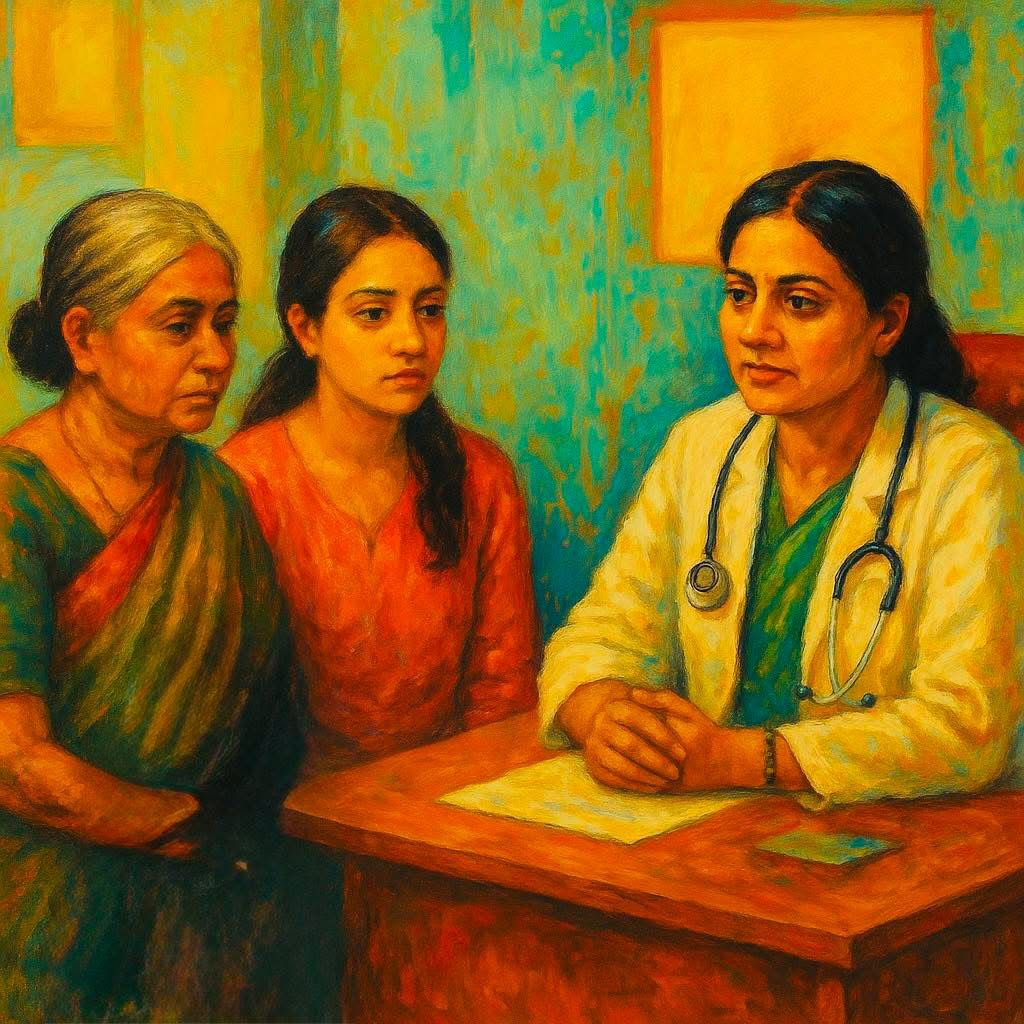
PS: The image is AI generated.

An Unhappy Independence Day

©Dr. Aparna Govil Bhasker

This morning, as our honourable Prime Minister hoisted the Indian flag at the Red Fort in celebration of the 78th Independence Day, the celebration felt hollow for nearly half of this country’s population which is constituted by women. What we feel today is profound sadness and a collective despair that overshadows any sense of pride.

A brilliant young lady doctor was recently raped and brutally killed while on duty in her workplace. This incident has shaken us to our core and struck a personal chord with every one of us because it could have been any of us. During my residency, I too have walked through dark, isolated corridors in the dead of night. I have faced intoxicated patients, confronted families who burned their daughters-in-law for dowry, dealt with enraged relatives demanding miracles for their terminally ill loved ones, and endured threats from mobs ready to vandalize the hospital. Security was minimal, and the lack of basic amenities was glorified as a character-building exercise.

Yes, I have survived to see this 78th Independence Day, but only by sheer luck. In this broken system, I am merely a statistical survivor with my safety a matter of luck rather than any kind of systemic protection. I guess as Indian women, ultimately, we are all statistical survivors who get to live more by chance than by design.

As we enter the third decade of the 21st century, it feels as though we are taking one step forward and two steps back in our pursuit of gender equality and the safety of women. Today we are ambitiously reaching for the stars and striving for greatness, yet more than ever we remain bound by the persistent chains of misogyny and patriarchy. The dichotomy was never more defined and clearer.

  • It is pathetic that instead of strengthening our laws, we tell girls to be more cautious.
  • It is shameful that instead of punishing the perpetrators, we ask women to avoid going out alone in the dark.
  • It is infuriating that we teach daughters to live in fear rather than teaching sons to respect women.
  • It is outrageous that victims are often blamed for the violence inflicted upon them, while their attackers are shielded by a culture of silence and complicity.
  • It is disgraceful that a woman’s character is questioned in courtrooms, while the character of her assailant is conveniently overlooked.
  • It is devastating that parents must weigh the risks of educating their daughters against the fear of losing them to violence.
  • It is sad that even today, rapists can exploit loopholes in our system and roam free.
  • It is sickening that it takes eight long years to resolve even fast-track, high-profile rape cases like that of “Nirbhaya”.
  • It is unforgivable that society has allowed the normalization of fear and insecurity in the lives of women.
  • It is disheartening that the cries for justice from countless victims and their families continue to fall on deaf ears.
  • It is shameful that, time and again, the burden of shame always falls on the girl, while the real culprits walk away unscathed.

In this relentless tug-of-war, women are the ultimate losers, unable to fight against the dreadful societal forces that continuously undermine their progress and potential. We are a nation that claims to be progressing, yet we fail to protect and respect half of our population. On this 78th Independence Day, we deserve more than empty promises and delayed justice. We deserve a society that values our safety as much as our potential.

It is agonizing to even think of the pain that the victim’s parents will have to endure for the rest of their lives. The countless dreams that they must have had for their daughter have been crushed in the most brutal manner.

I don’t know how we can celebrate Independence Day today?

Our enemies are no longer the British; they lie within our own society, and we must seek freedom from these internal threats to truly honour our independence.

Calm Under Pressure- Becoming A Surgical GOAT

©Dr. Aparna Govil Basker

It’s my regular bed time routine to scroll through some Insta reels before I crash for the night. I usually love watching commencement speeches and sometimes some other stuff like stand-up comedy etc. It is good to end the day on a funny note or an inspiring one!

One of the recent commencement speeches I watched was that of Roger Federer. Federer is not only a personal favourite but is also undisputedly one of the greatest tennis players of all times (a GOAT!). He has been admired and celebrated all over the world not only for his impeccable tennis skills but his calm and cool demeanour. I am yet to come across a more graceful personality on the court. Every time I’ve watched him play; I’ve been hugely impressed by his composed demeanour.

Whether he wins or loses, he remains unruffled and tranquil, never showing a trace of excitement or agitation. It has never mattered whether the crowd is cheering him on or being hostile, whether he is being trolled or adored. Federer’s mental strength and fitness shines through. He has maintained the same calm composure in hundreds of matches over two decades. It’s actually quite funny; as bystanders in history, we not only take his greatness for granted but also his remarkable calmness.

What struck me in Federer’s commencement speech was his confession that he wasn’t always this composed. Before his golden era of Grand Slams, Federer was a completely different person— a hyperemotional racquet-breaking brat who couldn’t handle a bad game. This calm and composed demeanour was consciously acquired and cultivated after a deeper self-realization and work with a sports psychologist. It took continuous effort over many years to develop the persona we witnessed on our television screens for so long, both on and off the court. There is no doubt that technical skills and physical prowess played a big part in his success but ultimately what led him to being a GOAT was his ability to create a serene and a resilient mind.

Federer’s journey to mental tranquility and his insights about the importance of mental fitness are highly relevant to a surgeon’s life. Similar to professional sports, the field of surgery demands not only exceptional technical skills but also extraordinary mental resilience and composure. Surgeons operate in high-pressure environments where the stakes are extremely high; a single mistake can have a significant impact on a patient’s health. This responsibility necessitates maintaining a high level of calm, focus, and precision.

In our profession, we confront numerous critical situations at various points. Surgeries can be challenging and intricate, emergencies can arise unexpectedly, equipment malfunctions can occur at critical moments, human errors can happen when least anticipated, and complications are an inherent part of every surgeon’s experience. While it is very easy to express frustration or tension, it is crucial for us to develop our mental resilience to remain composed under pressure.

Many a times surgeons express tension and frustration, especially by directing it towards surgical assistants or operating theatre staff. This creates a stressful environment that affects their performance. This can ultimately impact the overall surgical outcomes negatively. Moreover, such behaviour increases the general stress levels in the operating theatre, which increases the likelihood of mistakes occurring. Surgeons who create a tense and intimidating atmosphere in the operating room disrupt the conducive working environment needed for long-term success. It’s evident that this approach doesn’t lead to achieving any kind of greatness in the field of surgery even if the surgeon is highly skilled technically. I personally feel that they may be successful in creating fear in the short term but fail to get any respect in the long term.

On the other hand, even though it may be difficult, maintaining a professional and calm demeanour not only fosters a more supportive atmosphere for the entire surgical team but also enhances communication and collaboration. This contributes to a smoother operation and better patient care. Surgeons who are conscious about this and prioritize creating a positive and respectful working environment help mitigate stress and optimize the team’s performance, ultimately leading to improved surgical outcomes. Its difficult, but doable!

Federer’s journey has several lessons that are also relevant for surgeons and can be adapted. Just as Federer learned to manage his emotions to avoid being a hyperemotional player, surgeons must learn to regulate their emotions to maintain clarity and focus during surgeries. Emotional outbursts or distractions can impair judgement and affect performance.

Actively working on emotional regulation can help surgeons to remain steady and effective, even under stressful circumstances. Surgeons can benefit from mental preparation strategies, such as visualization of procedures, mindfulness, and stress-relief techniques. These practices can enhance concentration and reduce anxiety, leading to better surgical outcomes. Resilience and the capacity to remain unruffled in the face of complications or unexpected challenges are crucial for successful surgical practice. Ultimately staying calm and composed in the face of adversity can be acquired and cultivated. The first step towards change is to be aware. At the end of the day we all are a work in progress in different stages.

Developing mental toughness and inner calmness is crucial not only in the operating room but also in any high-stakes profession. Surgeons who cultivate these qualities in addition to clinical and technical skills can navigate their responsibilities more effectively, resulting in improved patient care and personal fulfillment. This approach also paves the way for achieving excellence. So if you ask me who is the greatest surgeon I think you already know the answer by now. GOAT in the field of surgery would be someone who would not only be technically skilled but have the highest level of mental fitness and tranquility.

Happy Doctor’s Day!! 🙂

Hope and healing

©️Dr. Aparna Govil Bhasker

One of the most powerful stories that Homo Sapiens have passed on from generation to generation over thousands of years, is the story of “hope”. “Hope” is our true super-power. Hope can work miracles. Without “hope”… well… everything will be … “hopeless”…(no prize for guessing that)!

Hope is unique to our species. No other animal can boast of being able to feel this magical emotion. Human children are born brimming with hope. One just needs to look into those innocent eyes to feel it. However, with time, this reservoir of hope starts diminishing. As we grow up, few of us become childishly optimistic, some lean towards realism and many turn a tad pessimistic.

Like in everything else, “hope” is a very important ingredient in the potion of healing too. It is a lifesaving elixir for the patient and serves as a vital anchor for the anxious family members. It is no secret that patients who lose hope have poorer outcomes as compared to those who do not. A lot has been written about the role of “hope” in ailing patients and their families, however not much has been said about the significance of “hope” in doctors. It is simply assumed the doctors are the most “hopeful” of all adult humans. Can you imagine a doctor who is “not hopeful”?

As doctors, we start our professional careers by training on dead people (That’s not very high on hope score!). By the time we complete our medical training, we have already seen more sickness and death than any normal human would in their entire lifetime. We frequently witness the fragility of life and very often have to bow down to the forces of nature. Yet, as paradoxical as it seems, we have to dispense “hope” in every prescription that we write.

Does the reservoir of “hope” diminish in doctors as they age or does it increase? This is a million-dollar question. Doctors are like old wine. They are said to get better with age and experience. As years pass by, we see that many more people live through their sicknesses and regain their health, as compared to those who enter the doors of a mortuary. We come across many patients who defy all odds and overcome the worst of diseases. And though we spend a lot of time studying complications, we all know that complications are rare and rare things happen rarely. Thanks to advances in medical science, today most people are living twice as long as they were living a hundred years ago. Not only are they living longer, they are living healthier and looking better too. There is every reason to be hopeful.

However, the true measure of hope for a doctor lies in how they navigate challenging situations. Every healthcare professional encounters difficult cases at some point in their career. These could encompass complex medical scenarios, cases with uncertain prognosis, difficult decision making, ethical dilemmas, emotionally charged relatives, legal threats etc.

We can never have all the answers when it comes to complex case scenarios, but years of experience engrave subtle patterns in our minds, aiding us in anticipating the clinical trajectory of a specific patient. Our minds weave together a tapestry of various stories and clinical situations, forming a powerful network of interconnected experiences and insights that significantly enhance our clinical ability. Many times, we are not able to pinpoint the exact pathology, but these interwoven stories serve as valuable reference points, enabling us to recognize patterns, identify key indicators, and make informed decisions in patient care. So, when an experienced doctor exudes hope, it signifies a profound understanding and confidence rooted in years of experience and learning. Hope is not just an abstract emotion in medicine, hope is entrenched in a blend of evidence and experience.

Sometimes the inability to achieve desired results despite best efforts can lead to feelings of frustration and failure. At times, coping with their own emotions can be quite overwhelming for doctors and the idea of “hope” can feel very elusive. Well, doctors are human too and can be as emotional and vulnerable as everyone else. Also, though the doctor patient relationship is often gratifying, the weight of responsibility always lies on the doctor’s shoulders and it can become a tad burdensome at times. At such times, just like we write prescriptions of “hope” for our patients, we need to understand the value of rejuvenating ourselves also from time to time. We also need to understand that battles are never won by lone warriors, it usually takes an army to defeat the enemy. On days when our “hope” reservoir is running low it makes perfect sense to take a break and let someone else take charge.

In the realm of medicine, hope emerges as a vital thread. Despite the challenges doctors continue to dispense hope, navigating through complexities with resilience and compassion. Empowered by knowledge and years of experience, hope transcends being merely a destination; and becomes a continual journey shared by patients and healers alike.

The Gift Of Life

©Dr. Aparna Govil Bhasker

Samarth (name changed) had called my team at least a dozen times over two days, seeking an urgent appointment for a consultation for weight loss. He wanted to lose weight in a very short span of time. As is common understanding, usually there is nothing “urgent” about weight loss. People gain weight over many years and are usually in sync with the idea that weight loss will be a time-consuming process with any modality, be it diet and exercise, medications, or even bariatric surgery.

As a team, we are a bit wary of people who are looking for instant solutions. When it comes to treating obesity, we believe in setting realistic goals. If the expectation is not set right, the journey invariably ends in disappointment. Hence, when I was informed about this patient, I was sceptical.

Samarth was the eldest of three siblings. Two years back, his mother was diagnosed with cirrhosis of the liver, which had now progressed to liver failure. She needed a liver transplant urgently in order to survive.

For the last couple of years, the recurring monthly expenditure on her care and medications was over a lakh of rupees. Health insurance covered the expenses only partially. For any middle-class family, this is a huge amount. It is enough to set anyone back financially for a few years, to say the least. Samarth was working two jobs to cope up with the monthly expense and to save money for the liver transplant. Not only was he saving money, but he was also the potential live liver donor for his mother. He was supporting his mother emotionally, medically, financially and was willing to go to any length to save her life.

Unfortunately, he was overweight and could not qualify as a donor until he lost weight. Working two jobs had taken its toll on his health over the years. He had no time for himself. He was stuck in a vicious cycle where he couldn’t take time off due to his financial responsibilities, and until he took some time out, he wouldn’t be able to sort his own weight related issues. But now, it was a race against time, and he had to get into shape really fast. On asking about the other two siblings, he simply said that they were not interested in the mother’s care. The attitude of the rest of the family didn’t matter to him. He was willing to move the earth for his mother and wanted to do everything within his power. He was ready to part with a piece of himself to give his mother the gift of life.

I had started this consultation with a bit of scepticism. However, over the years, I have realized that everyone deserves a benefit of doubt. As a doctor, I feel that the greatest gift that we can give to a patient is not just a solution to the problem but a “patient hearing”. More often than not, we discover a hidden story that was waiting to be heard. His desperation was justified, and there couldn’t have been a better reason for seeking help.

Samarth has started his weight loss journey, and only time will tell if he will win this race against time to be able to become a live donor for his mother.

But yet again, in my journey as a doctor, I have met a human being who has reinforced my belief in humanity. We hear negative stories every day, but these stories of my patients make me feel that all is well with the world. Such profound acts of love, kindness and sacrifice are rare but enough to outweigh many ills that scourge the society of today. We don’t get to hear them or read about them often. However, these are extraordinary stories of ordinary people, and I feel privileged to narrate them. I do believe that someone somewhere may be in the same boat as Samarth and may derive inspiration from his incredible journey.

May such souls be blessed with more power.

The Caretakers

©Dr. Aparna Govil Bhasker

I recently treated an 80 years old diabetic lady for a gangrenous gall bladder. By the time she presented to us, she was in severe sepsis. It was a difficult surgery. After the surgery, I met her son and grandson and explained her condition to both of them. She had to kept in the ICU for a few days in view of her age and associated conditions. Over the next few days, whenever I visited her on my rounds, I would ask for the relatives so that I could explain the clinical progress to them. However, every time I would be disappointed as no one would be around. The old lady was practically left all alone in the hospital. The staff informed me that the son and the grandson took turns to visit her every night for a short while. No one stayed by her side during the day.

Elderly patients sometimes tend to get neglected by their families. This is especially true for elderly women. They are a vulnerable in every way and an extended illness can sometimes push things to the brink. With this thought, I discharged her hoping that they would take care of her at home. For some reason, I kept thinking of her from time to time during the next week.

A few days later, they brought her to my clinic for a follow up. The old lady was in good spirits however, the attendants were extremely hassled and worked up, once again, reinforcing my thought process about neglect. They had a whole lot of complaints about her not heeding to any medical or dietary advice. The more I heard from them, the more I judged them for taking care of her poorly and treating her like a burden they were forced to carry. I felt bad for the old lady and wished I could do something to make things better for her.

After I finished checking her dressing, I asked for her son and daughter in law to come in. I gave them a nice little speech about the need for emotional support after surgery and chided them for not being there for her at the hospital when she was admitted.

After my monologue was over, they revealed that for the last two decades they had been taking care of five senior citizens at home. Father, mother and three unmarried sisters of the father lived with them. The old lady was his aunt and not his mother as I had assumed. His parents had passed away a few years back but the couple continued to take care of all the three aunts. Two of them were completely bed ridden and dependent on them for everything. All of them were octogenarians. None of them had any source of income. The gentleman and his young son were the only earning members of the family. The family along with the three aunts lived together in a small two room apartment in a Mumbai chawl. They were barely making ends meet. Frequent hospitalizations of the family members had set them back financially and they were perpetually under debt. The husband and his son had no option but to go to work in order to survive. The wife needed to be home to take care of the other two aunts. Getting help was an extravagance they could not afford. Every day was a struggle. With their meagre resources in terms of time and money, they were trying to do as much justice as they could. It was impossible for anyone of them to be at the hospital 24 by 7. In their eyes, the hospital was a safe place where they knew that the old lady was being taken care off well and being supported by the staff. They did as much as they could in the given circumstances.

I was amazed at how much they were doing. The couple had not only taken care of their parents, but were also taking care of the extended family. Contrary to my assumption, they had gone beyond the call of duty.

People lead tough lives. When we meet them in the hospital, we get to see a very small glimpse of their lives. As doctors, all our attention is on the patient’s well being and in the process sometimes we tend to judge the care takers. While the patient is the recipient of all our care and empathy, the caretakers usually get no credit.

After they finished narrating their story, the couple smiled and looked as though a burden was off their chest. Sharing a piece of their life with me, would not really change much for them. However, a little less judgement and a bit of empathy would probably make their journey slightly more tolerable.

As for me, by digging a bit deeper, I lightened my own burden of judgement.

©️Dr. Aparna Govil Bhasker

HNY!!!

When I was growing up, the new year meant sending and receiving greeting cards to and from friends and family. For over a month, the postman would continue to deliver bundles of actual greetings almost daily. As a child, it was most exciting to receive cards and we would eagerly wait for them every day. By January of every year, our house would be full of colorful greetings from friends and family from all over the country. Many times these were accompanied by a short letter or a note. At times, we would receive letters from long-lost friends and it would help to rekindle the forgotten relationship. Every card that was received brought in loads of memories with it and we would fondly remember the good times spent together. We would religiously make the effort to respond to each one and add the new senders to our annual greeting card sending list. The Archie’s and Hallmarks of the world did make life easier when it came to sending wishes to our loved ones. And I think just like me, many people saved and cherished these cards for years to come. They were precious!

Cut to 2023, the greeting cards, the card shops, the postman, and sometimes even the relationships have faded into oblivion. Today sending wishes usually means a short WhatsApp message… sometimes as short and cryptic as “HNY” ?. Most messages are forwarded creatives and images. No offence meant to the senders! Responding to new year wishes is a cut-copy-paste phenomenon, at times even without downloading the image sent by the other person especially if the wifi speed is not upto our expectations. (For all you know it may not be a new year message at all.) The second day of the new year is usually spent deleting all the images that have clogged the phone gallery. In the tsunami of hundreds of messages there is no time to actually think about the person or the relationship. Our lives in the 21st century are indeed very busy and time is a commodity that is always scarce.

As I grow older I tend to think a lot more about the years gone by. I have been blessed with some really good friends and the list keeps growing every year. I do believe that we can make friends at any age and of any age. It could be a child or at times someone a lot older. There is no formula for making friends. It just happens. However, like every other relationship in this world, friendship also needs work and effort. Life tends to happen to all of us and our friends tend to slip away even without us noticing. As I write this, I am also guilty of allowing this to happen to my own friendships. At times years pass by and suddenly one day we realize that we could have done a better job of supporting each other a little more.

Last year for me was about rediscovering old friendships and making new ones. At this stage in life, I realize that one more publication, one more conference, one more book written, one more presentation, one more difficult surgery or one more career goal achieved cannot bring greater happiness than one more friend cherished or one more new friend made. The rat race is exactly that… a rat race. If we wish to live life king-size, we have to first stop being a rat.

Friends are precious and if you have a few to grow old with, you are lucky and blessed. In this new year cherish them and make that little extra effort to keep up the friendships. If not a greeting card, do make the effort to pick up the phone and give them a call. Nothing can be more rejuvenating than a heart to heart conversation with a close friend.

Wishing everyone a very Happy New Year full of friendship and love!
Dr. Aparna Govil Bhasker

THE EXPERIENCED DOCTOR

©️Dr. Aparna Govil Bhasker

This morning as I was getting ready to go to the hospital, I looked in the mirror and a streak of grey hair caught my attention. I paused for a moment and a bittersweet emotion passed through me. As a doctor, grey hair bring in a lot of validation from patients. Grey hair signify experience and who wouldn’t want to see an #experienced doctor. Rather who wants to see an inexperienced doctor! I guess no one.

But what does “experience” mean in its true context?

Experience means years of rigorous training to hone our skills to be able to diagnose and treat illnesses.

Experience means to be able to effectively ease physical and mental pain and save lives.

Experience means understanding, guiding and providing support to hundreds and thousands of people day in and day out for years on end.

Experience means to be able to communicate effectively and give out the correct information without taking away hope.

Experience means doing our job and doing it well consistently.

Experience could also mean, exposing ourselves to deadly infections in order to save someone else’s life.

Experience means accepting that sometimes the worst patients may get better and the most unexpected ones may get worse.

Experience means knowing that sometimes despite all our efforts, things may still go wrong.

Experience means realizing that #nature is the third element between a doctor and a patient.

Experience means accepting that this third element, that is nature, will always remain more powerful than any advances in medical science.

Experience is finally a lesson in humility ….. and if we have learnt that, we are truly experienced.

Dr Aparna Govil Bhasker

DOWN THE MEMORY LANE

My father is known in the family for his humongous collection of stamps and rare first day covers. All through my childhood, I waited for the day when he would pass this precious collection to his first born child, which is obviously me! Well, as dear as I am to my father, his stamp collection must have been dearer to him, for I am well into my middle age, and the stamps are nowhere near my reach.

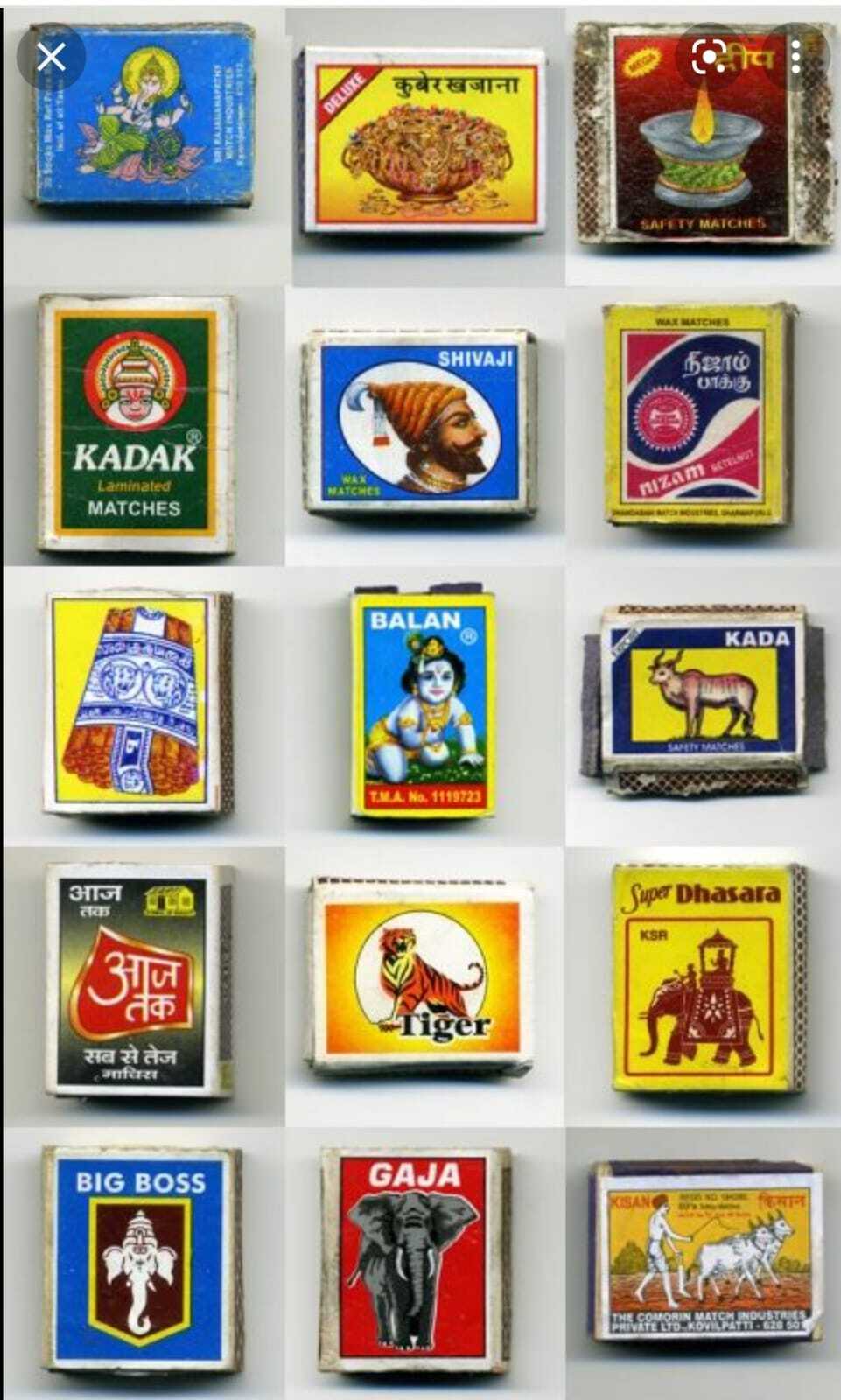
So, while I kept eyeing the stamps of my father, I took up another hobby in my childhood, and that was to collect match box covers. A bit of a downgrade when compared to stamps, but I did manage to collect more than 400 different matchbox covers over the years. And today, while surfing the net, I came across the attached picture, and it brought back a flood of memories. Memories of my accomplice who helped me to acquire such a large collection. He would ensure that every matchbox cover that he found on his way to our home would reach me intact. I would wait eagerly every evening to see him in anticipation of adding a new cover to my collection.

Radhe Baba was 85 years old. He was not related to us in any way, but he kind of adopted us as his family. My mother would always save a meal for him, and he seemed to love her cooking. He was the most rocking old man I have ever come across. As a World War two veteran, he received a meager pension from the government off and on and had no worldly possessions. But somehow, he always managed to smoke his bidi and get a new set of dhoti and jacket once in 6 months. Every winter, he would fall terribly sick, and we would worry for his life. Come spring, and he would spring back to life like a lark. Every Republic Day, he would save the packet of laddoos for my sister and me. Somehow, those always tasted better than the ones given to us in school. He was known as the jugaad king. When no one in the city could get a job done, he would get it done by hook or by crook.

My parents relied on him a lot and would leave us home under his watch while they were travelling. And come what may, he would not budge from our main gate until they came back.

Well, life went on. I got into medicine and would visit home twice a year. I loved to see him every time I visited home. It has been more than 25 years now, but he remains etched in my memory forever.

In our lives, we connect with many people who bring a lot of joy to us without any expectations. He was one such person. He had no immediate family, but to us, he was more than family. I don’t have the matchbox collection anymore, nor do I have a picture of his. However, he was a cherished part of my childhood. He indirectly taught me that it takes very little to be happy and lead a content life. All we need is to care a little for each other, and that leaves us with memories to cherish for a lifetime.

©️Dr. Aparna Govil Bhasker

Best Bariatric Surgeon in Mumbai, India

Picture courtesy- Google