Posts in Blog

रेप तो हर जगह होता है

रेप तो हर जगह होता है

©डॉ. अपर्णा गोविल भास्कर

कुछ लोग कहते हैं, क्या हुआ जो एक डॉक्टर का रेप हुआ, रेप तो हर जगह होता है,


कभी रात के अंधेरे में , तो कभी भरी दुपहरी में,

कभी सुनसान सड़कों पे, तो कभी भरे बाज़ार में,
कभी एक जवान लड़की का, कभी एक छोटी बच्ची का तो कभी एक बूढ़ी औरत का,
कभी शहर में तो कभी गाँव में; कभी घर के बाहर, तो कभी घर के अंदर,
कभी ऑफिस में, कभी स्कूल में, और अब तो ये अस्पताल में भी होता है,
कभी अनजान दरिंदे होते हैं, तो कभी कुछ अपने ही कर देते हैं।

कुछ लोग कहते हैं, क्या हुआ जो एक डॉक्टर का रेप हुआ, रेप तो हर जगह होता है।

कहते हैं, ज़रूर लड़की की ही गलती होगी; छोटी स्कर्ट या क़मीज़ पहनी होगी,
रात को अकेले क्यों घूम रही थी; लाइब्रेरी में क्यों देर रात पढ़ रही थी,
क्यों किसी के साथ नहीं चल रही थी; क्यों लड़कों पे विश्वास कर रही थी।

कुछ लोग कहते हैं, क्या हुआ जो एक डॉक्टर का रेप हुआ, रेप तो हर जगह होता है।

सुना नहीं आपने? रेप एक ‘स्ट्रे इन्सिडेंट’ है, जो कहीं भी हो सकता है,
डाल लीजिए अब इसकी आदत, क्योंकि आज कोलकाता, कल दिल्ली और परसों मुंबई में हुआ था,
कल कहीं और होगा, क्योंकि ये तो हर जगह होता है, हर रोज़ होता है,
रेप से ख़ानदान का ही नहीं, अब देश का नाम खराब होता है।

कुछ लोग कहते हैं, क्या हुआ जो एक डॉक्टर का रेप हुआ, रेप तो हर जगह होता है।

सालों लग जाएंगे, पर रेपिस्ट शायद ही पकड़े जाएंगे,
लड़की के माँ-बाप रोते रह जाएंगे, सोचते रह जाएंगे, खुद को कोसते रह जाएंगे,
लेकिन दोस्त ये याद रखना, कल हमारे बच्चे भी इसी सोसाइटी में आएंगे,
अगर आज हम चुप रह जाएंगे, तो कल शायद हमारे दिल भी टूट जाएंगे।

इसलिए पूछो आज उन लोगों से जो ये कहते हैं, क्या हुआ जो एक डॉक्टर का रेप हुआ, रेप तो हर जगह होता है,
क्या करते आप जो आपके घर में ये होता? क्या करते आप जो आपकी होती वो बेटी, बहन या पत्नी?
क्या करते आप अगर ये आप पे गुज़री होती?

रेप तो हर जगह होता है, पर सर ये हर बार पर्सनल होता है।

EMPATHY AND OBJECTIVITY- A DELICATE BALANCE

©️Dr. Aparna Govil Bhasker

As doctors, we love evidence-based medicine! Most of us believe in the old adage- “In God we trust. All others must bring data.” We are deeply impacted by impact factors and the graph of our pride rises in direct proportion to the number of times our research papers are cited in the literature. Today, we have journals sprouting by the dozens and thousands of research papers being published every year. We go around the world, brainstorming with colleagues and trying to make sense of these infinite numbers in an attempt to solve the mystery of human health and disease. Though we are always trying to apply the evidence to generate best practices, many times during heated discussions in conferences it all boils down to- “What would you do (WWYD) if this was your wife? WWYD if this was your mother? And saving the best for the last…… drumroll please!!….. WWYD if this was your (you guessed it right!) ….. mother-in-law?”

The biggest irony faced by medical practitioners is that while data guides clinical practice, statistics get severely skewed when viewed from the perspective of the patient and their family. The universally acceptable 0.1% adverse event rate is a one hundred percent catastrophe when the life of a loved one is on the line. Randomized controlled trials (RCT) fall terribly short when we have to break bad news to a patient’s family. Unfortunately, RCTs can’t feel the pain or the disappointment. In real life, numbers are just numbers and they have no feelings. At such times, emotions overrule evidence leading us back to the timeless question- “Doctor, what would you have done if this was your own family member?”

Medicine is probably the only profession with a direct impact on a person’s life and death. An average person would probably make life and death decisions once or twice in their entire life. Some may never have to do it at all. Doctors are professionals who have to make these difficult choices on a daily basis. We have to remain objective while everyone is panicking and remain calm in the midst of chaos. We have to keep our head on our shoulders and our heart tucked a little away. We are bound by oath to take risks on behalf of others. Well, we all know that taking a risk is a risky affair and things can go either way. We have the impolite job of being realistic and setting the expectations right. Sometimes we have to say things that people may not wish to hear. And sometimes when we say things, people may choose not to hear. At the end of the day, we have the challenging task of keeping hope alive too, for hope can be a stronger potion than any medicine in the world.

Striking a balance between objectivity and empathy is like navigating a ship through turbulent seas. If either side is lost or if there’s an excess of one, it could tip the balance and sink the ship. Published literature, studies, trials, data and numbers can at best guide clinical practice to some extent. However, rattling off numbers can never provide solace to a suffering family. The practice of medicine is beyond that and the healing potion must contain the right dose of empathy to be effective.

Some of us can overdose on empathy too. Excessive emotional involvement in every patient’s case can lead to burnout and compassion fatigue. Overwhelming empathy can be quite exhausting and we need some degree of professional detachment and objectivity to navigate the medical maze effectively. This brings me back to the WWYD question. Throughout my career, I’ve been taught to treat patients as I would my own family. While we hold our loved ones dear, treating every patient as kin would lead to an emotional roller coaster. Trust me, it’s not good for any of the stake holders.

The journey of a doctor is a delicate balance between objectivity and empathy. We begin our careers armed with a solid foundation in evidence-based medicine and data-driven practices. With experience, we come to appreciate the necessity of complimenting these with empathy and a profound understanding of the humane aspect of healthcare.

When science marries compassion, the journey of healing begins. Those who find this equilibrium our blessed and experience immense gratification and fulfilment in their professional lives. For others, it remains a work in progress. It’s challenging, yet attainable. It’s not easy, yet possible. It is a continuous journey of growth and learning, shaping us into better healers every day.

Embracing Authenticity: A Surgeon’s Journey Beyond Conformity

©Dr. Aparna Govil Bhasker

The field of surgery has long been associated with images of masculinity – the stereotypical strong, authoritative and dominating figure giving orders in the operating room. These perceptions, however, fail to capture the true essence of surgical prowess and the diverse skill set that contributes to success in the field. In reality, effective surgical practice encompasses a range of qualities, including precision, empathy, kindness, collaboration, adaptability and maintaining equanimity during surgery.

I embarked on my surgical journey 21 years ago as the lone woman in a department dominated by men. Not much has changed in the last two decades. Whether it is at the hospital or at a surgical conference, number of women surgeons can still be counted on fingertips.

When I first entered the field of surgery, the prevalent male culture around me felt rather intimidating. Those days there were no support networks and hardly any female mentors to look up to. The prospect of potential professional and social isolation, coupled with the fear of being underestimated, fuelled my determination to meticulously refine my foundational skills in laparoscopic and bariatric surgery. I worked really hard through those years and today, I take pride in being acknowledged among highly skilled surgeons. Yet, the realization dawned that sheer technical proficiency does not always equate to success. In the realm of professional success, factors extending beyond technical expertise assume a crucial role. Many individuals consciously craft an image or aura around themselves, projecting a specific persona aligned with perceived notions of success.

I quickly realized that attempting to adopt a borrowed male aura for success was not only impractical but also counterproductive for me. Authenticity emerged as a fundamental principle in my professional life. I needed to remain true to myself. Success, I discovered, wasn’t about conforming to preconceived notions or adopting a facade. Instead, it was about embracing and refining my own unique strengths and qualities.

In this realization, I found the freedom to cultivate a professional identity that resonated with my authentic self. It allowed me to leverage my inherent skills, communicate with sincerity, and project a genuine image that reflected not societal expectations, but my own values and capabilities. By embracing authenticity, I discovered a more fulfilling and sustainable path to success, one that didn’t require the compromise of my true identity.

Gradually, I began to forge my own path. Infusing a feminine touch and cultivating a culture of care in every aspect of my work became my signature. I wasn’t concerned about being a woman in what is traditionally considered a man’s world. While I learned valuable lessons from my male colleagues, particularly in assertiveness and financial literacy, I realized that success didn’t necessitate adopting a masculine persona. Success, I discovered, hinges on core skills and authenticity, coupled with a touch of luck.

Authenticity, an often-underestimated asset, becomes paramount in our pursuit of professional and personal success. Embracing and staying true to oneself, despite the existing gender dynamics, is not only empowering but a key component. As women surgeons, it is essential to bring one’s unique qualities, perspectives, and approaches to the forefront, challenging the preconceived notions of what a surgeon should be. As more and more women break through the barriers of tradition, they must realize that femininity need not be sacrificed for success in the operating room or in life.

BEYOND THE SCALPEL: FACING THE MIRROR IN SURGICAL LEARNINGS

©Dr. Aparna Govil Bhasker

As a medical professional, I interact with numerous individuals on a daily basis. While their primary reason for visiting me is related to medical or surgical concerns, I consider it a privilege to gain a brief insight into their lives during the limited time they spend with me.

Yesterday, I met Aisha (name changed), a 35-year-old woman seeking treatment for a ventral hernia. Engaging in conversations with my patients is a practice I deeply value, a habit instilled in me by my professor during my postgraduate years. He always emphasized that a simple conversation could unveil many a hidden diagnosis. This approach has become an enduring part of my practice, and I find great satisfaction in these conversations with my patients, gaining a deeper understanding not only of their disease but also of their life-stories.

During my conversation with Aisha, I discovered that she was a mother of seven children. The revelation took me by surprise when she shared that her last pregnancy resulted in quintuplets. Initially expecting a third child, they were unexpectedly blessed with five at once. Consequently, her family now includes an 11-year-old daughter, a 7-year-old son, and five 3-year-old daughters. The idea of having five three-year-old, little girls together is heartwarming but daunting at the same time. Raising a single child is demanding enough, so I can only imagine the immense challenges of raising five toddlers simultaneously. I presumed that Aisha’s primary focus must be on caring for her children, leaving little time for her own well-being. My concern deepened as I contemplated her post-operative period, wondering if she would have sufficient time to rest and recover.

Approaching the end of our consultation, Aisha caught me offguard with a question that stumped me. She wanted to know the duration of leave she would need from “work”. I had assumed that, with the responsibility of caring for her numerous young children, she must be a stay-at-home mother. Contrary to my well-intentioned assumptions, I discovered that Aisha was not only a devoted mother but also a highly accomplished professional in the finance industry in her country. I found myself not only surprised by Aisha’s profound passion for her profession but at the same time, was taken aback by the level of judgement and assumptions I had unconsciously made about another woman.

As I write this article, it has been almost 24 hours since I met Aisha. Throughout the hustle and bustle of yesterday, Aisha has continued to stay in my thoughts As, a lady surgeon, I have myself faced similar biases at different points in my life and career, and have actively worked to resist them. Yet, here I was, grappling with the same shortcomings that I have criticized the society for at times.

This incident served as an illustration of the profound nature of our own implicit biases. Despite being a woman and a working professional, I came to the realization that I, too, had fallen prey to the same biases and passive gender roles embedded in our society. Unfortunately, these biases are further perpetuated due to influences from media, political and legal systems, religious institutions, workplaces, and family networks. The cycle is completed when, unconsciously, even so-called empowered women like myself become victims of the same biases that confine us.

I spent the morning delving deeper into this issue and reading more about it. To my dismay, I realized that my experience was not unique. According to a study, around 75 percent of individuals tend to associate terms like business, profession, and work with “men,” while connecting terms like family, household, and caregiving with “women.” Recently, the Gender Social Norms Index discovered that 90% of individuals across all genders exhibit a bias against women, a statistic that worryingly remains unchanged from data collected over a decade ago. Notably, these biases pose significant obstacles for women in the realms of politics, business, and the workplace, resulting in the erosion of their rights and instances of human rights violations.

What’s even more worrying is that as the use of artificial intelligence becomes more widespread, it could reinforce these biases. AI language models draw extensively from existing publications, leading to the replication and amplification of prevailing gender biases. As Sasha Luccioni, a Research Scientist and Climate Lead at the machine learning company Hugging Face, aptly pointed out, “AI bias doesn’t emerge from thin air; it originates from the patterns we perpetuate in our societies.” Unfortunately, our societies are still struggling with the formidable challenge of attaining gender equality and remain far from its realization.

As for me, I recognized the importance of challenging my own biases and learning from the diverse experiences of my patients. The encounter with Aisha has prompted me to reassess my biases and adopt a more inclusive and empathetic perspective. Inspired by Aisha’s resilience, I am committed to advocating for a more woman-centric approach in my medical practice. I hope to explore more about the unique needs of my female patients, offering not only medical care but also a supportive environment for open discussions about their challenges and aspirations. Recognizing that personal biases are an ongoing challenge, even for a working professional woman like me, I hope to overcome them and establish a medical practice that is more inclusive and understanding.

PS: Image courtesy Bing AI

A PAGE FROM A DOCTORS’ DIARY

Unseen Struggles: The Weight Beyond Weight

©Dr. Aparna Govil Bhasker

This is the story of Shruti and Raj (names changed). A touching journey of profound emotions woven through an array of love, loss and unyielding hope amidst a backdrop of deepset societal prejudices and biases.

As a young couple, their quest to start a family was laden with challenges. The initial elation of finally conceiving a pair of twins through IVF, was swiftly eclipsed by the cruel hand of fate. Losing one of the twins in the early months of conception left them reeling with grief. Despite the heartache, they clung onto the flickering hope for their remaining baby, channelling every bit of love and determination towards nurturing that fragile life.

In a heart-wrenching twist of destiny, just days before the expected delivery, their journey took yet another unexpected turn. They were shattered when the second baby’s heartbeat stopped in the womb and they faced loss once again. Their world was engulfed by the painful reality of losing both babies, leaving them immersed in profound grief.

The year was 2020 and amidst their ordeal, the world was overtaken by the chaos of the Covid-19 pandemic. Shruti, already battling with the weight of grief, found herself grappling with a severe bout of Covid. Once again, she was admitted for weeks in the hospital. Treatment with steroids saved her life but the side effects brought unwanted #weightgain. The pandemic restrictions further isolated her, eliminating avenues for physical activity and exacerbating her struggles emotionally as well as physically. A few months passed by.

As if her already overwhelming trials weren’t enough, one year later, she started experiencing an excruciating pain in the left hip joint. She was diagnosed with avascular necrosis of the hip, a consequence of the steroids that she required during treatment for Covid. At a young age of 28, she faced the daunting reality of needing a hip replacement, an unforeseen challenge that added to her physical limitations and struggles. Each step became a battle and every movement a painful reminder of her body’s limitations. Coupled with her restricted mobility, it became an additional factor contributing to her weight gain.

Shruti’s struggles with her health issues weren’t merely confined to their physical toll. The most profound blow stemmed from the absence of understanding and empathy from those around her. Society’s unforgiving lens fixated solely on her outward appearance, remaining oblivious to the turmoil raging beneath the surface. Instead of offering empathy or a listening ear, they chose the path of blame—an unjust attribution of her weight gain to her actions, without acknowledging the intricate complexities she struggled with.

The understanding of #obesity needs to extend far beyond superficial judgements. Beyond the visual appearance lie many emotional and physical struggles that shape an individual’s journey with weight gain. While it’s easy to cast aspersions, true understanding requires a deeper connection, an effort to empathize with the multifaceted challenges faced by individuals. Sadly, in today’s world, obesity stands amongst the most stigmatized conditions, frequently greeted with a glaring lack of empathy. Instead of kindness, those affected often confront sneers, harsh judgments, and biased attitudes, exacerbating their already uphill battles.

Amid this tumult, Raj remains an unwavering source of support for Shruti. His love and belief in her never falter as he tirelessly advocates for her well-being and offers unwavering support.

Shruti’s yearning for a family and a life liberated from judgement remains resolute. Her dream transcends mere physical weight loss. It encompasses liberation from the confines of societal judgement and misconceptions. What she longs for is a world where her narrative finds resonance, where her trials are met not with disdain but with empathy, understanding, and heartfelt compassion.

In this world, as we all traverse our individual tests and trials the weight of these burdens tends to feel less heavy when we encounter understanding, empathy, and genuine compassion from others. Individuals dealing with obesity often face the unfortunate reality of not being truly heard or seen beyond their outward appearance. It’s important for society to listen to and truly see individuals dealing with obesity. Acknowledging their experiences and understanding the multifaceted nature of their struggles can pave the way for a more supportive and compassionate approach towards addressing this condition.

लकीरें

आज आईने में मैंने अपना चेहरा देखा; तो नज़र आई कुछ लकीरें……

कुछ लकीरों में चमकने लगी थी सफेदी, कुछ में हो रहा था थोड़ा सा दर्द,

कुछ लकीरें खिंच गईं थीं दिलोजान पर, कुछ  गई थीं रिश्तों के बीच,

कुछ मिट रही थी, कुछ नई बन रही थी,

कुछ थी ऐसी, जो किसी को नज़र नहीं  रही थी,

और कुछ ऐसी, जो चाह के भी, छुप नहीं पा रही थी.

आज आईने में मैंने अपना चेहरा देखा; तो नज़र आयें कुछ लकीरें…..

समझ नहीं पा रहे थे की; हम इनको कैसे करें कम, कशमकश में और डूबते जा रहे थे हम,

फ़िर एक दोस्त ने समझाया की, ये लकीरें ही ज़िन्दगी हैं,

ये लकीरें हम में हैं, और इन लकीरों में हैं हम.

समय के साथ सीखा हमने; लकीरों पे करना ऐतबार,

लकीरों की ख़ूबसूरती जो समझ ली हमने, जिंदगी का मजा ही हुआ कुछ और.

अब लकीरें कितनी भी हो टेढ़ी; चेहरे पे नहीं दिखती,

जो दिखती है कभी चेहरे पर, वो आती है बन के मुस्कुराहट,

और कहती हैं लकीरों से, कि हमसे हो तुम, और तुमसे हैं हम,

करते हैं मिलके मजा, क्यूंकि यही है जिंदगी की रजा.

आज जब फिर एक बार आईने में  मैंने अपना चेहरा देखा; तो नज़र ना आई कोई लकीरें…..

Be independent and free from within!

Happy Independence Day!

A Dramedy Of Errors!

©️ Dr. Aparna Govil Bhasker  

This morning, I had to fly to Ahmedabad for a conference (#YoungHSICON). Last night, the Prince of Wales intrigued me so much that I couldn’t stop bingeing on the period drama that I was watching on Netflix. Even after 75 years of independence, the crown still succeeds in evoking that uncomparable feeling of awe and has the potential to lead to a sleepless night.

Finally, when I slept, it was way beyond my usual sleeping time. I was having an elaborate dream about Buckingham palace when the alarm started blaring in the wee hours of the morning, and I woke up with a start! As expected, waking up so early was a terrible ordeal. I cursed myself for not having enough discipline and plodded myself out of bed at half my usual pace and then in a painstaking effort to stay awake, I spent double the time sipping on my tea (English Breakfast, ofcourse!).

My husband, who is an epitome of self-discipline, kept chiding me for staying up late and then dragging my feet through the morning. He was worried that I was going to miss the flight. To be honest, I was running quite late but somehow managed to get into a cab and crossed my fingers, hoping to reach the airport on time. Fortunately, early mornings in Mumbai on a Saturday are quite forgiving when it comes to traffic. The roads were empty, and I made it to the airport on time. I wasted no time in sending a message to my husband that I was “on time”! (A very loving wifely gesture, trying to prove a point!)

I finally relaxed and stood in the queue to enter the airport. The queue moved ahead quite fast, and in no time, I was at the gate with my ID proof and boarding pass ready. I smiled at the security guard, and she smiled back at me. Then, she looked at my boarding pass and looked up. The smile had disappeared from her face, and suddenly, my heart skipped a beat. In my absent-mindedness, I am perfectly capable of carrying my husband’s ID proof instead of mine! I was sure she thought of me as an imposter.

“You are at the wrong terminal!”

I looked at her, then I looked again at my boarding pass and finally looked at my watch! In my Netflix stupor, I had come to the wrong terminal. The other terminal was 5 km away. Panic rose up in my throat. Not because I could potentially miss my flight, but how would I go back home and face my husband!

I came out running with my bag in tow. Luckily for me, a couple of cabs were waiting outside. The cabby quoted an insanely high fare, which I readily agreed to, as I had no time or energy to negotiate.

Just then, two airport supervisors appeared out of nowhere. Apparently, I was not the first person in the city of Mumbai to land up in the wrong terminal. They reprimanded the cabby for trying to take advantage of my predicament and suggested that I take another cab who would charge more reasonably. For me, money didn’t matter, but I was grateful for their concern at a time of distress. I took the cab they suggested and tried to hand out a tip to them as a gesture of thankfulness. They graciously refused to accept any money from me and saw me off.

En route to the other terminal, I kept thinking. Nowadays, it is rare for someone to show concern for others. It is also hard for us to accept the selfless concern of a stranger. There is an implied expectation of a reward for any good deed. I found it difficult to accept that they helped me just out of concern, without any expectations for a reward. It was just a good deed, human to human. As plain as that.

While I was lost in my thoughts, the cabby almost flew the car, and it took us exactly 10 minutes to reach the other terminal. Much to my displeasure, he demanded 1.5 times the money that we had agreed upon. I had no choice but to pay, as I had no time to indulge in a squabble.

In a single morning, within a span of ten minutes, on one hand, I experienced selfless human concern, and on the other hand, there were people who without an iota of doubt were ready to take undue advantage of a vulnerable situation.

There are all kinds of people in this world. Sometimes, we receive support from unknown quarters. It pleasantly surprises us and reinforces our faith in people. At other times, we feel cheated by others, and it can lead to varying degrees of dejection. We can not avoid the cycle of good and bad, but we can always choose to care more for the good over the bad. Every person has an impact on our life. It can be big or small. I could have spoiled my morning, fretting over the behavior of the cabbies. But today, I chose to focus on the kindness of airport supervisors over the cunningness of the cabbies. It made me feel better in an already rushed morning.

Yes, the cabby did succeed in making a little more money, but at the end of the day, it was the airport supervisors who made an impression on me and earned my respect. Also, I do believe that every time a good deed is done, it sets the foundation for the next one somewhere in the universe and helps to keep the balance intact.

PS: This time, I messaged my husband after completing the check-in process. I need to start paying more heed to his advice. But then, if husbands and wives always lived in tandem and heeded to each other, what would become of the drama in life! 😉

And yes, I did make it to the conference.

A PAGE FROM A DOCTOR’S DIARY

Dedicated to all the #mothers

©️Dr. Aparna Govil Bhasker

In a city like Mumbai, most people live in nuclear families, and many a times, children have no option but to tag along with their parents even during medical consultations. Some people feel a tad awkward about getting children with them and leave them with caretakers. However, if responsible caretakers are not available, I wouldn’t refrain from saying that children can also be a barrier to seeking timely healthcare, especially when it comes to women’s health.

A few days back, we treated a lady for a breast abscess, and she had to come in for frequent dressings. Every day, she would bring her three years old daughter along with her. The daughter would just not leave the mother and cling to her all the time. She would refuse to sit outside in the waiting area and insisted on being inside the dressing room with her mother. On being denied, she would start crying inconsolably, and absolutely nothing would comfort her. Being a mother myself, I presumed that as the child was so small, she may have some degree of separation anxiety and wanted to be with the mother all the time. Hence, much to the chagrin of the staff at the hospital, I requested them to allow her to be with her mother during the dressing. This went on for almost 10 days….. It was the same story every day. Mother and daughter would come together, and while I did the dressing, the little girl would sit quietly on a chair inside the dressing room. On the last day, I asked the mother if the little girl was so clingy at home too. She just smiled and said that though she lived in a joint family, no one accompanied her for the hospital visits. The husband had to be at work, and the others were busy with their own lives.

Her three years old daughter came with her every day because no one else came. She didn’t want her mother to come alone to the hospital. That was her way of supporting her mother. By being on her side…. All through…..

It set me thinking about how mistaken I was in my thought process. This little human was not a barrier for her mother’s treatment. She was, in fact, the enabler. Any surgery, however small, is a big deal for a patient. One needs physical, mental, and emotional support, and all these go a long way in the healing process. At the tender age of three, she understood this well and, in her own sweet way, supported her mother by being there for her.

May is the month of the “mother”. I am a mother myself, and honestly, many times, it can get a little overwhelming to manage a kid, family, home, and work together. As a mother, I think of myself as the doer who is not allowed to be vulnerable. I believe that it is my job to take care of the needs of my child, my family, and my patients. I feel that all of them look up to me, and meeting these expectations is an unquestionable and integral part of life.

However, this episode set me thinking about all the times when my child tries to support me through difficult times in his own innocent ways. If I complain of a headache, he brings slices of cucumber and puts them on my eyes. If I look tired, he brings me a glass of water. If I look stressed, he asks me if everything is okay at the hospital.

Children try to comfort us in their own sweet way, and it is up to us to allow them to help us and accept their help. Mother’s Day is not meant to make us sit on an unreachable pedestal. Some degree of vulnerability can make mothers a little more human. Be vulnerable, and next time when your child offers you help, do accept it. It will definitely make your journey a lot easier and bring a smile to your face.

THE PHOTOGRAPHER

I have been pathetically camera conscious for most part of my life. The moment I know someone is taking my picture, I tend to stiffen, I don’t know where to look, and I smile weirdly. It’s not hard to guess the end result. The awkwardness is evident and most of the time, I hate to look at my own pictures. I delete them more often than I keep them. Getting pictures clicked is an onerous task, which I would totally avoid if I could. I envy the selfie enthusiasts who seem to get that pout right every time and I am always in awe of those perfectly pastel wedding albums.

That brings me to my wedding pictures…… well, the less we say about them, the better it is. Like most Indian weddings my wedding was also quite emotionally and physically taxing. However, the photographer seemed quite set on his task of creating a perfect wedding album for us. He expected a graceful pose with a flawless smile for every photograph. It almost felt like I was there for a grand photo shoot and not for my own wedding. Getting pictures taken was the most tormenting part of my wedding, to the extent that towards the end, I threatened to walk away if any more photos were taken.

Cut to 2023. Last week we had our annual obesity surgery conference in Mumbai. It was a 4 days long affair and of course there was a “photographer”. Usually, most of us would not pay much attention to a photographer in a routine surgical conference. After all, it is not exactly a wedding! However, here was this middle-aged person, impeccably dressed in a jacket and with a very interesting expression on his face. A face that brings about a smile on another face. One look at him and you have no option but to smile. He went around bouncing on his feet, taking pictures, making small talk, cracking jokes and making everyone laugh. He had a persona that was very hard to ignore. I guess, all those who attended the conference will agree that getting pictures clicked felt quite natural and to some extent even enjoyable. For the next 4 days, he worked with the same fervour and his passion for photography went miles beyond being just a job. By the time the conference came to an end, we were on first name basis and I was happy to know that he was a proud father of a dental student. He shared with a lot of pride that though he couldn’t study much, his children were doing very well academically.

I am sure he made a deep impact on many of us who attended the meeting. I guess it is not about what you do, it is about how you do it. A simple task of taking pictures can be done so differently by two different people. Not only was he passionate about what he did, he also connected with each one of us at a personal level. He worked for about 15 hours everyday and yet had a smile on his face at the end of every day. He danced when we danced, he laughed when we laughed and he clicked hundreds of pictures. I am yet to see the pictures but for the first time I didn’t mind being photographed, infact, I actually enjoyed it.

This one is dedicated to you Naresh Bhai! Thank you for your efforts.

©Dr. Aparna Govil Bhasker

THE TRAIN TRAVAILS

©️Dr. Aparna Govil Bhasker

Mumbai locals…. Rightly known as the lifeline of this city of dreams. Mumbai will not be Mumbai, if it were not for its local train network. For some, it’s a necessity and for others more privileged, it’s a choice. But no one can challenge the fact, that in this bustling city which is forever bursting at its seams, it is the fastest way to commute from one part of the city to another.

I take the train off and on to work. Especially on days when I am running behind schedule (which is quite often ?), it helps me to make up on the lost time. It also helps me to relax mentally and catch up on my reading, thanks to all the wonderful apps on my phone. Many a times, I just sit by the window-side and observe all the hustle and bustle around me. It’s true that every train has a life of its own. Most fellow passengers are usually immersed in their phones and many a times, I catch people smiling to themselves or letting out a small laugh. Despite being as public as transport can get, Mumbai locals can sometimes also be the most private place to shed a tear or two. In Mumbai, space may be lacking in the literal sense, but people do know when to give you space.

Mumbai locals are also busy centres for business. Especially the ladies’ compartments. Everything that can make a working woman’s life better, is available on the train. There are women selling all kinds of things, from cut vegetables to kitchen-ware to innerwear! The other day, a middle-aged lady walked in with two huge bags full of Indian Kurtas for women. Very neat, decent quality and most importantly reasonably priced. No wonder she was an instant hit. There is no better delight for a woman than shopping for new clothes and especially if they are economically priced. In no time, the mundane phones went inside the bags and there was a kurta in almost everyone’s hand. Some were marvelling at the designs, the others bargaining for a better price, some in a tearing hurry as they had to get down at the next station. Almost everyone bought something and when it was time to pay, this lady who was selling the clothes just gave them her phone number and asked them to pay through their Google pay accounts whenever they could. Almost half of the ladies got off at the next station with their latest purchase. Some of them had paid and some hadn’t yet. They all had her number.

I was watching as a bystander this whole time. After the train started moving, I couldn’t resist asking her if any of her customers defaulted on paying her. I was pleasantly surprised when she said that never has, she been cheated of her money. She sells to strangers on a new train every day. She lets them take the goods and trusts that they will make the payment eventually and invariably, by the end of the day, her books are in a good shape. While I did understand that it was a good marketing strategy, but it also came with a risk. The risk of being cheated and her trust being broken. For the last three days I cannot stop thinking about my conversation with her. This lady who had nothing much in the name of savings, who sold cheap clothes out of a plastic bag, on a local train, to make a living, made a conscious choice to “trust” people.

It is sad that today, trusting people is considered as a character trait that needs a trimming. Trusting others is considered foolhardy and naïve. We all want others to trust us but we find it difficult to return the favour. As a doctor, I know the value of trust. The most serious of ailments can be cured if the patient trusts the doctor. Lack of trust today is the biggest issue not only in healthcare but in every stratum of life. It makes us insecure, edgy and self-centred. Sadly, we teach our children the same things.

Trust is the most essential part of every relationship. We need to trust people to be able to sustain the most basic necessities in life. We trust that the food we eat, will lead to good health, we trust that houses we stay in will protect us from harm, we trust that the air we breathe in, will keep us alive. Most importantly, we need to trust people around us. Believe it or not, given a chance, majority proves to be trustworthy. If only we started with trusting just one more person every day, this world would be a better place and we would all feel more free.

To live, is to trust. And it is a choice, just like the one made by the cloth seller on the train!

©️Dr. Aparna Govil Bhasker

independenceday2022 #mumbailocaltrains #mumbaidiaries #mumbaikar

THE YELLOW CANDY

©️ Dr. Aparna Govil Bhasker

He saw me standing lost in my thoughts,

He noticed that I didn’t ask for a coffee today,

His old experienced eyes perceived that I was not my usual self,

He waited for the moment when I would look at him,

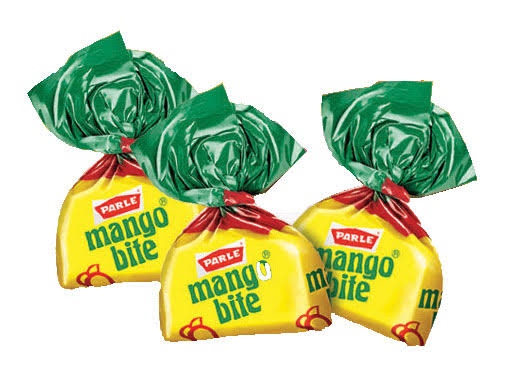
The moment I turned around he waived and reached out to me with a yellow candy,

I took that one, and promptly he offered another one and a big toothy smile free,

And a smile begets a smile, so magically, the frown on my face turned into a smile,

Something eased in that moment and a twinkle returned to my eyes,

As doctors, we have to be kind to everyone, but sometimes a yellow candy of kindness can do wonders for us too. Such precious moments are enough to keep us going.

©️ Dr. Aparna Govil Bhasker

PS- “He” is the coffee vendor at one of the hospitals I visit.

(Picture courtesy- Parle Archives)