Posts tagged obesity surgery

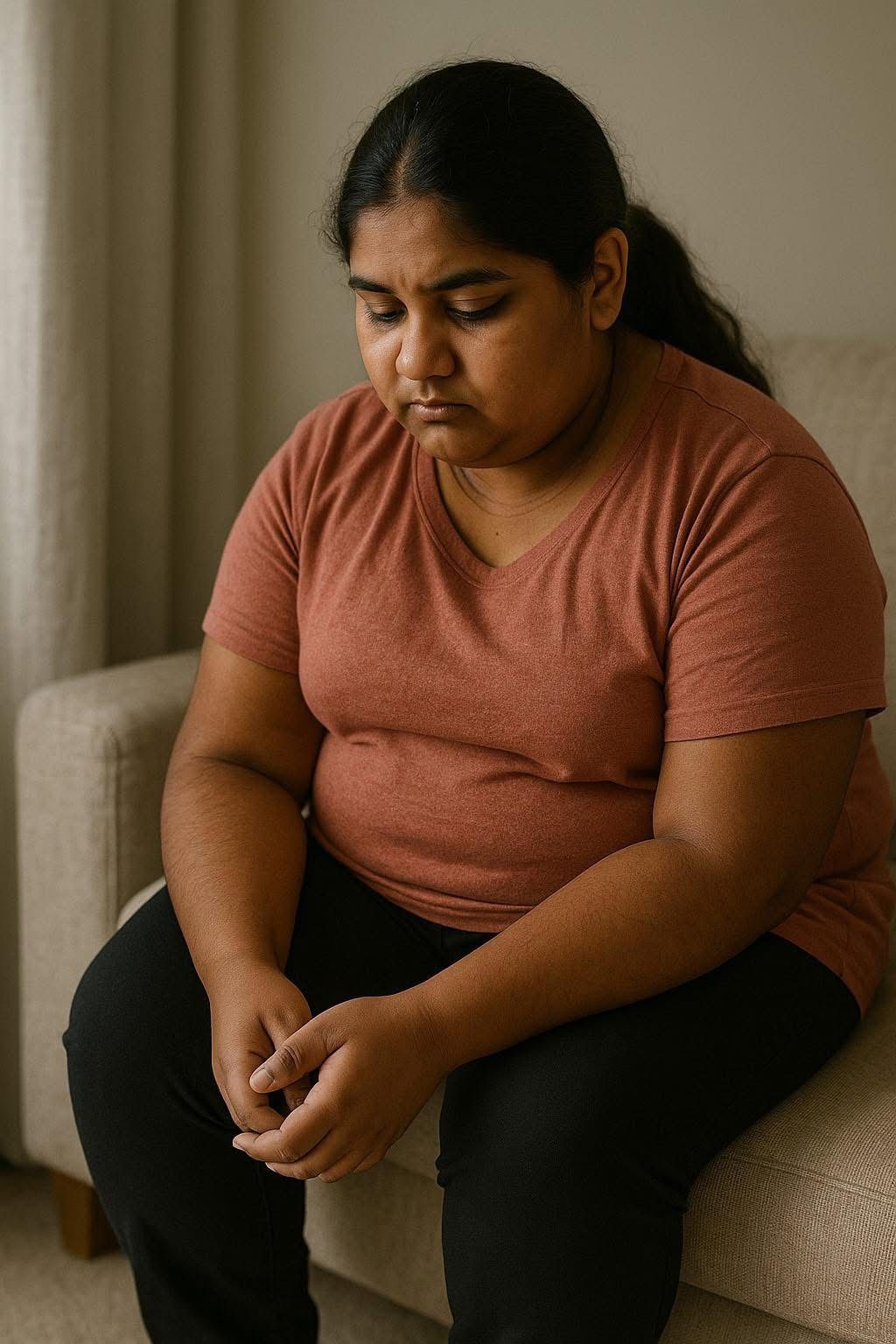
WHEN A CHILD IS PUNISHED FOR HER WEIGHT

She is just 13 years old.
Six months ago, she weighed 153 kilos. Today, after 6 months of bariatric surgery, she weighs 112 kg.

She has lost 25% of her total body weight—a remarkable achievement by any medical standard. Physically, she’s doing better than ever. Emotionally, she’s struggling.

Because no school wants to take her in.

She hasn’t been to school since Grade 3. Her weight—and the judgement that came with it—forced her into homeschooling. Now, even after making such incredible progress, she finds herself rejected again. Every admission form, every interview, every polite refusal chips away at her self-worth.

She is a bright, curious, and articulate girl. But instead of celebrating her courage and recovery, the system is punishing her for a disease she never chose to have.

Obesity is not a failure of willpower. It’s a complex medical condition—one that affects the body, mind, and social identity. Yet, even when a child fights back with everything she has, stigma continues to stand in her way.

Schools need to do better.
Education is not just about marks—it’s about inclusion, empathy, and growth. A young girl’s potential must not be limited solely by her weight.

It breaks my heart that even after winning the battle against her body, she still has to fight one against society.

THE SILENT STRUGGLES

Yesterday, a 44-year-old man living with a weight of 182 kg broke down in tears during the consultation.

He did not cry because he was in any kind of physical pain. He cried because he felt utterly helpless—and scared. He cried because he could no longer breathe easily or walk without difficulty. Breathing and walking are basic, right? He cried because he felt he was failing as a father and as a husband, unable to support his wife and children the way he wanted to.

Every attempt to lose weight had ended in defeat. He felt like he was a burden on everyone. He felt that his life was over.

This is the hidden weight of obesity. It’s the part no one sees.

People living with obesity carry years of silent suffering. They are constantly mocked, judged, and dismissed. They are labelled as lazy, irresponsible, or lacking willpower. They live an entire lifetime with smirks, unsolicited advice, or silent disdain.

And yet what we see in our clinic is that most of them have tried—tried harder than we can imagine.

Here lies the paradox: society expects them to “do something” about their weight but offers little understanding of the disease or support. Instead, it adds layers of #shame, making an already difficult journey even more difficult.

It expects them to fight a complex battle alone and also pins the blame on them at every step of the way.

Obesity is more than a physical condition—it’s a complex and deeply emotional experience. What people with obesity often need is not more advice, but more #empathy.

Sometimes, just being treated with kindness and understanding can lift more weight than any scale ever could.

©️Dr. Aparna Govil Bhasker

PS- Image is AI generated

Using bariatric surgery to fight obesity

Dr. Aparna Govil Bhasker
Bariatric and Laparoscopic Surgeon

In the last week amongst the other patients I saw, there was one with a history of a stroke a few days back, one with a history of stroke, 2 years ago and a young lady with a condition called intracranial hypertension.

The one common factor between all three patients was, that all of them suffered from morbid obesity or clinically severe obesity, as it is called now.

The thing about obesity is that it is wrongly perceived as a sign of good health and a well to do economic status, atleast in India. However once people crossover from the overweight to the obese category, which is somewhere around a BMI of 29 to 30 or so, they tend to put on weight faster.

As the BMI continues to increase, obesity gradually starts affecting each and every part of the human body. Diabetes, high blood pressure and dyslipidemia are the big three that alongwith obesity form the metabolic syndrome. Eventually these together increase the risk of having cardiovascular events. Stroke is one of them.

Coming to the treatment part. Bariatric surgery is recommended for patients suffering from clinically severe obesity if their BMI is greater than 35. It can also be considered as a treatment option for patients with a BMI more than 32.5 with two or more associated diseases. As of now it is the only valid treatment option that leads to sustained weight loss in this patient population.

As a bariatric surgeon, I see many such patients on a daily basis. I also usually see that these patients and their families are very scared of getting the surgery done. There are many myths and many detractors who prevent these patients from getting treated on time.

Now here is the thing about treatment of any disease. Firstly, one needs to recognize that he or she is suffering from a disease. Secondly, get one or may be two expert opinions from qualified professionals and specialists about the best way forward. Thirdly, plan the entire process, prepare well and get it done. Last but not the least, dont delay the treatment. Every treatment works best in the early stages of a disease. Every single day that you delay, you are allowing the disease, time to grow and decreasing the chances of curing it.

Problems like stroke, heart related issues, embolism etc are life threatening complications of obesity. Dont let it grow to this extent.

Getting timely treatment can save your life and also improve your quality of life. Consult the right doctor at the earliest. Please dont miss the bus.

Dr. Aparna Govil Bhasker
Bariatric and Laparoscopic Surgeon

Bariatric Surgery – How to maintain weight when the “Honeymoon” Wears off

Mariam Lakdawala, Bariatric nutritionist; Dr. Aparna Govil Bhasker, Bariatric Surgeon

Honeymoon period is basically the golden period in the first year post bariatric surgery wherein the patient experiences drastic weight loss. Obesity surgery leads to weight loss through a combination of various mechanisms such as restriction of food intake, a decrease in hunger sensation, mal-absorption of calories, action of gut microbes and hormonal activity in the gut.

An interesting fact about the “post-bariatric surgery honeymoon phase” is that it is relatively longer than the “post-marriage honeymoon phase”. However, like the other one, this too is a temporary phase which sadly comes to an end after 6-9 months of surgery. After about 6 months or so, weight loss starts slowing down, but continues to happen until 1 year-18 months. Most patients reach the nadir of weight loss between 18 to 24 months.

By the end of 12 to 18 months, there is a considerable increase in food intake and hunger. Bariatric surgery is a tool that must be used for pushing one into a lifestyle change. Patients who embrace a healthy diet and an exercise regime, tend to do better in the long term. Varying degrees of weight regain is seen after obesity surgery in the long term. Regular follow up is the key to maintenance of weight loss in the long term.

In the first 6 to 9 months after the surgery, the main focus must be on conditioning the mind to, adopt a low calorie well balanced diet:

  • Your diet is important not only during the honeymoon phase but is even more important after 12 to 18 months to prevent weight from coming back
  • Restricting outside eating & intake of fried food, ice-cream, chocolates, processed foods, sugary foods etc.
  • Fat gives double the amount of energy as compared to carbohydrates and proteins, hence it should be restricted in the diet.
  • The body spends more energy to digest protein; thus, a high protein diet is very important for weight loss and maintenance. It is wise to distribute protein rich foods in all the meals in order to ensure better absorption.
  • Avoid keeping long gaps between meals, eat every 3-4 hours to prevent overeating in the subsequent meal
  • Maintaining a food diary is the best method to be aware of the food choices you make.
  • Grazing which is a repetitive eating behaviour, in an unplanned manner not associated with hunger or satiety sensations, could develop post the surgery. It might lead to poor weight loss if not corrected. A simple way to deal with it is to eat the entire meal at a go and keep a decided gap consciously between the meals.

Mindful eating

The story doesn’t end on what to eat, how to eat? how much to eat? When to eat? Is equally important. Given below is the cycle of mindful eating created to make you more mindful about your eating habits.

Mindful eating basically involves the practise of eating food slowly, in a relaxed environment by limiting other distractions so that you can focus well on your meals. As a result, you will be more conscious of portions and food intake.

Make exercise a way of life – Engage in any form of physical activity daily for at least 40-45 minutes. Make exercising fun by engaging in the activities you like so that you don’t leave it in between.

In addition to a focused exercise, increase the nonspecific exercise activities like usinga stairs instead of taking elevators or escalators, park your vehicle a little away from the intended destination, avoid using vehicle for short distances, etc

Stay away from lifestyle stressors like alcohol, smoking, erratic sleeping, sedentary lifestyle, work stress, etc.

Engage in meditation/ yoga/ breathing techniques or spend 30-40 minutes of your time daily in any activity that keeps you away from negative thoughts.

Dr. Aparna Govil Bhasker is one of the best bariatric surgeons in India and is associated as a consultant bariatric surgeon in Mumbai with many renowned hospitals.

Hair-fall after bariatric surgery

Author:

Mariam Lakdawala RD

Bariatric nutritionist and diabetic educator    

Hair loss is one of the most important concerns that patients have after weight-loss/bariatric surgery. In the first 6 months, more than normal amount of hair fall may be experienced depending upon the age, gender, genetic factors, etc. This hair loss however, is not permanent and it can be decreased with dietary modifications and adequate supplementation. 

Why does hair-fall happen after bariatric/weight-loss surgery:

Hair follicles have two phases of growth namely:

Anagen – Active growth phase

Telogen – Inactive phase

Hair follicles start with anagen phase wherein the growth occurs and then move on to the telogen phase which lasts for 100-120 days. Then the hair falls out. This process, if accelerated, is called Telogen Effluvium and is the cause of hair loss in bariatric patients.

Telogen effluvium could occur due to: 

  • Rapid weight loss
  • Increased stress
  • Chronic disease such as liver disease or any chronic debilitating disease
  • Hormonal imbalance such as hypothyroidism
  • Poor compliance with supplementation resulting in micronutrient deficiencies especially, iron deficiency
    • Decreased absorption in case of a mal absorptive surgery, as most of the iron absorption occurs in the Duodenum
    • Less Hydrochloric acid (HCL) to convert iron into its most bioavailable form, as 3/4th of the stomach containing HCL is bypassed.
  • Food intolerances resulting in overall very less food intake
  • Low protein intake- There is decreased absorption of proteins post a mal-absorptive surgery
  • Decreased tolerance to protein rich foods
  • Medications

To decrease hair fall, make sure that the following nutrients are included in your diet

  1. Proteins: Insufficient protein intake can cause thinning of hair, affect the normal process of hair growth and causes diffuse alopecia. Thus, a protein intake of 1.5 g/ kg of ideal body weight is very important post the surgery with more emphasis on essential amino acids. Among all the essential amino acids, L-Lysine has shown to improve hair growth after the period of decline and also can improve the levels of iron in the body. L-lysine supplementation of 1.5-2 g is recommended (Faria. S, et. al, 2010). Its bioavailable forms are found in fish, meat and eggs. The vegetarian sources include, soy products, lentils, quinoa, black beans, pistachios, pumpkin seeds, etc.

Protein deficiency can be identified by serum albumin levels, loss of muscle mass, hair fall and weakness.

  1. Iron: Iron supplementation can help to decrease hair fall induced by iron deficiency. In case of GI related disturbances or if the haemoglobin levels are very low, intra-venous iron can be prescribed. Iron deficiency can be identified by serum iron studies and a complete blood count.
  2. Biotin: It plays a vital role in the development of hair follicles.

Supplementation of 1-2 mg of Biotin may be helpful to decrease hair fall (Faria. S, et. al, 2010).

  1. Zinc: It is an important factor for the growth and development of hair. In case of hair loss 15 mg/d of zinc chelate is recommended (Faria. S, et. al, 2010).
  2. Essential fatty acids: Biotin if complimented with essential fatty acids, can decrease hair loss. Foods rich in essential fatty acids include fatty fishes, flaxseeds, flaxseed oil, extra virgin olive oil, etc
  3. Vitamin B12: Deficiency of B12 may alter the pigmentation of hair. However, this alteration can be reversed by B12 supplementation.

Take a look at few suggestions to help you deal better with fear of hair loss post weight loss surgery

  • Relax and don’t worry, you will lose 5-15% of your hair due to the stress of surgery and weight loss. It rarely lasts more than 6 months and grows back.
  • If it lasts for more than 6 months visit your primary care doctor to be evaluated for any illness or non-nutritional reason for hair loss
  • Be regular with follow-ups so that any nutritional deficiency causing hair loss can be timely identified and taken care of

Surgical & Prosthetics

Interventions like hair transplant, hair restoration therapy like QR678, may be considered if hair-loss persists even after 18 to 24 months of bariatric/weight-loss surgery.

Wigs, weaves, etc can be used as a temporary measure to tackle with hair loss if required.

Last but not the least, hair-fall after bariatric/weight-loss surgery is a transient phenomenon and is self-limiting. However if it has become a cause of stress, do visit us so that we can evaluate and help you out.
Reference:

Faria, S., Pereira Faria, O., Diniz Lins, R., & Rodrigues de Gouvea, H. (2010). Hair Loss Among Bariatric Surgery Patients. Bariatric Times, 7(11), 18-20.

How to choose a Protein Powder after Bariatric Surgery?

Author: Mariam Lakdawala, RD

Bariatric nutritionist and diabetic educator

My last blog emphasized on the importance of protein supplementation post weight loss/bariatric surgery. It is extremely important to meet the protein requirements (especially for vegetarians) to prevent or decrease the consequences of possible protein insufficiency after weight loss surgery.

In our practice we see that most patients a number of preconceived notions and mis-conceptions about protein supplements. A lot of patients feel that protein supplements are artificial and can be harmful, they may lead to weight gain or that they are just meant for body-builders…. the list just goes on! After any type of weight loss / bariatric surgery, food intake goes down considerably and it is usually not possible to meet the body’s daily protein requirement through food alone. Hence it becomes essential to add a protein supplement.

Now, the market is full of options for protein powders. Various brands and different types of protein powders and meal replacers are available today. It is enough to confuse anyone. The commonest query I get from my patients is, “Which Protein powder should I choose to meet my requirements?”.

This blog will enable you to understand the nutritional label on these protein supplements and help you to decide which one will be the best option for you.

Let us first understand classification of proteins:

  • Concentrates: Concentrate contains between 30% and 85% protein based on the degree of removal of non-protein part. It is cheaper and easier to find.
  • Isolates: Isolate contains up to 90% protein and very less non-protein part. It is best quality protein, but more expensive
  • Hydrolysates: These are partially digested proteins, which are digested faster than the intact proteins. It has a higher content of amino acid Leucine which is essential for “turning on” muscle building.

Next is to look out for measures used to state the digestibility of these proteins. Given below are the most widely accepted ones, which will be either printed on the label or can be obtained on demand. Every measure used will have its own pros and cons, hence best is to check for more than one measure before making the final decision.

  • Biological value: It determines how much of the digested protein stays in your body and is represented on a scale of 0-100. 100 being the highest bioavailability
  • Protein Digestibility Corrected Amino Acid Score (PDCAAS): This score ranges from 0-1.0, 1.0 being the most likely to meet human protein needs. 
  • Amino acid profile: A complete protein will contain all the essential amino acids (Essential amino acids are not produced by the body and have to be obtained from diet) required for the synthesis of important proteins in the body.

Knowing the type of protein is very important to match your diet preference and also to know which one will suit you the best.  

  • Whey proteinis one of the most commonly used protein obtained from milk. It contains all the essential amino acids and is easily digested. Whey concentrate retains lactose as it is comparatively less processed versus whey isolate which contains negligible amounts of lactose. It is rich in Branched Chain Amino Acids (BCAA’s) which promotes muscle growth.
  • Soy proteinis a plant based protein obtained from Soya bean and is the best choice of protein for vegans.
  • Casein Protein: Like whey it is also obtained from milk. However, it is digested and absorbed very slowly.
  • Egg protein: It is an eggcellent source of high quality protein. Egg protein powders are generally made from egg whites and not whole egg
  • Rice protein, which is 100 percent plant-based, is a good choice for vegetarians or for people who don’t consume dairy products. It’s also gluten-free. However, it is not a complete protein and is not ideal for muscle building
  • Pea proteinis highly digestible, hypo-allergenic and economical.
  • Hemp proteinis also 100 percent plant-based. It is a good source of omega-3 fatty acids. However, it is not a complete protein as it is low in amino acids lysine and Leucine.

While selecting the protein powder also check the sugar content, as high sugar content in your protein drink will aggravate the risk of dumping syndrome especially after a Roux-en y gastric bypass. Instead of sugar, you can add ginger, cinnamon, cloves or extracts like almond extract, coconut extract, vanilla extract, peppermint, etc for taste.

In short, protein powders provide high quality protein in a concentrated & convenient form. Hence, instead of running away from protein supplements, know how to read the nutritional label on protein supplements and make them your friends.

References:

How can vegetarian patients keep up their protein intake post bariatric / weight loss surgery

Author: Mariam Lakdawala
Registered Dietician and Bariatric Nutritionist

Protein is very crucial as it forms a part of every cell, tissue and organ in the body. Post weight loss surgery meeting your ideal protein requirement is extremely important. All bariatric surgeries lead to restricted intake which in turn leads to a drastic decrease in the total number of calories consumed daily. In case of mal-absorptive bariatric surgeries, along with restriction the absorption of proteins is also affected. Indians are primarily vegetarian. Even those who consume non-vegetarian foods, do so in small quantities. Hence post bariatric surgery, it is extremely important to lay stress on this aspect of nutrition.

The major role of protein is to rebuild and maintain muscle mass. In addition, protein has many other roles to play, like it enhamces the wound healing post surgery, it enables the immune system to work efficiently, helps to maintain healthier hair, skin and nails and provides satiety which prevents hunger pangs in the subsequent meals.

Low caloric intake post-surgery, compels the body to use fat stores as well as muscle mass as a source of energy which results in the loss of lean muscle mass.

A daily protein intake of 1.5g/ Kg/ Ideal Body Weight has shown to prevent muscle loss (Moize. V. et. al., 2003). After bariatric surgery, for vegetarians, it is difficult to meet such high protein requirements through diet alone. Adding protein supplements to a high protein vegetarian diet thus becomes necessary to reach the ideal protein intake.

Dietary Management:

To keep up with the protein requirement of the body, the golden rule post weight loss surgery is to include a protein rich food in every meal. Let us have a look at few vegetarian foods rich in protein,

  • Low fat milk/ Low fat curds/ Unflavoured Yoghurt
  • Home-made Cottage cheese/ Tofu
  • Soymilk
  • Soy granules/ Soy chunks
  • Sprouts
  • Dals and Pulses
  • Combining dal/ pulse/ sprout with cereals (Rice/ Wheat/ Jowar/ Bajra/ Ragi/ Maize) in 1:1 proportion increases the quality of proteins.

You can incorporate one or more of these protein supplements listed below as prescribed by your Bariatric Nutritionist keeping in mind your requirements,

  • Protein powders – Whey isolate/ Whey Concentrate/ Other high protein blends (E.g. Soy + milk proteins/ Peanut + milk proteins, etc)
  • Protein bars
  • Protein chips
  • Threptin biscuits

Protein supplements are very important for atleast the first 10-12 months post the surgery. Later on, your intake increases fairly to meet the protein requirements through diet. Even after 1 year if protein rich foods are not consciously included in the diet, then continuing protein supplementation through external sources becomes unavoidable.

The compliance with protein supplements has always been poor due to its strong aftertaste, and food aversion post-surgery makes it even worse. However, with technological advancements the protein powders are getting better in terms of their taste and texture. There is a wide variety of flavours available in the market. In case you have tried many and still not being able to get your taste buds accustomed to it then you can try few tips to improve palatability,

  • Opt for vanilla flavour, as you can add some coffee powder/ fresh fruit to it for taste
  • Consume it chilled
  • Make it into a Smoothie by adding some yoghurt and fruit
  • You can add the protein powder to oat flour and make mini protein pancakes

What happens in case of protein insufficiency

Proteins play a very important role in the transport of various vitamins and minerals. Insufficient proteins in the body can affect the availability of vital nutrients such as iron, calcium, copper, and vitamins A & D.

Its insufficiency results in various symptoms like,

  • Edema/swelling,
  • fatigue,
  • muscle wasting,
  • thinning or brittle hair,
  • pale skin,
  • flaky or dry skin,
  • lethargy,
  • headache, etc.

Few suggestions to ensure sufficient protein intake are as follows, 

  • Don’t miss your follow-ups

Being regular with your follow-ups will help you to identify if you are deficient in protein

  • Maintain a diary

This option works great as you are aware how close or far you are from meeting your requirements. You just need to take out 10-15 minutes to write it down. End of the day is a good time to reflect and note down. Probably its even more effective than Almonds for improving your memory.

  • Maintain a checklist

You can consult your Bariatric Nutritionist to prepare a checklist of protein rich foods to be consumed daily as per your requirements. Put up that checklist in the kitchen so that you don’t forget your PROTEINS.

So please ensure that after bariatric surgery you are taking enough protein. If you are unable to do that, please get in touch with your bariatric nutritionist for her guidance. Prevention is always better than cure!

Reference

Moize, V., Geliebter, A., Gluck, M. E., Yahav, E., Lorence, M., Colarusso, T., … & Flancbaum, L. (2003). Obese patients have inadequate protein intake related to protein intolerance up to 1 year following Roux-en-Y gastric bypass. Obesity surgery, 13(1), 23-28.