Posts tagged obesity

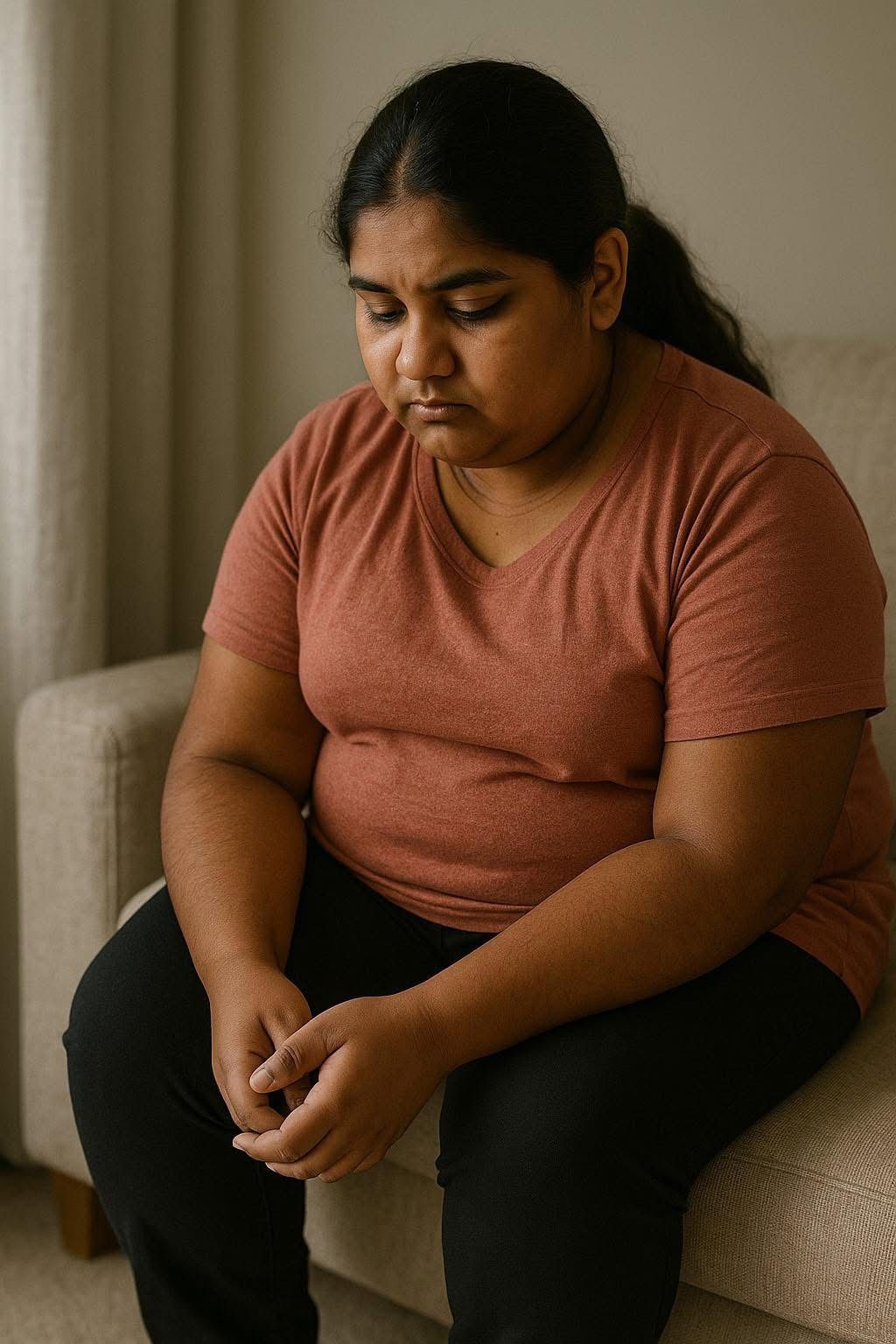
WHEN A CHILD IS PUNISHED FOR HER WEIGHT

She is just 13 years old.
Six months ago, she weighed 153 kilos. Today, after 6 months of bariatric surgery, she weighs 112 kg.

She has lost 25% of her total body weight—a remarkable achievement by any medical standard. Physically, she’s doing better than ever. Emotionally, she’s struggling.

Because no school wants to take her in.

She hasn’t been to school since Grade 3. Her weight—and the judgement that came with it—forced her into homeschooling. Now, even after making such incredible progress, she finds herself rejected again. Every admission form, every interview, every polite refusal chips away at her self-worth.

She is a bright, curious, and articulate girl. But instead of celebrating her courage and recovery, the system is punishing her for a disease she never chose to have.

Obesity is not a failure of willpower. It’s a complex medical condition—one that affects the body, mind, and social identity. Yet, even when a child fights back with everything she has, stigma continues to stand in her way.

Schools need to do better.
Education is not just about marks—it’s about inclusion, empathy, and growth. A young girl’s potential must not be limited solely by her weight.

It breaks my heart that even after winning the battle against her body, she still has to fight one against society.
THE SILENT STRUGGLES

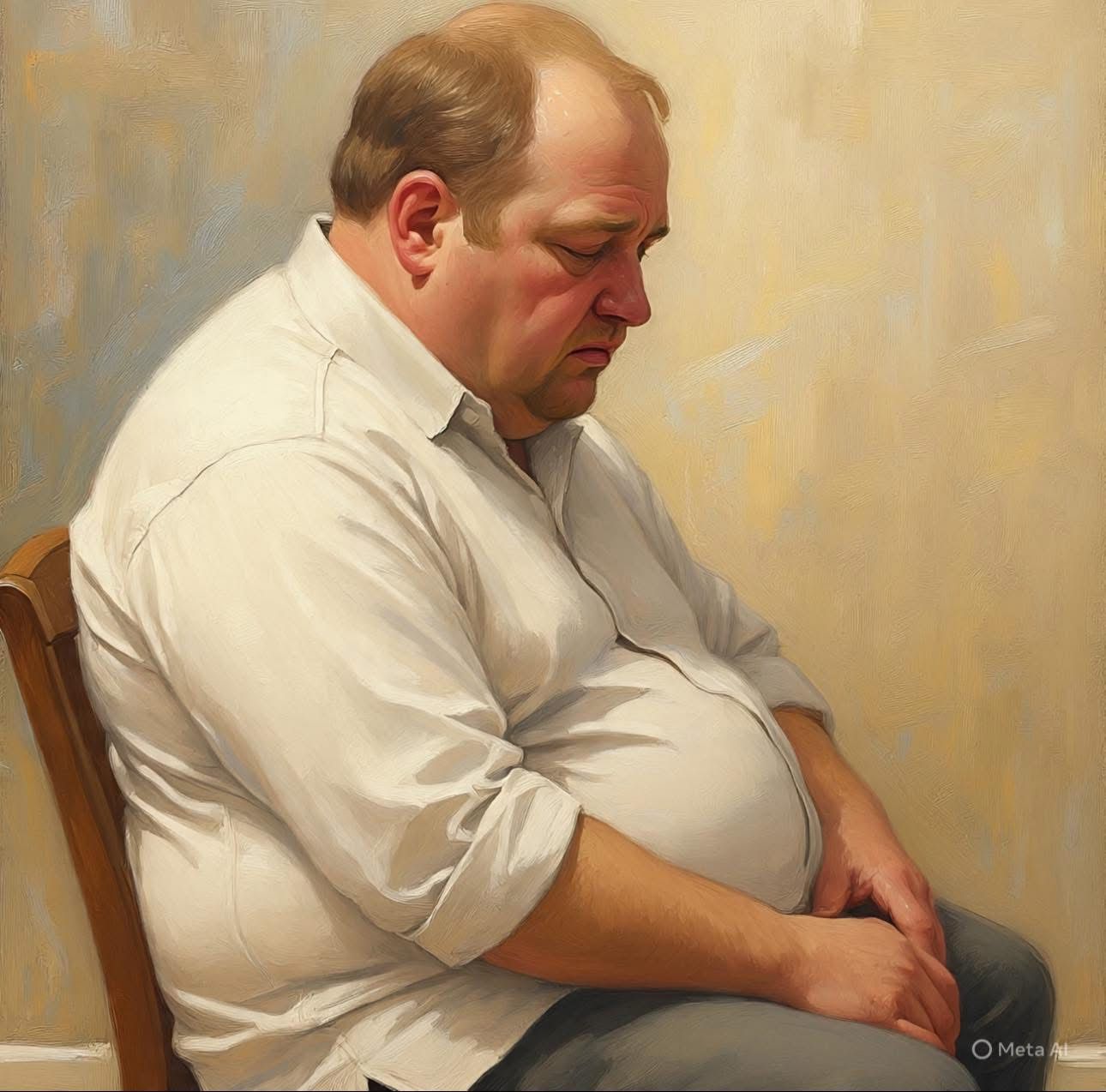
Yesterday, a 44-year-old man living with a weight of 182 kg broke down in tears during the consultation.

He did not cry because he was in any kind of physical pain. He cried because he felt utterly helpless—and scared. He cried because he could no longer breathe easily or walk without difficulty. Breathing and walking are basic, right? He cried because he felt he was failing as a father and as a husband, unable to support his wife and children the way he wanted to.

Every attempt to lose weight had ended in defeat. He felt like he was a burden on everyone. He felt that his life was over.

This is the hidden weight of obesity. It’s the part no one sees.

People living with obesity carry years of silent suffering. They are constantly mocked, judged, and dismissed. They are labelled as lazy, irresponsible, or lacking willpower. They live an entire lifetime with smirks, unsolicited advice, or silent disdain.

And yet what we see in our clinic is that most of them have tried—tried harder than we can imagine.

Here lies the paradox: society expects them to “do something” about their weight but offers little understanding of the disease or support. Instead, it adds layers of #shame, making an already difficult journey even more difficult.

It expects them to fight a complex battle alone and also pins the blame on them at every step of the way.

Obesity is more than a physical condition—it’s a complex and deeply emotional experience. What people with obesity often need is not more advice, but more #empathy.

Sometimes, just being treated with kindness and understanding can lift more weight than any scale ever could.

©️Dr. Aparna Govil Bhasker

PS- Image is AI generated

BEYOND THE BALANCE SHEET

“How old are you?” I asked.
“42,” he said.
“What do you do for a living?”
“I used to work for one of the Big Fours. Now I’m retired.”
At 42?
Curious, I asked why.
“I couldn’t handle the #stress. I’ve lived with #depression for years.”

This wasn’t the first time I’d heard something like this.

Over the past few years, we’ve seen global business leaders glorify the 70- to 90-hour workweek.

They want the employees to relentlessly push the envelope, burn the midnight oil, and get the job done.

The bottom line is to meet the target and cross that ridiculous number on the balance sheet.

Work-life balance? That’s for the weak and soft. In today’s testosterone-charged corporate culture, #burnout is worn like a badge of honor.

Add to that the constant fear of being handed a pink slip or losing your job to the next round of cost cutting. Afraid to pause, employees are locked in a constant cycle of overwork and stress.

But here’s the truth we don’t want to hear:

Nearly 1 in 10 Indians live with depression, anxiety, or chronic stress.

Work-related stress is the leading cause of poor employee health.

It not only affects performance—it spills into families, communities, and long-term well-being.

Ten years ago, poor mental health was already costing companies an estimated $100 million annually. Imagine what that number looks like today.

Now add another layer— “obesity.”
Stress, long working hours, sleep deprivation, and poor food habits are all well-documented contributors to #weightgain.

Obesity, in turn, worsens mental health, increasing the risk of a dangerous vicious cycle.

And it doesn’t stop there. With rising obesity and stress levels, we are seeing a disturbing trend—an increase in early-onset #heartdisease.

Heart attacks in the 30s and 40s are no longer rare headlines; they’re becoming alarmingly common.

We often talk about performance, productivity, and passion—but not the price we pay for them.

It’s time we redefine what success truly means. Because no matter how impressive the balance sheet looks, it won’t matter if the numbers on your medical report are telling a different story.

Burnout isn’t a badge of honor—it’s a warning sign we can no longer afford to ignore.

©️Dr. Aparna Govil Bhasker

PS- The image is AI generated

A PAGE FROM A DOCTOR’S DIARY

Together through every step

Seven years ago, Anaya walked into our clinic as a young, bubbly girl. She had struggled with obesity since puberty. She chose to undergo a bariatric surgery in the form of a laparoscopic sleeve gastrectomy and stepped into a new phase of life.

Yesterday, she came in for a follow-up consultation—a graceful woman, now married, a mother of two, and running her own business. Over the years, life has changed beautifully for her. But one thing hasn’t changed: her struggle with weight. Unlike many other health conditions, obesity is rarely understood. The frustration, the social pressure, the silent judgment—it can eat you up from inside.

Over the last 7 years, we have walked this journey together as a team—helping her through phases of weight regain after both pregnancies. This time, too, we helped her achieve her weight loss target. Our patients slowly become part of a larger family, and their victories, big or small, mean everything to us.

She told us about the joy and hope she regains with even a little progress, made possible through our support. And as she left, she said, “I really love you for all the support that you have given to me through the years.” Hearing that touched me deeply. It’s moments like these that make all the effort worthwhile.

This journey is not about numbers on a scale. It is about being understood, supported, and never left alone.

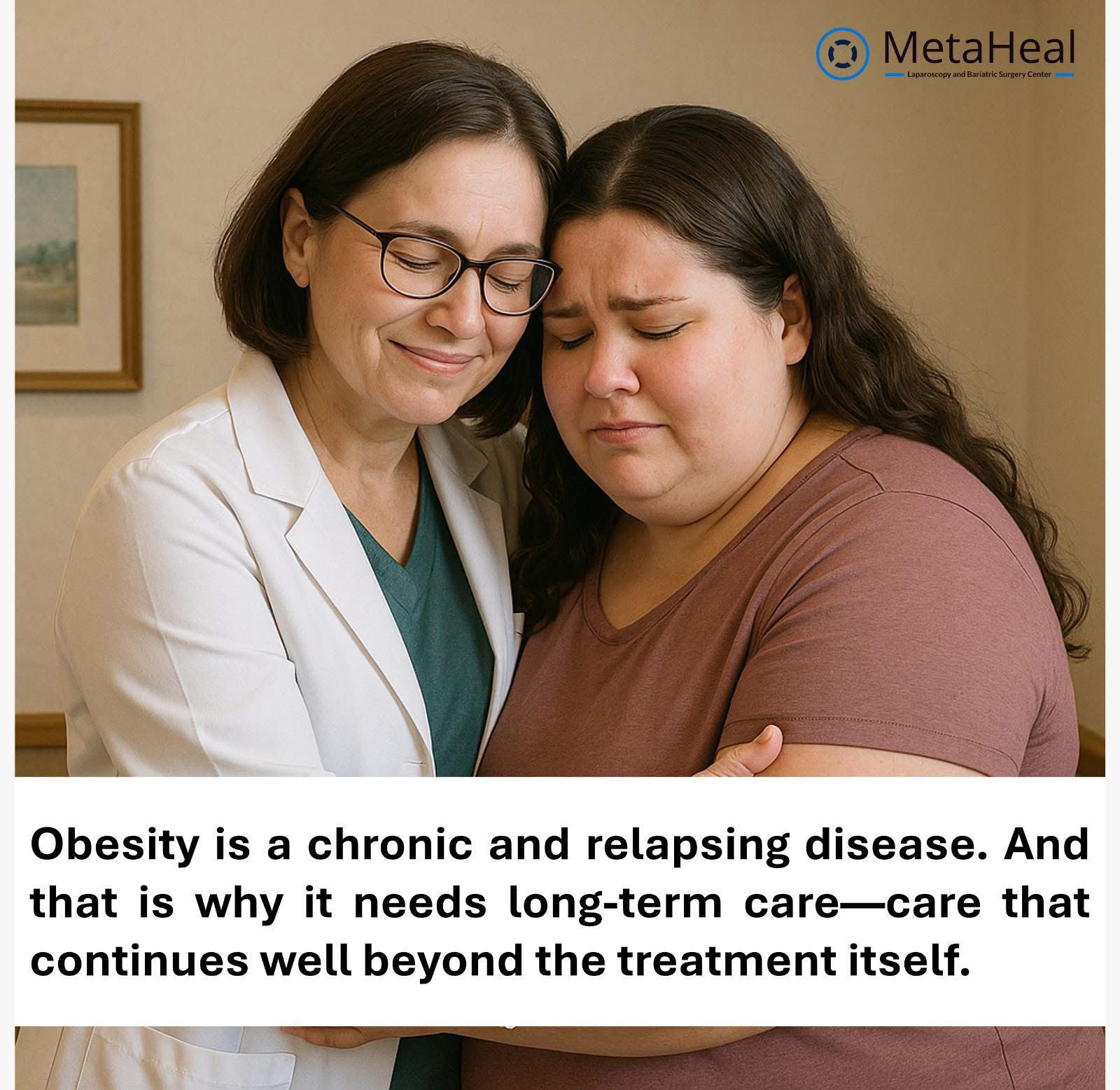
Obesity is a chronic and relapsing disease. And that is why it needs long-term care—care that continues well beyond the treatment itself.

©️Dr. Aparna Govil Bhasker

PS- The image is AI generated

The Unseen Struggles

©Dr. Aparna Govil Bhasker

I am continuously trying, but I feel like I’m constantly failing.”

This was the first thing she said when we started talking about her weight issues. She was a 32-year-old working mother of a 16 months old baby girl, struggling with obesity, exhaustion written all over her face. Every day was a battle between juggling work, home, baby and her own well-being.

Her day started early, rushing through chores before heading to work. She worked long hours, returning home only by 9:30 p.m. By then, her little girl—who had been waiting for her all day—wanted all her mother’s time and attention. And how could a mother say no? She played with her, fed her, and held her until she fell asleep. Then came the household tasks—cleaning up, preparing for the next day, squeezing in a few moments of personal time before finally collapsing into bed, usually around 1 a.m. And the cycle repeated, day after day, month after month.

The weight kept piling on. She desperately wanted to prioritize her health. She knew she needed to exercise, eat better, and get proper sleep. But by the end of the day, there would be no time and energy left. She had tried waking up earlier to fit in a workout, but sheer exhaustion made it impossible. She tried to meal prep, but something always got in the way. Life was like an express train without brakes.

As doctors, we often advice our patients to aim for balance—to have a structured schedule, to eat clean, to work out, to prioritize sleep hygiene, to make time for themselves. But in real life, especially for women who are juggling work, home, and motherhood, is balance truly possible? Advice alone is not enough. What women really need is, tangible support—partners who share responsibilities, workplaces that accommodate their realities, families that step in when needed.

She looked at me, eyes filled with frustration and exhaustion. “I know I need to do better. I want to. But I just don’t know how.”

And I had no perfect answer for her. Because the truth is, she wasn’t failing—she was surviving. Every single day, she showed up, doing her best for her child, her work, and her home. In the process she could not do justice to herself. As doctors, we often find ourselves helpless in bridging the gap between the ideal and the reality of lived experiences.

She didn’t need more advice. She needed reassurance. She needed to hear that she was already doing enough and things will eventually get easier and better. That she wasn’t alone. That her worth was not tied to a number on the scale or the hours spent exercising. Because balance isn’t about perfect schedules—it’s about grace. It’s about finding kindness for yourself in the midst of chaos.

As doctors, we must remember that medicine is not only about prescriptions and protocols—it’s about people. We need more compassion, more acceptance, and a deeper understanding of the lives our patients lead. Because sometimes, healing is not just about more advice—it’s simply letting them know they are seen and heard.

She sighed, stood up, and adjusted the bag on her shoulder. “I’ll try again,” she said softly.

And I hoped that, someday, the world would make it easier for women like her.

#WorkingMoms #StrugglesOfMotherhood #ObesityAwareness #MoreThanWillpower #SupportMatters #BalanceIsHard #HealthBeyondAdvice

Beyond the prescription

Beyond the prescription

©Dr. Aparna Govil Bhasker

I’ve always enjoyed talking to my patients, and as much as I love surgery, I truly cherish my time in the OPD. However, the time available in the OPD is limited, and we need to cover a lot in those precious few minutes with each patient. As healthcare professionals, we often become laser-focused on providing well-meaning advice and delivering a neat looking prescription (a challenge in itself for any doctor! Thank God for the digital softwares!). By the end, we feel we’ve fulfilled our duty.

As our practice grows and the number of patients increases, the time spent with each patient tends to become shorter, or the waiting list grows longer. Both scenarios lead to decreased patient satisfaction. But it’s not just patient satisfaction that takes a hit—our own job satisfaction suffers too. Over time, frustration starts building on both sides, and we all know where that leads to.

In recent months, I’ve felt that tension growing within me. I began to question: if I wasn’t feeling satisfied with the consultations, what were my patients walking away with? As obesity care specialists, were we truly making a meaningful impact when it came to lifestyle changes and behavioural modifications? Despite spending nearly 40 minutes with each patient, it felt like something was missing, like we weren’t reaching the level of progress we aimed for. We were not getting through the way we wanted to.

Fortunately, I’m lucky to have friends who share a similar mindset. When I discussed my concerns with my friend Dr. Tejal Lathia a renowned endocrinologist, she highly recommended the Motivational Interviewing course by Prof. Miller and encouraged me to explore it. Although I’ve been in medicine for nearly 30 years and can confidently say I’m a skilled doctor and surgeon, I must admit I’ve never been formally trained in the art and science of communication.

As a bariatric surgeon and specialist in obesity care, I’ve come to realize that communication is the real game changer. We can perform the most advanced surgeries, but it’s only through consistent and effective communication that we can truly help our patients make lasting lifestyle changes. Without it, both doctor and patient can fall into a cycle of judgment, bias, and blame, which benefits no one.

Yesterday in the clinic, we tried the “person-centered” approach for the first time. “We went beyond seeing the deficits on the patient’s side (3 months post a bariatric operation) such as- staying up late in the night, skipping breakfast, feeling low on energy, avoiding exercise, and neglecting her prescribed supplements.” On a normal day, our usual approach would have been to tell what she was doing wrong, offer well-meaning advice, explain the associated health risks of future complications, give her a prescription and send her off, hoping she’d correct course and be on a better trajectory by her next visit.

However, the person-centered approach encourages curiosity. It teaches us to move beyond assumptions about what we think we already know and what we believe is needed. It invites us to engage in deeper conversations with our patients. “With some gentle prompting, this particular patient revealed that for the past six months, she had been burdened by intense guilt. A close relative’s health had deteriorated after being admitted to a hospital that she had recommended. The financial burden from the medical bills was overwhelming, and the relative’s daughter had to give up her full-time job to care for her mother. This guilt weighed heavily on my patient, robbing her of sleep and triggering a cascade of problems—waking up late, missing meals, low energy, and neglecting self-care. It was also preventing her from feeling or accepting any joy in her own life

She broke down in tears during our conversation, and we discussed the possibility of seeking help from a counselor. While she wasn’t entirely open to the idea, a seed had been planted. She seemed more receptive to make changes to her lifestyle and came up with some solutions on her own. More importantly, she felt understood, and we, as her healthcare team, felt like we had moved beyond simply judging her for not meeting our expectations.

This experience reminded us that as healthcare professionals working with chronic conditions like obesity, we can’t “fix” patients overnight. We can’t just hand out prescriptions and expect perfect adherence. We aren’t in a position to command or take charge of their lives. Our role is to guide them, safely and hopefully enjoyably, towards a destination we both desire. We must acknowledge that life happens to everyone—our patients are no exception.

For those living with obesity, these challenges are often compounded. In addition to everyday struggles, they also face the stigma and bias that come with societal expectations. Patients who have undergone bariatric surgery often feel the weight of taking what is perceived as a “shortcut,” along with the pressure of not meeting expectations, even after the surgery.

As healthcare providers, it’s crucial to make the most of the limited time we have with our patients. Sometimes, the connections we form matter more than the prescriptions we give. Kindness, empathy, and compassion are universally effective tools, often more powerful than any advice alone.

Incorporating motivational interviewing into our practice has the potential to transform not only the patient’s journey but also our own. By fostering deeper connections and helping patients uncover their own motivations, we empower them to make meaningful and lasting changes. As healthcare professionals, we should be open to learning and refining the art of communication at every stage of our careers. It’s not just about enhancing patient satisfaction—this approach brings greater fulfillment and satisfaction to us as doctors too. A well-communicated, empathetic consultation can be the difference between frustration and fulfillment for both parties, ensuring that the care we provide is as effective as the surgeries we perform.

I’m just beginning this journey, but I hope that by sharing my experiences, I can enrich my own path and perhaps make a small difference along the way.

PS: The image is AI generated.

Using bariatric surgery to fight obesity

Dr. Aparna Govil Bhasker
Bariatric and Laparoscopic Surgeon

In the last week amongst the other patients I saw, there was one with a history of a stroke a few days back, one with a history of stroke, 2 years ago and a young lady with a condition called intracranial hypertension.

The one common factor between all three patients was, that all of them suffered from morbid obesity or clinically severe obesity, as it is called now.

The thing about obesity is that it is wrongly perceived as a sign of good health and a well to do economic status, atleast in India. However once people crossover from the overweight to the obese category, which is somewhere around a BMI of 29 to 30 or so, they tend to put on weight faster.

As the BMI continues to increase, obesity gradually starts affecting each and every part of the human body. Diabetes, high blood pressure and dyslipidemia are the big three that alongwith obesity form the metabolic syndrome. Eventually these together increase the risk of having cardiovascular events. Stroke is one of them.

Coming to the treatment part. Bariatric surgery is recommended for patients suffering from clinically severe obesity if their BMI is greater than 35. It can also be considered as a treatment option for patients with a BMI more than 32.5 with two or more associated diseases. As of now it is the only valid treatment option that leads to sustained weight loss in this patient population.

As a bariatric surgeon, I see many such patients on a daily basis. I also usually see that these patients and their families are very scared of getting the surgery done. There are many myths and many detractors who prevent these patients from getting treated on time.

Now here is the thing about treatment of any disease. Firstly, one needs to recognize that he or she is suffering from a disease. Secondly, get one or may be two expert opinions from qualified professionals and specialists about the best way forward. Thirdly, plan the entire process, prepare well and get it done. Last but not the least, dont delay the treatment. Every treatment works best in the early stages of a disease. Every single day that you delay, you are allowing the disease, time to grow and decreasing the chances of curing it.

Problems like stroke, heart related issues, embolism etc are life threatening complications of obesity. Dont let it grow to this extent.

Getting timely treatment can save your life and also improve your quality of life. Consult the right doctor at the earliest. Please dont miss the bus.

Dr. Aparna Govil Bhasker
Bariatric and Laparoscopic Surgeon