Posts tagged draparnagovilbhasker

A PAGE FROM A DOCTOR’S DIARY

The Uterus Dialogues

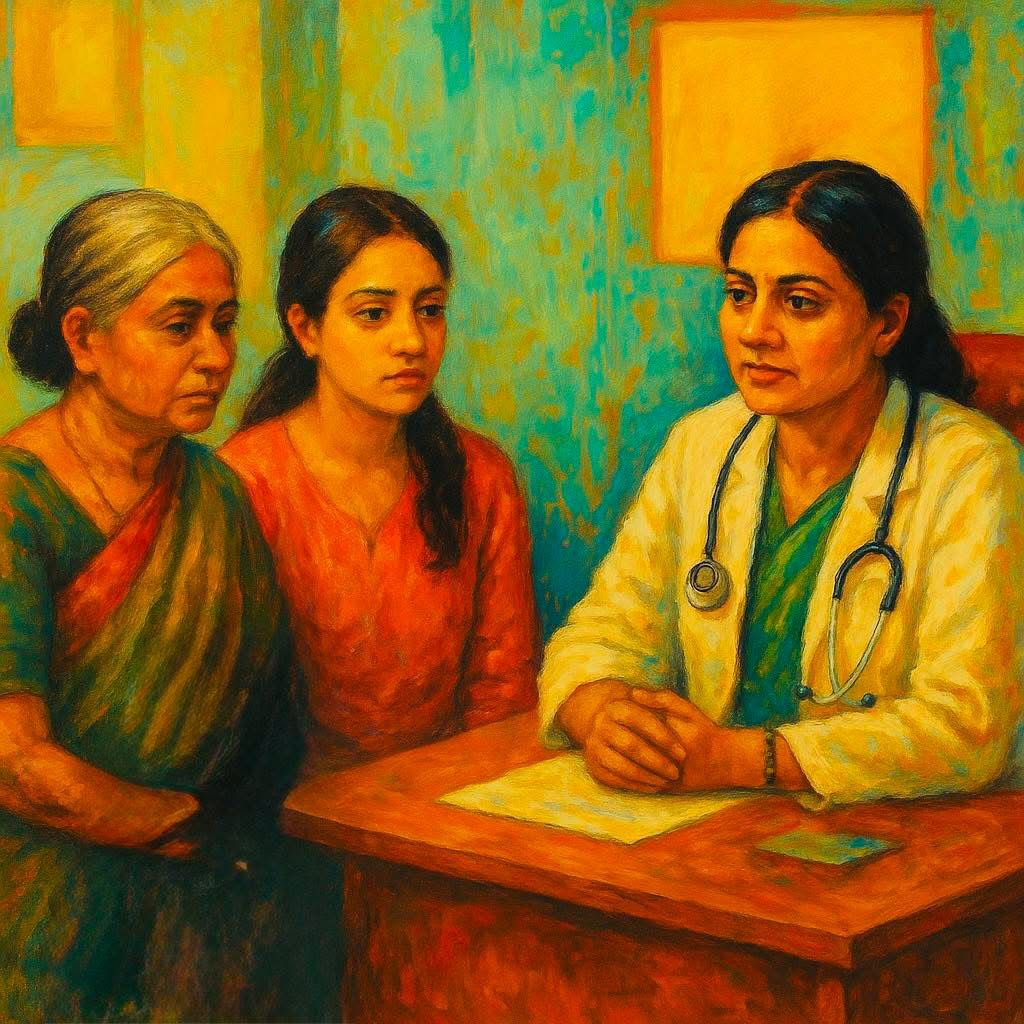
Iska “uterus” to thik hai na? (Is her uterus alright?)

I am not a gynecologist. So, it took me a few moments to digest this question. It was thrown at me by a young patient’s mother who had accompanied her. For a few seconds, I was stumped and could not comprehend what exactly was being asked.

I paused for some time, still failing to understand.

I asked her again, “What do you mean?”

“I mean, is the uterus in good condition?” she reiterated.

As I looked at her, the person vanished, and a uterus replaced her in the chair across the table. I imagined a uterus with two dainty feet sitting cross-legged with a delicate bag and sunglasses, demanding a check-up from me. I guess her mother saw her the same way.

From her perspective, the uterus was the main character. The uterus would determine the future prospects of her daughter in our society. The uterus was not just a uterus; it was a guarantee of security, almost a status symbol.

If anything needed to be preserved with care in her daughter’s body, it was the uterus.

More than her heart, for what does the heart matter in practicality?

More than her mind, for women with their own mind are not an asset but a liability.

More than her soul, because who cares about it?

Now, most of you must be thinking that it is such an innocuous statement. Why am I making a big deal about it? What is so abnormal about a mother wanting to know about the condition of her marriageable daughter’s uterus? That is so normal.

But I guess nowadays the definition of normal has changed.

The abnormal has become so normal that it is almost abnormal to question it!

The uterus, as it appears, is a great equalizer in our society. It does not matter whether one is fair or dark, rich or poor, educated or uneducated, a working woman or a homemaker, financially dependent or independent; the uterus seems to take precedence irrespective of everything.

But should it?

Perhaps it is time we adjust that lens. A woman can not be defined by one organ. She is her mind, her spirit, her dreams, her compassion, and her contribution. The uterus is just a part of her story, but how can it be the whole?

I wish I could tell my patient’s mother that the uterus is the great paradox of a woman’s life. It is both the crown and the chain—hailed as her liberator, yet binding her in the very same breath.

The saddest part is that I know that deep down she probably knows it too.

©️Dr. Aparna Govil Bhasker
A PAGE FROM A DOCTOR’S DIARY

God does His bit too!

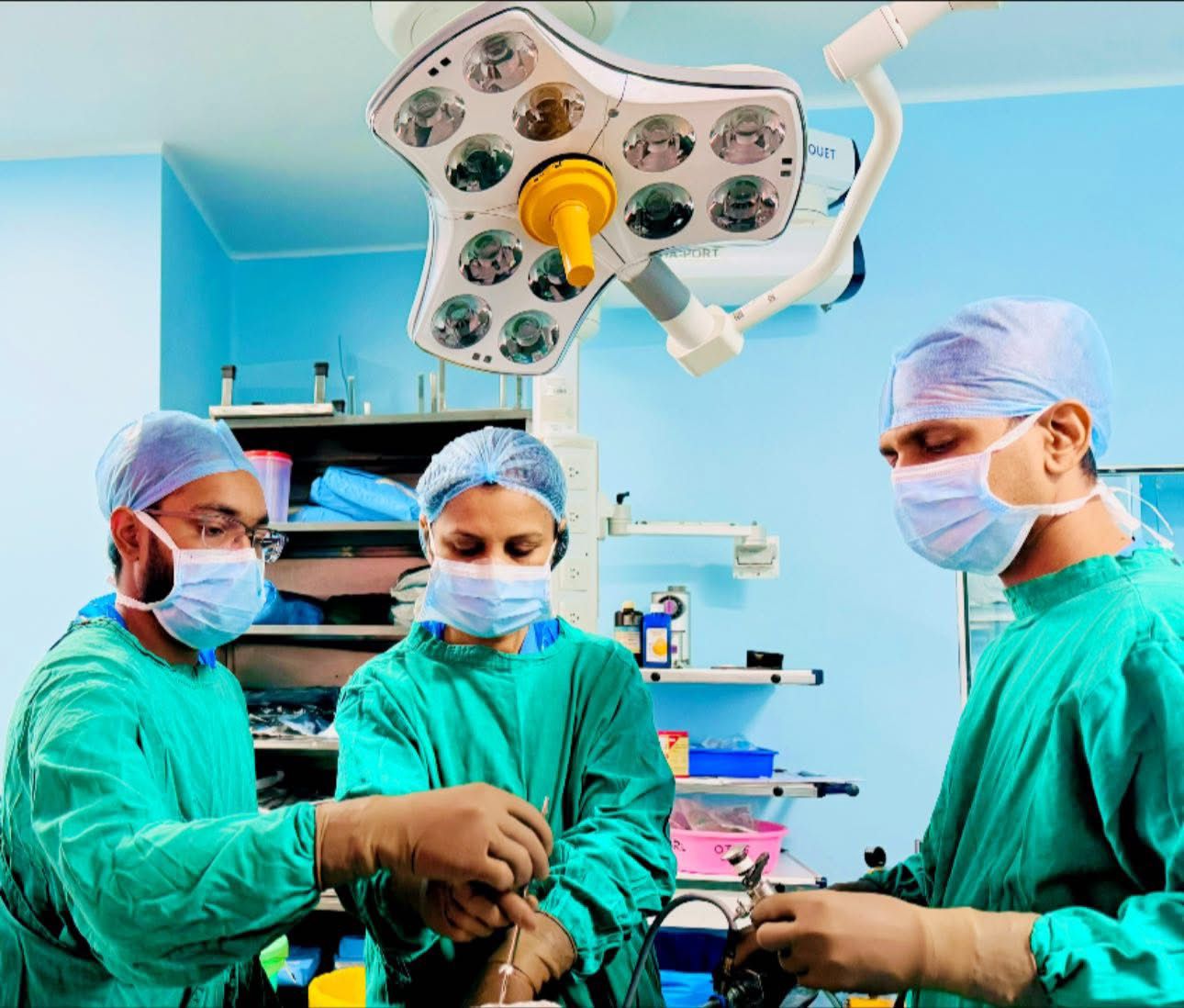
As surgeons, we are trained to give nothing but our best. In surgery, striving for perfection is a given- It is the ultimate non-negotiable aim. From the very beginning of our training, we are taught that the first time is the only time—the best time.

We are told that second chances are rare. The instinct is always to fix everything , to make things right, to find a way forward.

Yet, now and then, there are moments in the operating room when we feel horribly stuck—when every option seems to have been exhausted, and defeat stares us squarely in the eye.

In those moments, doubt creeps in, time seems to stretch, and the weight of responsibility feels heavier than ever.

In the early years of our careers, the urge is to fight for control, to act, to do something—anything—that will “fix” the situation.

But as time goes by and we gain experience, we realize that not everything needs to be forced into place. Many times, if left alone, things have a way of settling themselves.

Sometimes, not trying too hard is the best thing we can do for our patients.

Just as in life and relationships, many a time the wisest choice is to let it be, to accept, and to trust.

Better surgeons are those who have the maturity to know when to act and the wisdom to know when to wait.

Often, nature has its own plan. The body has a remarkable and an almost magical ability to heal, sometimes slowly, but almost always surely. And when science reaches its limits, faith steps in.

Doctors are not God, but we realize with time that every now and then, God does His bit too.

©️Dr. Aparna Govil Bhaskerr

Beyond the prescription

Beyond the prescription

©Dr. Aparna Govil Bhasker

I’ve always enjoyed talking to my patients, and as much as I love surgery, I truly cherish my time in the OPD. However, the time available in the OPD is limited, and we need to cover a lot in those precious few minutes with each patient. As healthcare professionals, we often become laser-focused on providing well-meaning advice and delivering a neat looking prescription (a challenge in itself for any doctor! Thank God for the digital softwares!). By the end, we feel we’ve fulfilled our duty.

As our practice grows and the number of patients increases, the time spent with each patient tends to become shorter, or the waiting list grows longer. Both scenarios lead to decreased patient satisfaction. But it’s not just patient satisfaction that takes a hit—our own job satisfaction suffers too. Over time, frustration starts building on both sides, and we all know where that leads to.

In recent months, I’ve felt that tension growing within me. I began to question: if I wasn’t feeling satisfied with the consultations, what were my patients walking away with? As obesity care specialists, were we truly making a meaningful impact when it came to lifestyle changes and behavioural modifications? Despite spending nearly 40 minutes with each patient, it felt like something was missing, like we weren’t reaching the level of progress we aimed for. We were not getting through the way we wanted to.

Fortunately, I’m lucky to have friends who share a similar mindset. When I discussed my concerns with my friend Dr. Tejal Lathia a renowned endocrinologist, she highly recommended the Motivational Interviewing course by Prof. Miller and encouraged me to explore it. Although I’ve been in medicine for nearly 30 years and can confidently say I’m a skilled doctor and surgeon, I must admit I’ve never been formally trained in the art and science of communication.

As a bariatric surgeon and specialist in obesity care, I’ve come to realize that communication is the real game changer. We can perform the most advanced surgeries, but it’s only through consistent and effective communication that we can truly help our patients make lasting lifestyle changes. Without it, both doctor and patient can fall into a cycle of judgment, bias, and blame, which benefits no one.

Yesterday in the clinic, we tried the “person-centered” approach for the first time. “We went beyond seeing the deficits on the patient’s side (3 months post a bariatric operation) such as- staying up late in the night, skipping breakfast, feeling low on energy, avoiding exercise, and neglecting her prescribed supplements.” On a normal day, our usual approach would have been to tell what she was doing wrong, offer well-meaning advice, explain the associated health risks of future complications, give her a prescription and send her off, hoping she’d correct course and be on a better trajectory by her next visit.

However, the person-centered approach encourages curiosity. It teaches us to move beyond assumptions about what we think we already know and what we believe is needed. It invites us to engage in deeper conversations with our patients. “With some gentle prompting, this particular patient revealed that for the past six months, she had been burdened by intense guilt. A close relative’s health had deteriorated after being admitted to a hospital that she had recommended. The financial burden from the medical bills was overwhelming, and the relative’s daughter had to give up her full-time job to care for her mother. This guilt weighed heavily on my patient, robbing her of sleep and triggering a cascade of problems—waking up late, missing meals, low energy, and neglecting self-care. It was also preventing her from feeling or accepting any joy in her own life

She broke down in tears during our conversation, and we discussed the possibility of seeking help from a counselor. While she wasn’t entirely open to the idea, a seed had been planted. She seemed more receptive to make changes to her lifestyle and came up with some solutions on her own. More importantly, she felt understood, and we, as her healthcare team, felt like we had moved beyond simply judging her for not meeting our expectations.

This experience reminded us that as healthcare professionals working with chronic conditions like obesity, we can’t “fix” patients overnight. We can’t just hand out prescriptions and expect perfect adherence. We aren’t in a position to command or take charge of their lives. Our role is to guide them, safely and hopefully enjoyably, towards a destination we both desire. We must acknowledge that life happens to everyone—our patients are no exception.

For those living with obesity, these challenges are often compounded. In addition to everyday struggles, they also face the stigma and bias that come with societal expectations. Patients who have undergone bariatric surgery often feel the weight of taking what is perceived as a “shortcut,” along with the pressure of not meeting expectations, even after the surgery.

As healthcare providers, it’s crucial to make the most of the limited time we have with our patients. Sometimes, the connections we form matter more than the prescriptions we give. Kindness, empathy, and compassion are universally effective tools, often more powerful than any advice alone.

Incorporating motivational interviewing into our practice has the potential to transform not only the patient’s journey but also our own. By fostering deeper connections and helping patients uncover their own motivations, we empower them to make meaningful and lasting changes. As healthcare professionals, we should be open to learning and refining the art of communication at every stage of our careers. It’s not just about enhancing patient satisfaction—this approach brings greater fulfillment and satisfaction to us as doctors too. A well-communicated, empathetic consultation can be the difference between frustration and fulfillment for both parties, ensuring that the care we provide is as effective as the surgeries we perform.

I’m just beginning this journey, but I hope that by sharing my experiences, I can enrich my own path and perhaps make a small difference along the way.

PS: The image is AI generated.

Keep the faith

KEEP THE FAITH

©️Dr. Aparna Govil Bhasker

Last week marked my son’s 11th birthday! We celebrated this milestone with an unforgettable family getaway in Goa. I was hoping to avoid the usual pressure of organizing a birthday party and the works…. (that plan kind of failed as the party eventually did happen after coming back???? ….. but that’s a story for another day!).

Even though we had not planned anything special, it turned out to be a beautiful day. Goa has this lovely vibe filled with joy and happiness and when combined with birthday excitement it gets elevated to a totally different level altogether. Everywhere we went, strangers came up to him and wished him a happy birthday! During lunch, we asked the restaurant to play the birthday song, and almost every guest there joined in singing for him (he was embarrassed, but secretly delighted!).

Later in the evening, we found ourselves on the beach, where a few amateur anglers were casting their lines. Our sunny boy was really keen to try fishing, so we approached them with a birthday request to borrow their fishing rods. They were more than happy to share some tips and let us have a go at it ourselves.

It was the generosity of strangers that truly made the day special and filled it with unexpected joy.

We dedicated his 11th birthday to all the kind “#strangers” in our #gratitudejournal that night.

However, as a parent, the word “stranger”, is associated with a lot of negative connotations. We teach our children to be wary of strangers from a very early age, and rightly so. Most of us (including myself) would skip a heartbeat if we saw our kids interacting with someone unfamiliar. We train them to have a very high degree of suspicion when it comes to strangers and their intent. This is universal. Be it boys or girls. We tell them that no uncle or aunt is “safe”. We expect them to maintain a safe distance from everyone. I think I wouldn’t be exaggerating if I said that we actually teach our children to be suspicious of other human beings from childhood. In doing so, we may inadvertently teach our children to be mistrustful of others from a very young age. This creates a contradiction: we want them to be team players while simultaneously instructing them not to trust people. Children’s brains are not mature enough to navigate such mixed messages, and I can’t help but wonder what kind of adults we are shaping who might carry #suspicion as a core value.

Today our world is hyperconnected and yet human beings are feeling increasingly isolated day by day. We can sit side by side on flights across continents for hours without exchanging a simple “hello.” Be it adults or children, we find more and more comfort in connecting with our screens than with other people. As our world shifts online, we are stepping into uncharted territories of negativity. Unfortunately, the trolls that once lurked beneath bridges have now surfaced online and are crossing boundaries that were once unimaginable. Behind the veil of anonymity, people can unleash a cruelty that is often suppressed in face-to-face interactions. Ironically, as we overprotect our children, we limit their opportunities to engage with others, leaving them more vulnerable to these unseen, cruel forces that can negatively impact their mental health.

Unfortunately, today the acceptable norms of negativity, mistrust and disrespect have reached a new high, with even the leaders of some of the world’s greatest nations engaging in behaviours that undermine their stature. Surprisingly (or not so surprisingly), this increases the ratings of media outlets and news channels, highlighting the disturbing shift in what we as a society accept as entertainment today. It creates a very poor example for the next generation, who are left questioning whom they can look up to.

However, a few lessons I’ve learned in life are that people, by and large, are still kind. Kindness is still the norm… (kidnapping is the exception!). While I’ve experienced a chain-snatching incident once, I’ve had auto drivers return my lost phones four times, sometimes even after a month (yes, I can be a bit absent-minded!). I’ve made friends with strangers—though some of these friendships didn’t last, others have endured for decades. And despite all its negative aspects, our phones have actually helped us stay in touch with childhood friends more easily. Even after 35 years, I still share memories of school days with my group of class five friends on our WhatsApp chat.

Trust has been the foundation of my life. I’ve trusted in the unknown, and magic has happened in my life many times. As my son turns another year older, my wish for him is to receive the gift of trusting in the unknown, in the goodness of strangers, and most importantly, in himself. I hope he learns that while the world has its share of challenges, faith in people and in life can open doors to endless possibilities. I hope that he is able to be realistically optimistic in this fast-changing world of ours.

Life is far too short to get caught up in negativity, and true magic only happens when we keep the faith.

That’s my wish for him— and perhaps a reminder to myself too: to always believe in the beauty of the unexpected and to trust that kindness, in the end, outweighs everything else. Keep the faith, and let life surprise you.

PS: Image is AI generated

AGE IS JUST A NUMBER

By- Dr. Aparna Govil Bhasker

I am a Mumbai girl and nothing defines Mumbai better than its local trains. Over the last few months, I have gradually shifted to using local trains a lot more than my car, which to be honest is more of a burden than convenience, in this over crowded city. Trains are undoubtedly faster when one has to get to multiple hospitals in a single day. Deep down I also feel happy about indirectly reducing my overall carbon footprint and doing my bit for the future generation.

Local train journeys in Mumbai can be quite entertaining and I have come to enjoy them mostly. (Except for the times when one may get crushed to near death!) Very often there are small time vendors selling their goods to the passengers. On one such day, I observed an old lady who walked with the support of a stick. She was extremely frail and bent over. Her head kept shaking with the slightest of movement. She must be in her eighties nearing ninety for sure. As I saw her boarding the train, I thought of getting up and giving her my seat. However, I was in for a pleasant surprise. As she entered the train compartment, she stabilized herself on her stick and took out a dozen colourful bracelets from a worn out bag to sell to the passengers. Now, I am not very fond of jewellary but that day, I felt compelled to buy that bracelet. I paid ten rupees and kept it in my bag, knowing fully well that I will never wear it.

A few days later, I saw her again. Bent over her stick, with her head shaking all the time, there she was. Once again, I felt compelled to buy one of the bracelets. The third time this happened, I saw a glint of recognition in her eyes and a tiny hint of a smile. As she glanced at my empty wrists, none of us needed to say anything.

It has been 3 months since I saw her last. Every time I am in that train, my eyes look for her. I wonder if she is well, as I have no way of knowing her whereabouts.

However, the bracelet has found its permanent place as it lies in my bag. I am not superstitious but it is my lucky charm. A charm that reminds me that age is just a number and it is always possible to earn a respectable living till our last breath. Every time I open my bag, the shiny bracelet looks up at me and inspires me to go on, to work hard and to live life to its best potential. And one day, when I close my eyes forever, I will lie there peacefully knowing that I gave it my best, always.

#HerStory #inspiration #motivation #draparnagovilbhasker