Posts by Aparna Govil Bhaskar

A PAGE FROM A DOCTOR’S DIARY

Together through every step

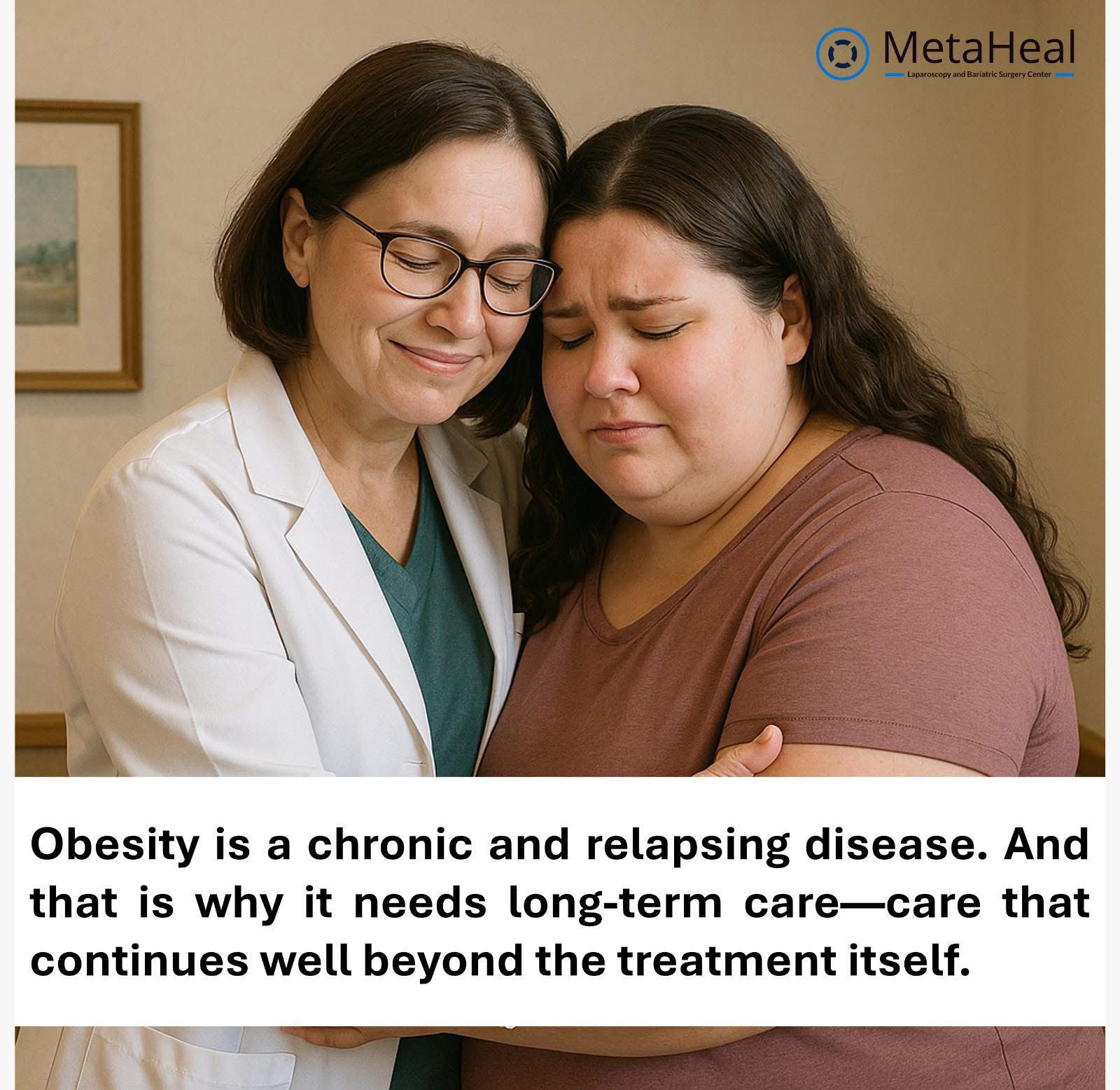
Seven years ago, Anaya walked into our clinic as a young, bubbly girl. She had struggled with obesity since puberty. She chose to undergo a bariatric surgery in the form of a laparoscopic sleeve gastrectomy and stepped into a new phase of life.

Yesterday, she came in for a follow-up consultation—a graceful woman, now married, a mother of two, and running her own business. Over the years, life has changed beautifully for her. But one thing hasn’t changed: her struggle with weight. Unlike many other health conditions, obesity is rarely understood. The frustration, the social pressure, the silent judgment—it can eat you up from inside.

Over the last 7 years, we have walked this journey together as a team—helping her through phases of weight regain after both pregnancies. This time, too, we helped her achieve her weight loss target. Our patients slowly become part of a larger family, and their victories, big or small, mean everything to us.

She told us about the joy and hope she regains with even a little progress, made possible through our support. And as she left, she said, “I really love you for all the support that you have given to me through the years.” Hearing that touched me deeply. It’s moments like these that make all the effort worthwhile.

This journey is not about numbers on a scale. It is about being understood, supported, and never left alone.

Obesity is a chronic and relapsing disease. And that is why it needs long-term care—care that continues well beyond the treatment itself.

©️Dr. Aparna Govil Bhasker

PS- The image is AI generated
A page from a Doctor’s Diary

LOOKING THROUGH THE HOSPITAL CORRIDORS

Hospitals are places where life unfolds in its truest forms—birth, healing, pain, and sometimes loss. For most of us working in a hospital, our days are fast paced. They are measured in patient rounds, surgeries, emergencies, clinics, meetings, academics, audits and reports. In the middle of all this, it is easy to forget that the people who stand beside us, supporting the system in quiet ways, have their own stories too.

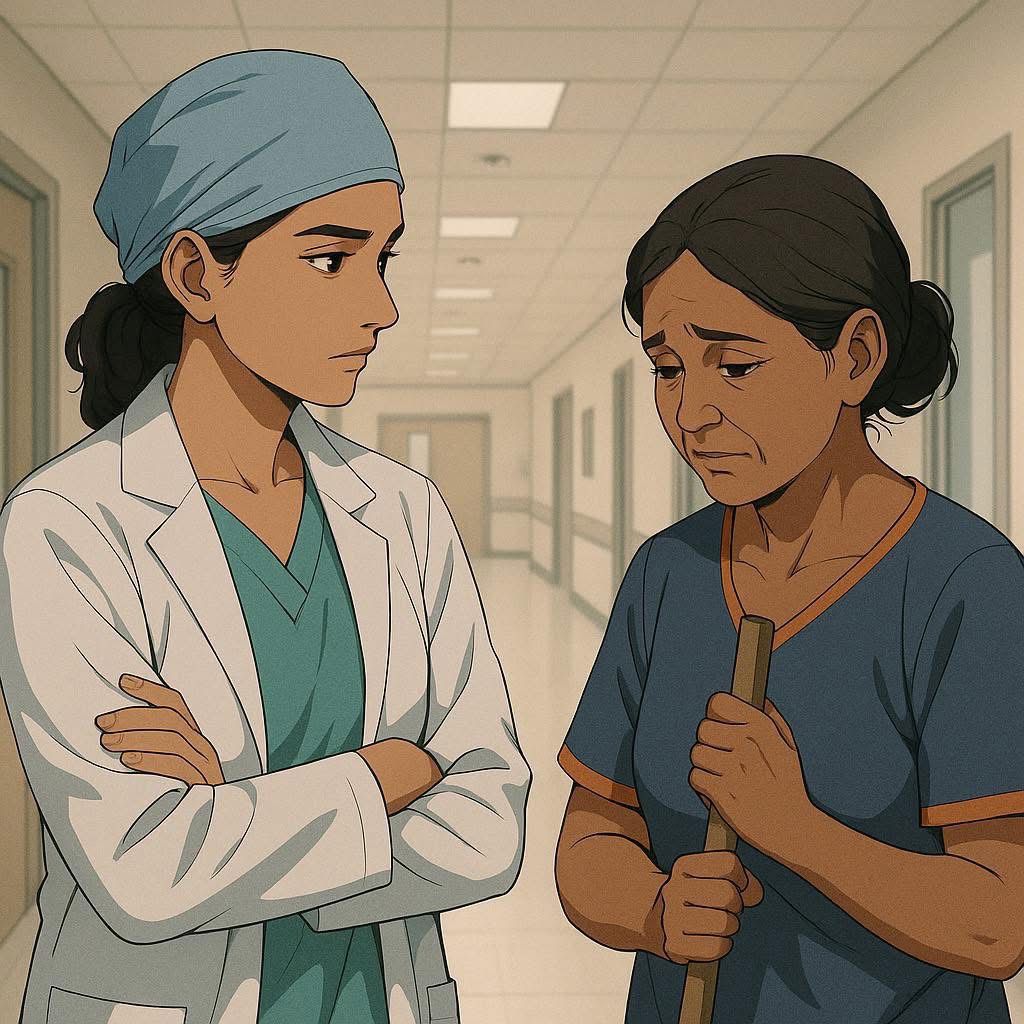
The other day, after finishing a surgery, I happened to overhear one of our support staff members speaking to someone about her married daughter. I was surprised—I had never realized she had a daughter who was already grown up and married. Almost playfully, I asked her if she was soon going to be a grandmother! Her face fell, and with sadness in her voice, she told me that her daughter had recently suffered a miscarriage.

I was taken aback. In that moment, I realized how little we often know about the lives of those who work around us. Even though her thoughts are constantly with her daughter and she grieves quietly, she continues to perform her duties without any fuss. We—the doctors, nurses, and medical teams—are at the forefront. But those who clean the wards, carry supplies, or ensure the smallest of tasks are done, often remain invisible in the system. And yet, they are so important to it—working with dignity while carrying burdens that most of us never see.

That brief exchange was a reminder to me that compassion cannot be limited to patients alone. It has to extend to everyone we encounter in these corridors. Sometimes, all it takes is a pause, a gentle question, or even silent acknowledgment that behind every uniform is a human being with joys, sorrows and unspoken battles.

As carers, we must remember: even carers need care at times. And perhaps the true spirit of healing begins not just in how we treat our patients, but in how we treat each other too.

Joy is already here

This evening, I checked out of a hotel after attending a conference. The check-out counter was super-crowded and the hotel staff looked totally overwhelmed with the sudden rush. Despite their immaculate make up and perfectly draped saris, they looked harrowed and tense. With a frown on their forehead, they gazed so hard into their computer screens, the screens could crack. The stress in the air was palpable. Finally, I checked out and left. During the fifteen minutes’ drive to the airport, my doctor brain kept wondering about the impact of work-related stress in people’s lives.

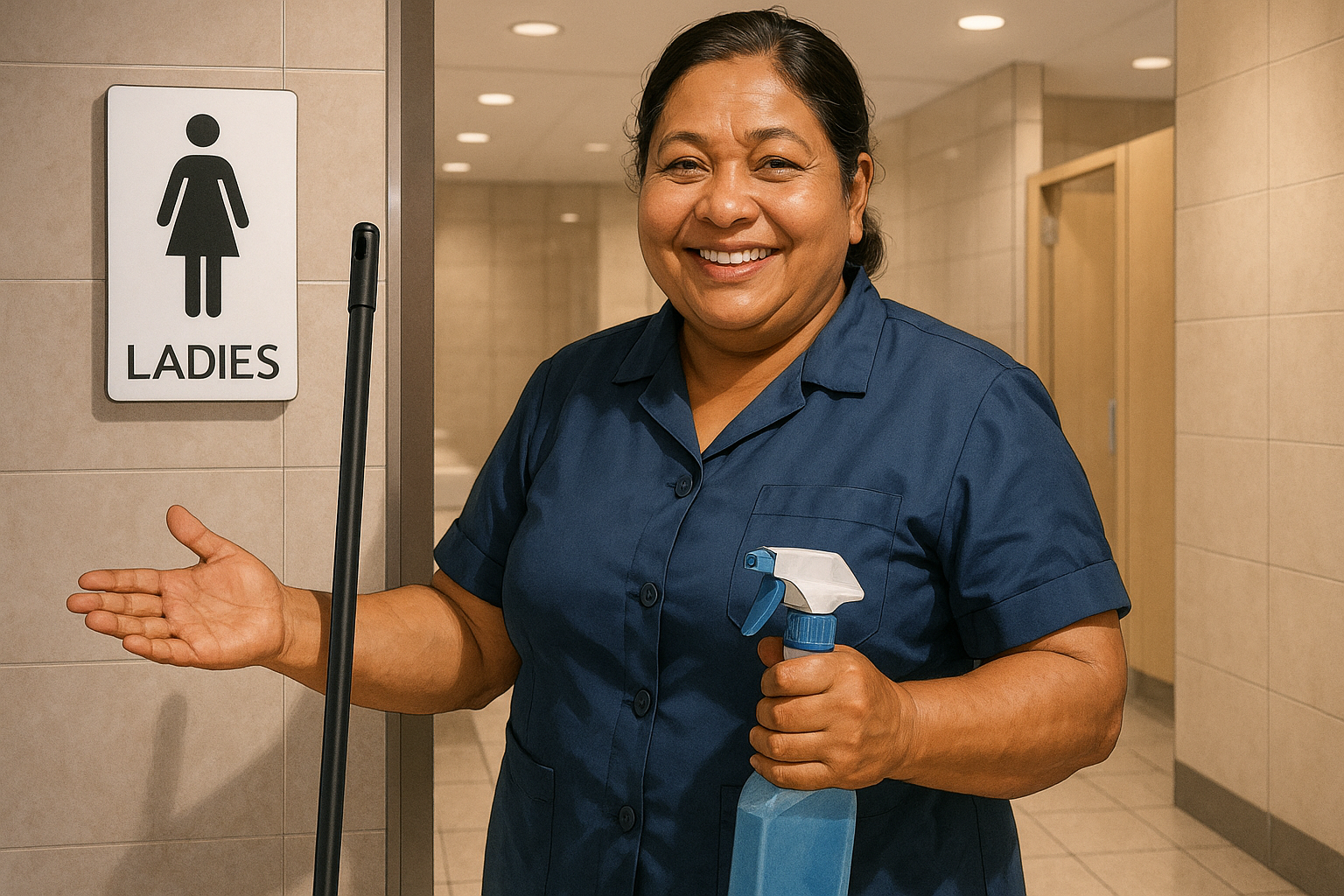
With this trail of thoughts in my mind as I entered the washroom at T1 airport in Delhi, a pair of bright shiny eyes caught my attention. She greeted me with a warm toothy smile. Not only did she welcome me, but she also cleaned the stall before I entered and even offered to flush it for me as there were some mechanical issues with it. For the next ten minutes she chatted with me and every other lady who walked in, her smile constant and the eyes gleaming.

As a token of my appreciation, I offered her a small tip. “Arre didi, It’s alright! No need for this!” I insisted that she take it, for I did not know how else to thank her. Chances were that I would most likely never meet her again in my life.

As I walked out, I realized, that I had just met a human being who was doing one of the most menial jobs in the world. She probably had bigger personal challenges at home. And yet she did it with a smile on her face and expected nothing in return. The washroom was her sanctuary. She welcomed everyone whole heartedly and made sure it was spotless.  It was evident that she found pride and purpose in her work. She was happy and she radiated joy.

We spend much of our lives at work. Yet for many, joy remains elusive — lost in the noise of long hours, office politics, or difficult relationships. We often compartmentalize our existence into “work life,” “family life,” or “social life,” waiting for some perfect day when happiness will finally arrive.

But joy is not a distant destination; it is in every moment. Some people are fortunate enough to find work that they truly love. But most of us can learn to love what we do. When that shift happens, we break free. Every moment — whether at a desk, in a clinic, or even in a crowded washroom — becomes an opportunity to feel alive and at peace.

Then it doesn’t really matter where we work, what role we play, or who our boss is. Joy is not outside; it’s within us. And when it does, it cannot be taken away by circumstances, other people, or the ups and downs of life.

PS: In the journey of life, we sometimes meet people who leave an imprint on our consciousness. I write and share these moments so that they can ripple outward and become part of a larger human experience

©Dr. Aparna Govil Bhasker

The More Things Change, The More They Remain The Same

Soon after we finished the question and answer session in a CME, a doctor came up to me and had a short conversation about weight loss medications.

Then he asked me, “Madam, are you a dietitian?”

I glanced at my colleague, a brilliant surgeon in her own right, and we both shrugged. Some things never change…..

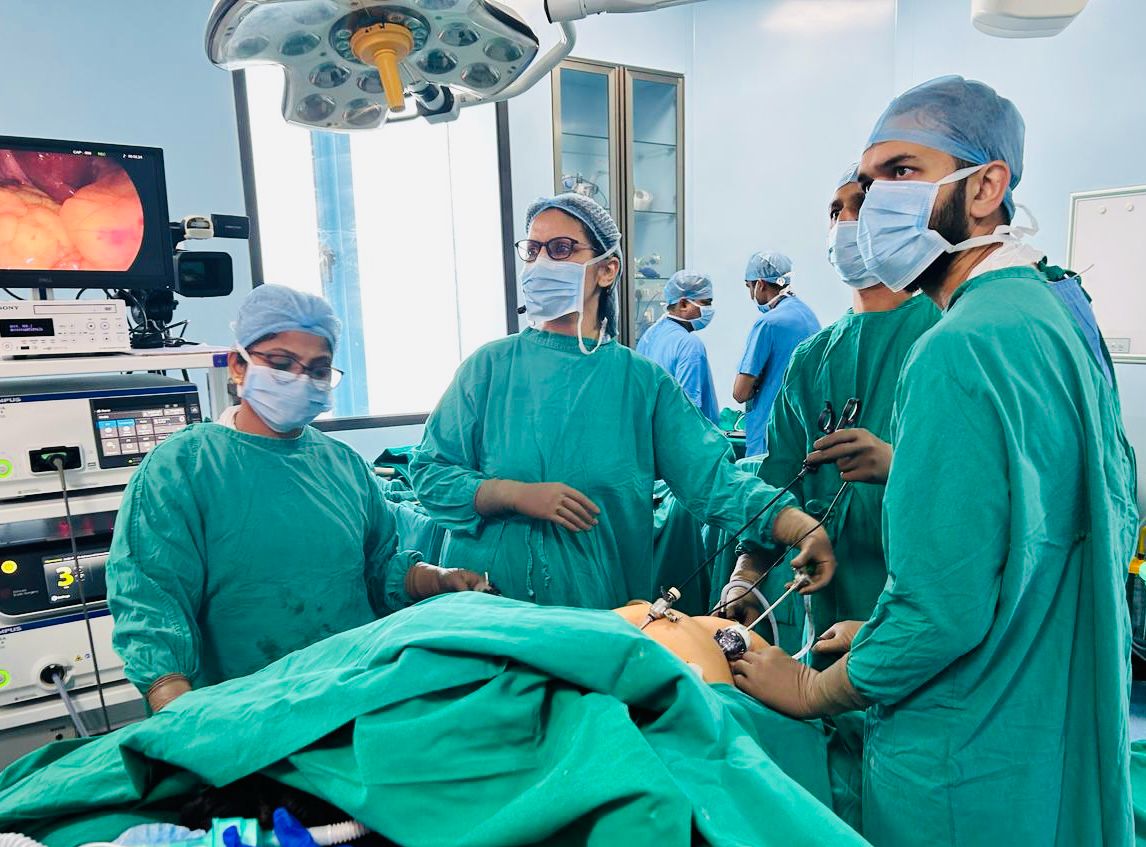
I’ve been a doctor for 25 years and a surgeon for nearly 20. I’ve heard it all. Back in my post-graduate days, I was the only woman in the department of surgery. The general consensus was that I would leave within 6 months and probably waste a precious surgery seat. While the male PGs were proclaimed as “Doctors”, I was the eternal “Sister” throughout.

It was assumed that being a female PG in surgery was just the backdoor to practicing gynaecology in future. When I finally graduated, if people saw me in scrubs, they almost always assumed that I was the anesthetist. There was a lot unsolicited advice about the wrong choice of my chosen profession and ofcourse the assumption that—”Women in surgery never make it to the top.”

Today after nearly two decades, people still do not expect or accept that the woman standing in front of them could actually be a surgeon.

In the early days, I’d get angry and upset. I would react. The whole “sister” or “anesthetist” thing would set me off. But today? I just shrugged and laughed it off.

Because no matter what you call us, we are here—and we’re here to stay.

Women in surgery aren’t just breaking barriers, we’re shattering them. Women are leading departments and organizations, conducting complex surgeries, and showing the world what true excellence looks like. Women surgeons score higher on empathy and compassion.

Research shows that women surgeons actually have better patient outcomes and lower morbidity and mortality. People live longer when they’re treated by women doctors.

So call us whatever you like—but know this: the numbers of women surgeons are rising, the tables are turning, and the world better get used to it.

We’re not just here to stay, we’re here to thrive.

©️Dr. Aparna Govil Bhasker

Down The Memory Lane- My Speaking Journey

©️Dr. Aparna Govil Bhasker

Last week, my son had one of his first serious #publicspeaking assignments at school. As always, he wanted to set a benchmark for himself. With no siblings for comparison, he turned to my husband and me, eager to hear about our speaking experiences—searching for something to measure himself against.

Just before leaving, he asked me, “How did you do in your first public speaking assignment as a child?”

That simple question took me down the memory lane, almost 40 years back. I remembered that the first time I went up on the stage in front of the whole school- ‘I Froze’! ……..My mother had put in so much effort—dressing me up in a beautiful outfit, making me rehearse my lines over and over—but in that moment my heart started pounding and my throat tightened. I just stood there, wordless and helpless.

Things didn’t change much as I grew older. Speaking never came naturally. Making conversation was an effort always and in my primary years I still remember being labelled as a boring kid who was no fun. Conversations felt like a chore, and it was no surprise that no one was particularly eager to sit next to me because I barely spoke.

Later, when I moved to Mumbai after high school, I wasn’t fluent in spoken English, but that was no trouble for me at all. Silence was always my comfort zone. I was so at ease with silence that for almost six months, I hardly spoke at all.

….But life has a way of pushing us beyond our safe spaces.

In today’s world, no matter what field you choose, public speaking isn’t optional—it’s essential. As a doctor, I have to teach, deliver lectures, present research at conferences, and speak at public awareness programs. And now, in 2025, making an impact also means stepping onto social media and create content—an idea that, for someone like me, has always felt daunting. I’ve always been camera shy and hated being on video.

My first public lecture as a doctor was nothing short of a disaster—riddled with awkward pauses, filled with “hums” and “ho’s”, and very shaky confidence. It fell flat.

But with every speaking opportunity, I improved—little by little, step by step. Today, I can hold my own on stage and pass as a decent speaker at any meeting. I know that there is still plenty of room to grow (just ask my 11-year-old son, who finds my videos painfully boring). He’s my toughest critic, and he doesn’t hold back! But as compared to before, I’ve evolved, and shed many inhibitions behind.

So, what changed?

It didn’t happen overnight. There was no magical transformation. It was a slow, organic process that unfolded over years.

Practice was key. Every opportunity, no matter how small, was a chance to refine, to cut out distractions, and to find my rhythm.

Observing other speakers played a crucial role. I watched them keenly—how they carried themselves, how they engaged their audience, how they used humour and pauses and tone to create impact. Every great speaker had something to teach, and I absorbed those lessons over time.

Expertise and #experience made a difference. When you know your subject inside and out, the words flow more easily.

Confidence took years to build. At first, I had to fake it. Then, I started feeling it. Now, I carry it with me.

But the real turning point was finding my own #Authenticity. The day I stopped trying to sound “perfect” and started embracing my own voice was the day everything changed. It didn’t matter if my voice was too soft or if I wasn’t the most polished speaker in the room. When I spoke from the heart, when I truly believed in what I was saying, people stopped noticing the imperfections. They just listened to what I was saying.

And now, as I watch my son step onto his own path, I know he will have his moments of doubt. He will stumble, just as I did. But I also know this—he will find his voice. He will shape his words. And one day, he will stand tall, speak with conviction, and own his space—just like I learned to do.

Because confidence isn’t about never being afraid. It’s about showing up, speaking up, and allowing yourself to grow- bit by bit- into the person you were meant to be.

Cheers!!

The Unseen Struggles

©Dr. Aparna Govil Bhasker

I am continuously trying, but I feel like I’m constantly failing.”

This was the first thing she said when we started talking about her weight issues. She was a 32-year-old working mother of a 16 months old baby girl, struggling with obesity, exhaustion written all over her face. Every day was a battle between juggling work, home, baby and her own well-being.

Her day started early, rushing through chores before heading to work. She worked long hours, returning home only by 9:30 p.m. By then, her little girl—who had been waiting for her all day—wanted all her mother’s time and attention. And how could a mother say no? She played with her, fed her, and held her until she fell asleep. Then came the household tasks—cleaning up, preparing for the next day, squeezing in a few moments of personal time before finally collapsing into bed, usually around 1 a.m. And the cycle repeated, day after day, month after month.

The weight kept piling on. She desperately wanted to prioritize her health. She knew she needed to exercise, eat better, and get proper sleep. But by the end of the day, there would be no time and energy left. She had tried waking up earlier to fit in a workout, but sheer exhaustion made it impossible. She tried to meal prep, but something always got in the way. Life was like an express train without brakes.

As doctors, we often advice our patients to aim for balance—to have a structured schedule, to eat clean, to work out, to prioritize sleep hygiene, to make time for themselves. But in real life, especially for women who are juggling work, home, and motherhood, is balance truly possible? Advice alone is not enough. What women really need is, tangible support—partners who share responsibilities, workplaces that accommodate their realities, families that step in when needed.

She looked at me, eyes filled with frustration and exhaustion. “I know I need to do better. I want to. But I just don’t know how.”

And I had no perfect answer for her. Because the truth is, she wasn’t failing—she was surviving. Every single day, she showed up, doing her best for her child, her work, and her home. In the process she could not do justice to herself. As doctors, we often find ourselves helpless in bridging the gap between the ideal and the reality of lived experiences.

She didn’t need more advice. She needed reassurance. She needed to hear that she was already doing enough and things will eventually get easier and better. That she wasn’t alone. That her worth was not tied to a number on the scale or the hours spent exercising. Because balance isn’t about perfect schedules—it’s about grace. It’s about finding kindness for yourself in the midst of chaos.

As doctors, we must remember that medicine is not only about prescriptions and protocols—it’s about people. We need more compassion, more acceptance, and a deeper understanding of the lives our patients lead. Because sometimes, healing is not just about more advice—it’s simply letting them know they are seen and heard.

She sighed, stood up, and adjusted the bag on her shoulder. “I’ll try again,” she said softly.

And I hoped that, someday, the world would make it easier for women like her.

#WorkingMoms #StrugglesOfMotherhood #ObesityAwareness #MoreThanWillpower #SupportMatters #BalanceIsHard #HealthBeyondAdvice

THE WEIGHT YOU DON’T SEE

Nineteen dietitians! That’s how many my patient had consulted before she walked into my clinic today for a consultation for #weightloss. She had tried everything—calorie counting, portion control, intermittent fasting, medical diets, naturopathy, —only to be met with the same assumptions: She must be eating too much. She must not be trying hard enough. It must be her fault.

“On one single day, eight different people commented on her weight. That night, she couldn’t sleep. Not because of hunger or discomfort, but because their words replayed over and over in her mind, louder than any diagnosis she had ever received.”

As a doctor, I see this all too often. People think that obesity is all about #gluttony and #sloth. Unfortunately, society has reduced obesity to an oversimplified equation: Eat less, move more. But if it were that easy, wouldn’t obesity have disappeared from our world by now?

The reality is far more complex. Obesity is a chronic, progressive condition influenced by genetics, hormones, metabolism, medications, gut microbiota, mental health, and more. Stress, sleep deprivation, and medical conditions all play a role. Food is just one of the many factors.

Yet, people tend to cling to this oversimplified narrative. They love to offer unsolicited advice without understanding the struggles that a person with obesity goes through. They don’t see the crushing frustration of doing everything right and still not seeing results. They don’t know what it’s like to wake up every day in a body that everyone feels entitled to judge. They don’t know the exhaustion of carrying not just extra weight, but the #shame and #stigma that is added to it.

I wish people would stop assuming. I wish they would see the person before the weight. And most of all, I wish they would understand—sometimes, the heaviest burden is not the body itself, but the weight of their words.

#ObesityAwareness #StopTheStigma #HealthNotJudgment #MoreThanFood #ChronicCondition #EndWeightBias #CompassionOverCriticism #MindYourWords #ObesityIsComplex #SeeThePerson #Bariatric Surgery #DrAparnaGovilBhasker

The Problem with Dominant Voices

©Dr. Aparna Govil Bhasker

Over the past week, I have been trying to figure out what is my real issue with the recent statement made by L&T Chairman, Mr. S. N. Subrahmanyan, proposing a 90-hour workweek. It’s not just him; similar sentiments were voiced by Mr. Narayana Murthy last year. Even our beloved superstar Shah Rukh Khan, has often proclaimed that success demands sacrifice (sleep etc is for lowly mortals). The underlying message seems clear: to achieve greatness, one must be willing to pay the ultimate price.

There is no denying that these individuals are extremely influential figures in their fields. They are overachievers, highly successful, and immensely respected. Their opinions carry a lot of weight. And while much of the world erupted in outrage over Mr. Subrahmanyan’s statement, there is a significant faction of society nodding in agreement, wondering what the whole fuss is about. Some think that the whole conversation about work-life balance and Gen Z (or Gen alpha or beta or whatever you want to call it!) is overrated. Many would agree that staring at your wife for too long could actually make you feel headier and more imbalanced and it may be better to stare at your laptop instead! Some may not even have the luxury of making a choice to have balance in their lives as they struggle to make ends meet and couldn’t care less.

I’d like to address this issue from two perspectives: as a doctor and as a person.

As a doctor who has endured gruelling 40-hour shifts, I speak from experience. A 90-hour workweek translates to working 13-15 hours a day, depending on whether one works six or seven days a week. And we are talking about forever…… For corporate companies, this is a dream—a committed, overworked employee (almost a slave) willing to forgo sleep, health, and personal life for the bottom line. But for individuals, it’s a catastrophic health hazard. It defies everything we’ve learned in medical school and preach in our clinics. On the one hand, we advise people to sleep well, manage stress, eat healthy, and exercise. On the other, these voices of influence are urging people to do the exact opposite. The irony is almost laughable, except it’s not. I am actually wondering if I got it all wrong as a doctor for the last 30 years!

Let’s break it down: prolonged work hours increase the risk of chronic illnesses such as hypertension, diabetes, obesity and cardiovascular diseases. Sleep deprivation leads to impaired cognitive function and mental health issues like depression and anxiety. Burnout—a term we’ve become all too familiar with—is real and devastating. In fact, the World Health Organization recognizes burnout as an occupational phenomenon. So, while we’re pushing people to work themselves to exhaustion in the name of success and national progress, we’re simultaneously creating a public health crisis. Isn’t it alarming how frequently we hear nowadays about dynamic, ambitious, and seemingly unstoppable young CEOs succumbing to untimely deaths in their 40s? And these are CEOs. What about the average employee who does not even have a voice or a choice in the system?

Consider where India stands on the global happiness index—a dismal rank of 126 out of 145, already near the bottom, reflecting widespread dissatisfaction and declining mental well-being. Compare this with several Asian economies, such as Japan and South Korea, where long working hours have historically been glorified. These countries have witnessed a dramatic rise in depression rates, suicides, and a significant decline in happiness levels. The correlation between overwork and deteriorating mental health is well-documented, yet we seem intent on repeating the same mistakes. At this rate I am not so sure about the economy but we will definitely touch the bottom of the happiness index in the next few years! Not a goal we should aspire for!

Overworking the young workforce today will only exacerbate health problems, reduce productivity, and strain healthcare systems tomorrow. Sacrificing well-being for short-term economic gains is not just shortsighted—it’s stupid and reckless.

Now, as a person, I can’t help but wonder: what is the purpose of all this sacrifice? What is the definition of success? For every Shah Rukh Khan who glamorizes and glorifies sacrifice, there are countless stories of people who’ve lost their health, relationships, and joy chasing an ever-elusive dream of so called success. What’s the point of a rising GDP if the individuals contributing to it are physically and emotionally broken? As a mother, I can’t help but wonder—what would I truly want for my child? The thought of him growing into high-achieving individual is certainly appealing, but in my heart, I want him to find contentment and happiness above all else.

This brings me to the crux of the matter: the responsibility of dominant voices. When influential figures speak, their words carry power. They inspire, shape opinions, and influence decisions. But with great power comes great responsibility. What you believe personally and what you propagate as a leader are not the same. Personal philosophies can remain just that—personal. However, once you speak publicly, your words take on significant weight and gravitas. Corporate leaders and company owners have considerable influence, and when they share certain views, there’s often an element of power play involved. These are the men (and women) in power. What they say has to be followed (usually) otherwise there is always a fear of being cancelled officially or unofficially.

Statements like “work 90 hours a week” or “success demands sacrifice” are not mere opinions; they set dangerous precedents. They risk normalizing (sometimes idolizing) unhealthy behaviours and creating a culture where overwork is equated with worthiness and tends to bring validation from others. Leaders need to understand that their influence extends far beyond boardrooms and fan clubs. They have the power to inspire positive change or reinforce toxic practices.

So, my plea to those with dominant voices is simple: think before you speak. Understand the impact of your words. Success does not need to come at the cost of health and happiness. Sacrifice is not a badge of honour when it leads to suffering. As leaders, please champion a culture of balance and well-being, because a thriving nation is built not on overworked, burned-out individuals, but on healthy, fulfilled, happy and inspired citizens.

Above all, please don’t be dominating and loud, be kind and considerate.

#WorkLifeBalance #MentalHealthMatters #PublicHealth #SustainableSuccess #HealthyWorkCulture #OverworkIsNotSuccess #SayNoToBurnout #ResponsibleLeadership #ToxicWorkCulture #HappinessOverHustle

The Power Of A Common Man

THE POWER OF A COMMON MAN

©Dr. Aparna Govil Bhasker

My husband and I have always divided our household chores equally. If I order vegetables, he orders the fruits. If our cook doesn’t show up, either one of us can step in to cook. If I teach our son math, he takes him for the tennis class. And if I have a challenging day at the hospital, he makes sure to order something nice for dinner. This balance has been the rhythm of our lives for almost two decades.

The other day, I overheard him ordering fruits on the phone. We’ve been getting our fruits from Guddu for over five years. We first became regulars at his small roadside shop, and later, he started delivering fruits directly to our home. He knows our preferences and always brings us the best of the lot. If certain fruits aren’t good that season, he’ll always let us know. Now we don’t even need to check on anything. He is extremely trustworthy and that’s the kind of relationship we’ve shared with him for years.

This time, however, the phone conversation seemed unusually long. After the list of fruits, words like Bajaj, Tata, Reliance, stocks, equity, and investments floated through the air. Curious, I listened for a bit longer and realized my husband wasn’t just ordering fruits—he was giving Guddu investment advice! I must say that this exchange between my white-collar husband and Guddu, our trusted fruit vendor, left me both amused and was deeply thought provoking.

This small interaction left me reflecting on two things. The first was about the relationships we form with people in our extended community. Over time, we had come to trust Guddu with our fruits, and in return, Guddu trusted my husband with his finances and investments. These bonds, built on mutual respect and trust, add so much richness to our lives. They go beyond mere transactions and bring a sense of connection in an increasingly impersonal world.

In today’s age of impersonal and faceless online deliveries, where convenience is king, these human interactions are often lost. While digital apps offer unparalleled efficiency—allowing us to receive groceries and everything else under the sun (from a to z!) at the click of a button—they lack the warmth, trust, and familiarity that come with personal interactions. Every call to Guddu isn’t just about fruits—it’s an opportunity for a meaningful conversation that can inspire and uplift. Such moments of connection reduce loneliness, decrease stress, and bring genuine happiness. In a fast-paced world, they remind us of the joy of slowing down and forming real relationships within our universe.

The second thought was about the evolution of the common man. Here was Guddu, a fruit vendor, discussing stocks and investments with ease. It was inspiring to see how even someone from modest means has an aspiration to secure a better future. Guddu’s aspirations for growth, his awareness of financial tools, and his willingness to seek advice speak volumes about the changing mindset of the common man in India.

He wasn’t just saving money—he was thinking about growing it. This reflects a profound hopefulness, not just for himself but for the next generation. He has no hesitation, no shame in asking for help, and a deep-seated belief in striving for something better. It’s a lesson for all of us: ambition, curiosity, and openness to learning can transform lives.

Guddu gives me hope. He truly embodies the dialogue of Shahrukh Khan—“Don’t underestimate the power of a common man.” He reminds me that the drive to improve, the courage to ask, and the willingness to grow are not limited by one’s circumstances or educational/financial status. It’s this spirit that makes the common man so extraordinary and inspires us all to believe in a better tomorrow.

Reflections 2025

©Dr. Aparna Govil Bhasker

As we step into 2025, a quarter of this century has already passed. It’s fascinating to reflect on the world of 1925, a hundred years ago, and to imagine what it might look like a hundred years ahead, in 2125. We are but travellers on the infinite road of time, covering a brief stretch before passing the baton to the next. Life in this universe, in its essence, is like a relay race—each generation carries the baton for a while before handing it over to the next, ensuring the journey continues.

And yet, in this grand relay, we often overestimate our importance. At most, we remember those who handed us the baton—perhaps one or two generations before us. But beyond that, the faces and names fade into obscurity, and eventually, all of us will be forgotten, our footprints washed away by the endless tides of time.

In our eagerness to sprint ahead, we sometimes miss the beauty around us—the vibrant moments, the connections, the simple joys that line the path we are traveling. We run so fast, striving for purpose, recognition, or legacy, that we tire ourselves out, forgetting that the race is eventually a relay and isn’t ours alone to finish.

This tendency to overestimate our role, to focus solely on forward motion, is uniquely human. Other living beings don’t run this race of overthinking; they simply exist, savouring the world around them. Whether this is a blessing or a curse depends on how we approach it. While it can inspire progress, purpose, and meaning, it can just as easily lead to stress and dissatisfaction. Perhaps the key lies in finding harmony—learning to embrace our unique drive while also taking the time to pause, reflect, and appreciate the journey.

As the new year begins, let’s resolve to run differently—not just for speed or significance but with awareness, gratitude, and a deep appreciation for the journey itself. After all, the baton will eventually be passed, whether we like it or not. Let’s ensure that while we hold it, we cherish the view and make the run worthwhile.

Here’s to a year of mindful traveling through life. Happy New Year!

Beyond the prescription

Beyond the prescription

©Dr. Aparna Govil Bhasker

I’ve always enjoyed talking to my patients, and as much as I love surgery, I truly cherish my time in the OPD. However, the time available in the OPD is limited, and we need to cover a lot in those precious few minutes with each patient. As healthcare professionals, we often become laser-focused on providing well-meaning advice and delivering a neat looking prescription (a challenge in itself for any doctor! Thank God for the digital softwares!). By the end, we feel we’ve fulfilled our duty.

As our practice grows and the number of patients increases, the time spent with each patient tends to become shorter, or the waiting list grows longer. Both scenarios lead to decreased patient satisfaction. But it’s not just patient satisfaction that takes a hit—our own job satisfaction suffers too. Over time, frustration starts building on both sides, and we all know where that leads to.

In recent months, I’ve felt that tension growing within me. I began to question: if I wasn’t feeling satisfied with the consultations, what were my patients walking away with? As obesity care specialists, were we truly making a meaningful impact when it came to lifestyle changes and behavioural modifications? Despite spending nearly 40 minutes with each patient, it felt like something was missing, like we weren’t reaching the level of progress we aimed for. We were not getting through the way we wanted to.

Fortunately, I’m lucky to have friends who share a similar mindset. When I discussed my concerns with my friend Dr. Tejal Lathia a renowned endocrinologist, she highly recommended the Motivational Interviewing course by Prof. Miller and encouraged me to explore it. Although I’ve been in medicine for nearly 30 years and can confidently say I’m a skilled doctor and surgeon, I must admit I’ve never been formally trained in the art and science of communication.

As a bariatric surgeon and specialist in obesity care, I’ve come to realize that communication is the real game changer. We can perform the most advanced surgeries, but it’s only through consistent and effective communication that we can truly help our patients make lasting lifestyle changes. Without it, both doctor and patient can fall into a cycle of judgment, bias, and blame, which benefits no one.

Yesterday in the clinic, we tried the “person-centered” approach for the first time. “We went beyond seeing the deficits on the patient’s side (3 months post a bariatric operation) such as- staying up late in the night, skipping breakfast, feeling low on energy, avoiding exercise, and neglecting her prescribed supplements.” On a normal day, our usual approach would have been to tell what she was doing wrong, offer well-meaning advice, explain the associated health risks of future complications, give her a prescription and send her off, hoping she’d correct course and be on a better trajectory by her next visit.

However, the person-centered approach encourages curiosity. It teaches us to move beyond assumptions about what we think we already know and what we believe is needed. It invites us to engage in deeper conversations with our patients. “With some gentle prompting, this particular patient revealed that for the past six months, she had been burdened by intense guilt. A close relative’s health had deteriorated after being admitted to a hospital that she had recommended. The financial burden from the medical bills was overwhelming, and the relative’s daughter had to give up her full-time job to care for her mother. This guilt weighed heavily on my patient, robbing her of sleep and triggering a cascade of problems—waking up late, missing meals, low energy, and neglecting self-care. It was also preventing her from feeling or accepting any joy in her own life

She broke down in tears during our conversation, and we discussed the possibility of seeking help from a counselor. While she wasn’t entirely open to the idea, a seed had been planted. She seemed more receptive to make changes to her lifestyle and came up with some solutions on her own. More importantly, she felt understood, and we, as her healthcare team, felt like we had moved beyond simply judging her for not meeting our expectations.

This experience reminded us that as healthcare professionals working with chronic conditions like obesity, we can’t “fix” patients overnight. We can’t just hand out prescriptions and expect perfect adherence. We aren’t in a position to command or take charge of their lives. Our role is to guide them, safely and hopefully enjoyably, towards a destination we both desire. We must acknowledge that life happens to everyone—our patients are no exception.

For those living with obesity, these challenges are often compounded. In addition to everyday struggles, they also face the stigma and bias that come with societal expectations. Patients who have undergone bariatric surgery often feel the weight of taking what is perceived as a “shortcut,” along with the pressure of not meeting expectations, even after the surgery.

As healthcare providers, it’s crucial to make the most of the limited time we have with our patients. Sometimes, the connections we form matter more than the prescriptions we give. Kindness, empathy, and compassion are universally effective tools, often more powerful than any advice alone.

Incorporating motivational interviewing into our practice has the potential to transform not only the patient’s journey but also our own. By fostering deeper connections and helping patients uncover their own motivations, we empower them to make meaningful and lasting changes. As healthcare professionals, we should be open to learning and refining the art of communication at every stage of our careers. It’s not just about enhancing patient satisfaction—this approach brings greater fulfillment and satisfaction to us as doctors too. A well-communicated, empathetic consultation can be the difference between frustration and fulfillment for both parties, ensuring that the care we provide is as effective as the surgeries we perform.

I’m just beginning this journey, but I hope that by sharing my experiences, I can enrich my own path and perhaps make a small difference along the way.

PS: The image is AI generated.