Posts by Aparna Bhasker

MY REFLECTIONS ON THE SEASIDE

Endearing is the innocence of childhood that believes in the pure joy of creating castles of sand. Children don’t get demotivated when these castles are washed away by the waves of the sea. It is inspiring to see their enthusiasm about making another one the next day and another one and another one….

I wonder when did adulthood swallow the joys of childhood.

Its pure joy to see the youth playing beach football. Oblivious of the world around them, they exhalt in the moment. There is no need for a fancy ground, nor branded shoes or a trophy coach.They don’t play to win, they play for friendship and fun.

I envy their carefree moments.

Its beautiful to see a group of friends celebrating a birthday on the seaside. There is lovely music playing on one of their phones, a cake is waiting to be cut and selfies ready to be taken. Its only friends who can make one feel so special!

I miss my friends.

Its lovely to see a young couple and another old couple content in each other’s company. The young ones have a whole life ahead of them and older ones have already lived a lifetime. Both realize that its a privilege to have someone special to go back to at the end of the day!

I count my blessings.

There is a lot more… the sun sets to rise again, the moon starts shining far away, the waves calm down, the birds go back home. Its the end of the day and it’s reassuring to see that despite all that is happening around us, life goes on, undithered, lovingly…enthusiastically.

There is a lot to be thankful for.

Dr. Aparna Govil Bhasker

THE HELPLESSNESS OF THE HELPERS

THE HELPLESSNESS OF THE HELPERS

The recent suicide by Dr. Anoop Krishna, a 35 years old orthopedic surgeon from Kerala brings to fore some very pertinent issues.

It takes decades of hard work to achieve a medical degree and many more decades to earn a reputation and goodwill in the society. Unfortunately, today all it takes is one surreptitious photograph or an offensive video for years of toil to go down in the drain. Character assassination of doctors to tarnish their reputation on social media is becoming increasingly common when the outcomes of treatment are not favourable.

Complications are a part of all surgeries and they are not the same as negligence.
We understand that for the concerned family it is difficult to come terms with the loss of a loved one. However, resorting to violence, character assassination and threatening, is completely uncalled for. As per IMA, almost 75%of doctors in India have faced some form of violence. 68% of this violence is caused by the escorts of the patients.

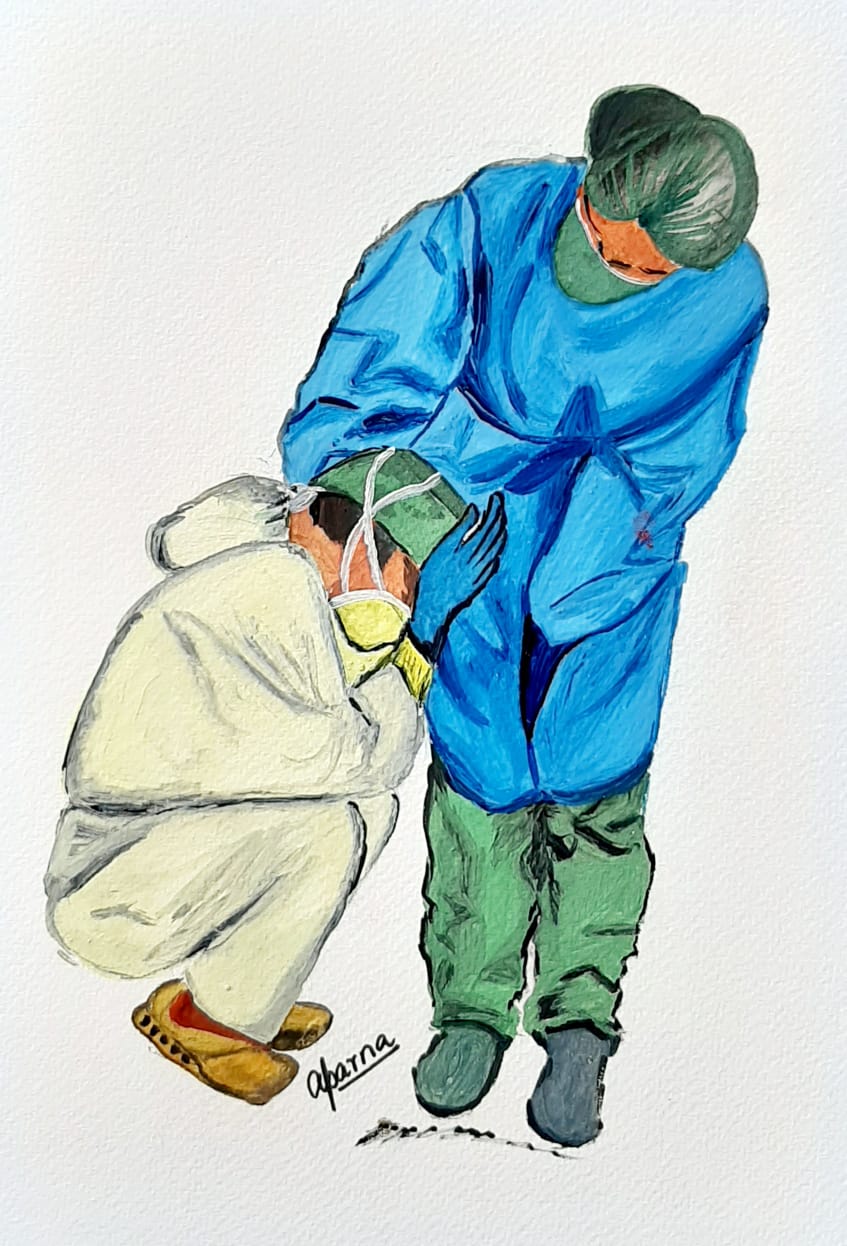
Losing a patient is never easy for any doctor too. Constantly working with sickness and death eventually takes an emotional toll. Increasing levels of stress in a doctor’s life is not only damaging to them but also to their spouses and families. In the case of Dr. Anoop Krishna a son lost his father, a wife lost her husband and the community lost a humane and talented doctor.

He scribbled the word “sorry” on his bathroom wall before he breathed his last. When one doctor is pushed to a suicide, hundreds are pushed away from medicine. And even a million sorries by the society will not be able to make up for this loss.

Dr. Aparna Govil Bhasker

A SURGEON’S PRAYER

©️ Dr. Aparna Govil Bhasker

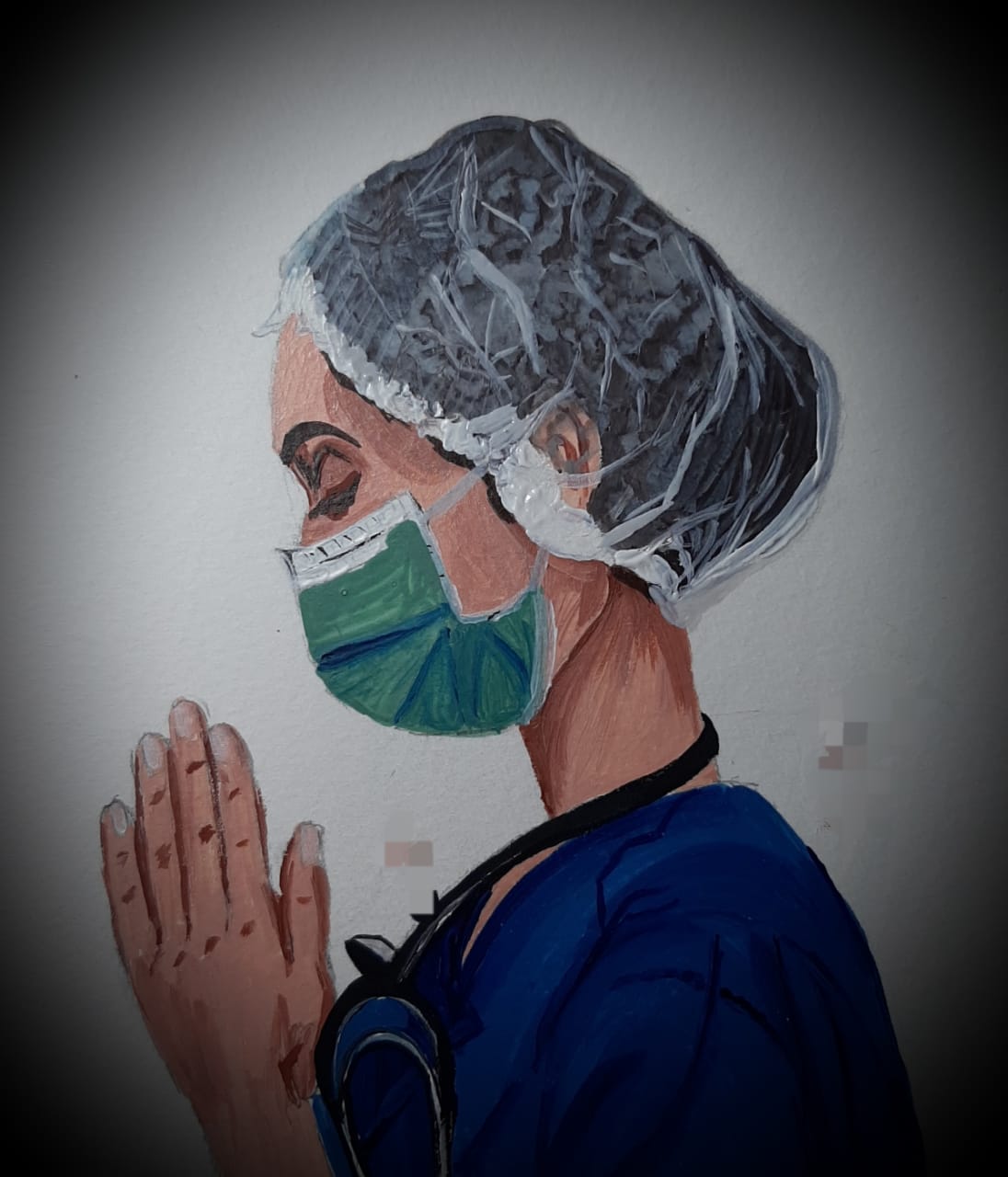
Dear people, every time I hold a knife in my hand to begin a surgery, I close my eyes and pray….

I pray that I am kind to you, who, lays in front of me, and I am as gentle as I can be,

I pray that my hands dont tremble as they sew, and I cause no pain & suffering to thee,

I pray that I always do right by ye, and dont waver in taking decisions taken by me,

I pray that I use my skills for your service and clarity doesn’t evade me,

I pray that my judgement may never be blurred and I may be blessed to win health from disease,

I pray that I have no fear and I can bring the light of life back from the darkness of death and that I do no harm in the process,

And at the end of it all, I pray that may God almighty give me strength to cope up, if things were not to go our way today.

Dr. Aparna Govil Bhasker

DO WE REALLY DETACH OURSELVES?

As doctors we confront disease and death on a daily basis. People think that we get used to death and loss over time. Unfortunately that is not true. Although we are advised from the beginning to cultivate detachment, it is not as easy as it sounds. Showing emotions is considered to be a sign of weakness, but most of us fail miserably when it comes to detaching our personal lives from professional life. There are many sleepless nights and some cases stay in our hearts forever. For years, we think about what we could have done differently to change the outcome. However, grief is not a luxury that we are granted as many more lives await our care and we have no other choice but to get back to work the next morning.

In reality, deep down most of us continue to mourn the losses much more than we can ever celebrate the daily victories. Eventually, this leads to emotional exhaustion and physician burn out. We need to break the professional taboo around expressing this unacknowledged grief. While we provide support groups for so many health issues, we also need to develop groups to support doctors and healthcare workers to help them overcome their daily stress and grief.

Dr. Aparna Govil Bhasker

Help us to help you

At the last count, 573 doctors in India have lost their lives during #Covid19 pandemic. Doctors groups on social media carry new #obituaries everyday. And yet, the medical community continues to fight the battle not only against Covid 19 but also against the hundreds of pre existing diseases. In this fight between disease and death, there is only one wall and that is the healthcare community. There is a dire need to strengthen this wall in every aspect for if this wall falls, there can be no hope.

Unfortunately, today we are witnessing even more cases of violence against doctors. As much as it harms the medical community, ultimately it will prove to be more harmful for the society and its future generations.

While the medical community rises above all barriers and continues to answer the call of duty, all we ask for is a little bit of #compassion and understanding . We are together on this journey and ultimately there is only one thing that can get us all through and believe me, it is not a #vaccine…….. “It is #empathy”.

Dr. Aparna Govil Bhasker

Obesity and Metabolic Surgery Society of India (OSSI) Recommendations for Bariatric and Metabolic Surgery Practice During the COVID-19 Pandemic

Very proud to be a part of this committee of experienced bariatric surgeons in India to help in formulating these important guidelines for resumption of #bariatricsurgery during the ongoing COVID 19 pandemic.

#Obesity has emerged as one of the most serious risk factors affecting the severity and prognosis of COVID 19 infection. Till date, Bariatric surgery remains the only effective option for sustained weight loss in patients suffering from clinically severe obesity. These guidelines will help surgeons to prepare for possible recommencement of bariatric surgery in a safe manner for patients suffering from obesity.

Kudos to the leadership of our President OSSI- Dr. Manish Khaitan for guiding us and ofcourse to Dr. Sandeep Aggarwal for threading this extremely important document together.

Let’s hope that this pandemic settles soon and in the meantime we do right by our patients as we resume bariatric surgery across the country.

Please click on the link to read the guidelines-

https://rdcu.be/b6pTh

TWO INCIDENTS- ONE PERSPECTIVE

Just as the lockdown opened up, my husband and I resumed our daily morning walks. On one Sunday morning, we were just about a hundred meters from our complex and two bikers came in and snatched the chain from my neck. Before we could react they fled. Later we were told that rising unemployment and misery during the lockdown has led to an increase in the crime rates. Everyone said, it’s not safe anywhere, anymore. We need to be cautious and we must not trust anyone.

After a few days, while I was on the way to the hospital, my car broke down on the highway. Though the lockdown had lifted, there were hardly any people on the road. Those days and even now, it’s a night mare to get hold of a taxi. Patients were waiting for me at the hospital and there were continuos calls to ask when would I reach. There was no way a mechanic could reach us before an hour. As the driver tried to fix the car, I stood out hoping and praying that somehow we could get a mechanic soon. After a few minutes an uber taxi driver stopped of his own accord. He came over to help us and pushed the car as we tried to jump start it. It was deserted with just the three of us on the highway and I was already getting uncomfortable. Eventually, much to my chagrin, i had no choice, but to request the cab driver to drop me to the hospital. In my mind, I thought that considering my desperation he would definitely try to fleece me and charge a lot more. I was totally convinced that it was for this reason he had stopped to help us in the first place. Also, cabbies were hardly getting any rides those days and this would be an easy way to make an extra buck. These are desperate times. Well, as long as I could get to the hospital at the earliest and start seeing patients, I didn’t mind paying more. Throughout the journey I was very cautious as those days there were hardly any people on the road and I didnt want to have another horrible experience. I kept my phone close to me, just in case…..

Finally we reached the hospital and asked him how much did I need to pay. I was totally taken aback when he refused to take any money. He said that he just wanted to help me and also especially because I was a doctor. I felt exposed as though he had read my suspicious thoughts during the ride, but I was also pleasantly surprised. It rekindled a faith that I seemed to be losing.

These are difficult times. Desperation is in the air. Crime rate is rising and I experienced it first hand, however it is heartening to see that there are many people who are going beyond themselves to help others. It is easier to help when God blesses us with plenty, but much harder to help and be considerate when there is nothing in your own house. That taxi driver taught me to keep the faith in humanity.

……Because to stay alive we need to believe and we need to have faith. Life is a mix of good and bad. We cannot avoid either, but it’s for us to choose whether we want to see a glass that is half full or half empty.

©️Dr. Aparna Govil Bhasker

CHANGE IS THE ONLY CONSTANT

©️Dr. Aparna Govil Bhasker

I grew up in a small town and one of my favourite childhood memories is about heading out to this small nearby village on my bike. I had a favourite spot there. A beautiful tree by a lake. I would usually take a book with me and just enjoy my time reading, lost in the world of stories. I must have been about ten years old at that time. Later I would cycle around the village and come back to our house which was in a government colony a couple of miles away. It was pure bliss. The freedom, the independence, the safety, the peace and the beauty of being so close to nature.

I moved to Mumbai 25 years ago, and the contrast couldn’t have been bigger. This is the city of opportunities. Life is fast and happening here. This city doesn’t fail you if you can work hard. There is something different about being in Mumbai. It instills a different kind of confidence in you. After all these years now I feel that, I cannot live in any other city. But I do miss the old days and cherish old memories. And…. ofcourse, being able to be close to nature in Mumbai is a luxury.

In this journey of life, everything is changing constantly irrespective of whether we want it that way or not. I learnt early in life that there are bigger plans in place than our own petty plans. We have to stop struggling and allow those plans to take over to be peaceful. All we can do is make sure that we cherish every yesterday and look forward to every tomorrow.

Today ofcourse is a beautiful day!!

A Dose of Realistic Optimism for Surgeons

“Action, heroism, certainty and optimism”, are some of the key tenets of surgical culture all across the world. However, in today’s times surgeons have been compelled to cope up with, “inaction, fearfulness, uncertainty and some degree of pessimism”. To say that COVID-19 pandemic has disrupted the very foundation of healthcare would probably be an understatement. 

These are uncertain times and “fear” is the dominant emotion, ruling the minds of people across the world. In the absence of a precedent and adequate data to rely on, decision making is one of the most challenging tasks today. Most governments across the world chose to freeze, as did most of the big businesses. However, the only profession, where decisions cannot be deferred is medicine. As doctors we do not have the luxury to defer and have to take split second decisions all the time. Decision making during Covid 19 pandemic is probably one of the biggest tests that all of us have had to face. 

At the beginning of the pandemic, surgical associations across the world were quick to act. Guidelines were drawn and circulated at a lightening pace. However, at the ground level, each of us have had to grapple with taking decisions on a daily basis and it has been a lonely exercise. Along with clinical dilemmas we have also had to deal with moral and ethical dilemmas. Should we be focusing on what could go wrong or refocus on what could go right? Would it be smarter to be pessimistic at this time than being optimistic? Could being optimistic be a liability at this time? How should we think about the future? What are the implications for patients and for surgeons? I have personally struggled with many of these questions over the last few months.

Taking a decision to get a surgery done is not an easy one. Patients and their families derive a lot of clues from the surgeon’s demeanour and body language which helps them to take these decisions. As I mentioned earlier, even the smallest of surgical procedures can lead to grave complications and rarely can even lead to mortality. As the complexity of the operation increases, so does the chance of having complications. Most patients and their families suffer from optimism bias and despite being informed about complications during a consultation, they tend to filter the information related to bad news. Hence the onus is on the surgeon to drive the point home. In an increasingly litigious environment, surgeons have to tread carefully on the fine line between being optimistic and being brutally honest.   

Well, the solution to this conundrum may probably be found in realistic optimism. I have always believed that surgery is a very humbling branch. While surgeons may be vested with the power to cure many diseases, all of us are well aware that however skilled and experienced we may be, we can never get to a hundred percent. We all know that failure can strike us at anytime. Sometimes it could be because of an unintentional mistake and at other times we just lose to the forces of nature. Law of averages eventually catches up with all of us some day. Despite this awareness, most of us choose to go on. We take all risks into account and perform new operations every day. Should we attribute this to heroism? I guess our non-surgical colleagues may agree to that. However, being a Bariatric Surgeon myself, I know that what drives us is not heroism, but optimism. Not just optimism, I would say that it is actually realistic optimism that drives most surgeons.

So, what is realistic optimism and how do we apply it to the surgical practice? How is it even more relevant in today’s times?

Optimism is a necessity. However, unrealistic optimism can sometimes be misconstrued as having a non challant and uncaring attitude. In worst case scenarios, unrealistic optimists may be treading on waters of denial. When it comes to surgery or taking surgical decisions this would translate into ignoring possible risks and complications and focusing only on the positives. In a scenario where things may not go our way, it comes as a shock to the patient and their family. Despite the good intent of the doctor/surgeon, this forms for a perfect setting for a litigation. During the Covid-19 pandemic not taking the added risk into account would border onto sheer foolhardiness.

On the other end of the spectrum is unrealistic pessimism. Unrealistic pessimists would go on to highlight the negatives much more than the positives. They would downplay the possible benefits of a particular procedure and focus a lot more on the side effects and complications. While it is important to keep our patients informed, it is also necessary to have some perspective. Treatments and surgical operations only come into common practice when their benefits are significantly more than the risks. No doctor deliberately wants to harm their patients but sometimes in trying to be honest we may tip over the scales to being too pessimistic. An over defensive doctor may unknowingly take away hope and push the patient into denying treatment. I would not shy away from saying that during this pandemic many of us have veered into the realm of unrealistic pessimism which may have unknowingly affected the disease outcomes for our patients. Only time will tell whether this was for good or bad.

This finally brings me to the middle ground and we all have to ultimately choose between being realistically pessimistic and realistically optimistic. Being realistically pessimistic is considered as a safe zone for certain professions and surgery is one of them. It is said to prepare patients and their families better for any eventuality. It also takes the onus of liability away from the doctor/surgeon. As surgeons we are an integral part of the tragedies of our patients and their families. Being realistically pessimistic helps us to maintain a certain degree of detachment which is necessary for our own survival. It prevents over involvement and protects surgeons as they venture into the unfamiliar territory of taking high stake decisions. Realistic pessimism is the sentiment which is ruling through the Covid-19 pandemic across all surgical specialties. There can be no arguments against it and in the present times, it is probably the most sensible way to proceed.

All said and done, doctors are human too. What ails the world today, ails us too. However, we also have to move forward and rise to the occasion to do right by our patients. We have to take the risks into account but ultimately, we have to move towards resilience. As we do this, we have to take our patients and their families along with us on the road to realistic optimism. While personal impact of negative outcomes can never be compared to statistics of complications, as doctors/surgeons we cannot take away hope from millions of patients. Just as patients must be made aware of all possible negative outcomes, they must also be made aware of the tangible benefits of the treatment being offered. Risk taking is a part of the journey towards a better life. As surgeons we become a part of this journey alongwith our patients. We have to help them to be able to objectively weigh the pros and cons and reach to a decision taken mutually for their betterment. Being realistically optimistic helps to ease the tension for a patient and their family and clear a partially cloudy disposition. At times carefully chosen words of optimism may be just the ice-breaker that was needed in order to reach to a life-saving decision.

Covid-19 pandemic is being considered as the Black Swan of 2020. Healthcare is at the forefront in this battle. As we wade through these troubled waters the need of the hour is to move away from panic and paranoia. We have to approach this challenge with increasing resilience and realistic optimism. We have no option but to become comfortable with ambiguity. None of us will be a hundred percent right or wrong in our decisions but ultimately whatever happens, in our hearts we must know that whatever we are doing is in the best interest of the people that we are serving.

Author: Dr. Aparna Govil Bhasker; MBBS, MS

Bariatric and laparoscopic surgeon, Mumbai

Email: draparnagovil@gmail.com

Mobile: +919819566618

A guest article contributed for Upsurge- Association of Surgeons, Nagpur.

THE NOWHERE PEOPLE

They were everywhere and yet they were nowhere,
They were invisible and yet their presence was felt most profoundly,
They created the skyscrapers and yet had no roof on their heads,
They took care of our kids while theirs cried of hunger,
They walked for thousands of miles, while we took months to arrange for a few trains,

They were the nowhere people… and all they ever wanted was, to go home to be loved and feel safe just like all of us.

©️Dr. Aparna Govil Bhasker

कहते हैं कि लाइफ में कुछ चीजें सदाबहार होती हैं

” कहते हैं कि लाइफ में कुछ चीजें सदाबहार होती हैं “,

©️ Aparna Govil Bhasker

बचपन वाली शैतानियों कि मस्ती कि चमक आखों में जब दिखे तो सदाबहार होती है,

दोस्तों के बेकार सा जोक सुनाने पर भी जब एक मीठी सी हंसी आ जाऐ तो सदाबहार होती है,

भाई बहन की नोक झोंक और दादी की कहानियाँ तो हमेशा ही सदाबहार होती हैं,

चाहे रोटी सूखी हो, पर अगर माँ के हाथ की बनी हो तो सदाबहार होती है,

पहले प्यार की याद आने पर चहरे पर आइ हल्की सी मुस्कराहट सदाबहार होती है,

खुले आसमान में उड़ती चिडियाँ और कभी बादलों का गरज के बरसना भी सदाबहार होता है,

ऋतुओ का बदलना, फूलों का खिलना और मुरझाना भी सदाबहार होता है,

दिन ढलता है तो रात आती है, रात के बाद सुबह का आना भी सदाबहार होता है,

कौन कहता है कि इस रात की सुबह नहीं, यह रात भी निकल जायेगी दोस्तों ….. कयोंकि यही सच है कि कुछ चीजें लाइफ में सदाबहार होती हैं।

©️ Dr. Aparna Govil Bhasker