Posts by Aparna Bhasker

HAPPY NURSE’S WEEK

As a young and inexperienced intern, my first surgical knot was taught to me by an OR nurse.

After I joined surgery, my first breathless day in minor OT was supervised by a senior nurse who could do the excisions and sutures seamlessly and took pride and interest in teaching the young ones in surgery (believe me no one even looked at us at that time).

As the only female PG in the whole surgery department, they were my best buddies, and after a long day in OR when no canteens would be open, I always knew where to look for food and always found it there without fail.

As I became a surgeon, their watchful eyes and insights during surgery helped prevent many a complications and I will always be grateful for that.

Always more systematic and always more dedicated, our nurses work silently day in and day out with the just one goal in mind and see to it that, “every patient on their watch gets the care that they deserve”.

Here’s to the innumerable cups of coffee, the shared tiffins and all the little and sometimes big favours that you have done to us!

Wish you all a very Happy Nurses Day!! We love you all! 

Metabolic surgery for treatment of Diabesity- A reality


Dr. Aparna Govil Bhasker

Bariatric Surgeon, Mumbai


“A picture speaks a thousand words”.

diabetes care book

In February 2016, the cover page of Diabetes Care, one of the best international journals in the field of diabetes, carried a picture of a surgery being performed in the military hospital in the first world war. This was not only the first time, surgeons featured on the cover of a medical journal, but this entire issue was a special article collection dedicated to “metabolic surgery and the changing landscape of diabetes care”.

Quintessentially, diabetes has been a medical disease, traditionally treated with pills and injections. Metabolic surgery in mumbai for the treatment of type 2 diabetes is a novel concept that has come to fore in the recent years. In 1978, Dr. Henry Buchwald from Minnesota, USA defined metabolic surgery as the operative manipulation of a normal organ or organ system to achieve a biological result for potential health gain [1]. Today, the term metabolic surgery is typically used to describe surgical procedures to treat type 2 diabetes and other components of metabolic syndrome.

Though the concept is not very new and has been around for about 30 years now, medical community has been very slow to warm up to the idea of metabolic surgery. Way back in 1995, Sir Walter Porries from USA, published a provocative paper – “Who would have thought it? An operation proves to be the most effective therapy for adult onset diabetes” [2]. In the same year-“metformin”, the wonder drug of diabetes treatment was discovered. While metformin went on to be the most commonly used drug in the diabetes spectrum, metabolic surgery still remains one of the most underutilized treatment option. 

Lack of proper evidence has been cited as one of the reasons for the slow uptake of metabolic surgery. In addition to all the other evidence, in the recent years we have level 1 evidence in the form of eleven randomized controlled trials that have compared metabolic surgery with best medical management in overweight and obese patients. One hundred percent of these studies have shown that when it comes to over weight and obese patients, metabolic surgery is far superior in achieving glycaemic control [3]. In 2015, an Italian researcher compiled results of metabolic surgery in more than ninety thousand diabetic patients. In this study more than 71% diabetic patients achieved remission after metabolic surgery [4]. By remission, I mean that these patients had normal fasting blood glucose and HbA1c levels despite no medications for at least one year. Metabolic surgery has also been shown to lead to a significant improvement in high blood pressure and patients are six times more likely to reduce ≥ 30% of their blood pressure medications after surgery [5]. It is needless to say that metabolic surgery leads to an improvement in metabolic and inflammatory profile and decreases the long-term cardio-vascular risk in this patient population. With data and results available for almost one hundred thousand obese diabetic patients, I think it is time that we put the argument about lack of evidence to rest.

In 2015, a landmark meeting was held in London where 48 international scholars came together and formulated guidelines for metabolic surgery. It is important to note that out of 48, 75% of the voting delegates were non-surgeons. The voting panel mainly consisted of diabetologists, endocrinologists and physicians along with a few academic surgeons. These guidelines have been endorsed by 54 international societies across the world, many of which are diabetes societies. Diabetes India is one of them [6]. In 2017, the American Diabetes Association (ADA) accepted these guidelines as an integral part of management of type 2 diabetes [7].

The ADA guidelines for metabolic surgery are as under:

  • Metabolic surgery should be recommended to treat type 2 diabetes in appropriate surgical candidates with BMI ≥ 40 kg/m2 (BMI ≥ 37.5 kg/m2 in Asian Americans), regardless of the level of glycemic control or complexity of glucose-lowering regimens, and in adults with BMI 35.0– 39.9 kg/m2 (32.5–37.4 kg/m2 in Asian Americans) when hyperglycemia is inadequately controlled despite lifestyle and optimal medical therapy.
  • Metabolic surgery should be considered for adults with type 2 diabetes and BMI ≥ 30.0–34.9 kg/m2 (27.5–32.4 kg/m2 in Asian Americans) if hyperglycemia is inadequately controlled despite optimal medical control by either oral or injectable medications (including insulin).

The ADA also acknowledged that obesity management delays the progression of pre-diabetes to diabetes and is also beneficial in treatment of type 2 diabetes. They also said that modest weight loss reduces the need for glucose lowering agents.

Despite great results, presence of evidence and guidelines from the ADA, metabolic surgery is not even being performed for 1% of the eligible patient population who stand to benefit from this. I believe that the biggest reason for this is lack of awareness. People are still not aware about the potential benefits of this therapy. I agree that surgery comes with a risk of anaemia, calcium and vitamin deficiencies but these are preventable with a good follow up and team approach. The advent of laparoscopy has reduced the mortality rate by ten folds as compared to open surgery and the overall complication rate after a Roux-en y gastric bypass is about 3.4% which is about the same as that of a gall bladder or a knee surgery. It is up to us to choose the trade off between preventable nutritional deficiencies and a low complication rate after surgery with potential complications of remaining obese and diabetic in the long term. Given a choice I would rather have my patients on multi-vitamin, iron and calcium supplementation rather than being on insulin or in worse cases kidney transplants, angioplasties, amputations etc.

There is also a contention that even after metabolic surgery, the weight along with diabetes comes back after a few years. Approximately one-third of the patients do experience a relapse or recurrence after a median 8.3 years. I would say that this is not bad at all. 8.3 years of disease-free interval has the potential to yield significant long-term cardiovascular benefits. Metabolic surgery is not an absolute “cure” but it does buy the patient almost a decade of good quality of life and has the potential to push back the expected complications of diabetes.

In conclusion, metabolic bariatric surgery in mumbai is a powerful tool for the treatment of obese diabetics. There is a substantial body of evidence that is showing that surgery on the GI tract yields better glycemic control in this patient population as compared to medical management alone. The role of gut in diabetes is being studied and is a hot topic across the world. Hopefully we shall have some tangible answers in the near future to explain the mechanisms behind diabetes remission after surgery. In the meanwhile, the medical community needs to break down walls and start building bridges so that the best possible therapy is advised to the patients. It is important to be cognizant of the burden that this burgeoning epidemic of diabesity is adding to our healthcare system. Diabetes and obesity are a deadly combination and although we cannot guarantee a cure, we can atleast endeavour towards getting a better glycemic control and quality of life. Metabolic surgeons and diabetologists/endocrinologists need to work in conjunction to provide the best treatment options to their patients.

Although it is true that ultimately it is He who heals, we as doctors must give our best to our patients.


References:

  1. Buchwald H. Metabolic surgery: a brief history and perspective. Surg Obes Relat Dis.2010 Mar 4;6(2):221-2.
  2. W J PoriesM S SwansonK G MacDonaldS B LongP G MorrisB M BrownH A BarakatR A deRamonG IsraelJ M Dolezal. Who would have thought it? An operation proves to be the most effective therapy for adult-onset diabetes mellitus. Ann Surg. 1995 Sep; 222(3): 339–352.
  1. Viktoria L Gloy et al. Bariatric surgery versus non-surgical treatment for obesity: a systematic review and meta-analysis of randomised controlled trials. BMJ 2013;347:f5934
  2. Panunzi S, De Gaetano A, Carnicelli A, Mingrone G (2015). Predictors of remission of diabetes mellitus in severely obese individuals undergoing bariatric surgery: do BMI or procedure choice matter? A meta-analysis. Ann Surg 261:459–467
  1. Schiavon CABersch-Ferreira ACSantucci EV et al. Effects of Bariatric Surgery in Obese Patients With Hypertension: The GATEWAY Randomized Trial (Gastric Bypass to Treat Obese Patients With Steady Hypertension). 2018 Mar 13;137(11):1132-1142.
  2. Rubino FNathan DMEckel RH et al. Metabolic Surgery in the Treatment Algorithm for Type 2 Diabetes: A Joint Statement by International Diabetes Organizations. Diabetes Care.2016 Jun;39(6):861-77.
  3. American Diabetes Association (2017) Obesity management for the treatment of type 2 diabetes. Diabetes Care 40:S57–S63


DR. APARNA GOVIL BHASKER- BEST BARIATRIC SURGEON IN MUMBAI, INDIAAbout Dr. Aparna Govil Bhasker

Dr. Aparna Govil Bhasker is an accomplished and renowned Bariatric Surgeon in Mumbai and Laparoscopic Surgeon.

Read more about Dr. Aparna Govil Bhasker- https://www.bestbariatricsurgeon.org/dr-aparna-govil-bhasker/  

Please write in to info@bestbariatricsurgeon.org or draparnagovil@gmail.com & Call/Text/WhatsApp: +919819566618 or +919930922761

Dr. Aparna’s website is- https://www.bestbariatricsurgeon.org

You can read her lovely blogs on- https://www.aparnagovilbhasker.com

Dr. Aparna Govil Bhasker is a visiting consultant at the following hospitals:

  • Gleneagles Global Hospital, Parel, Mumbai
  • Surya Hospital, Santacruz West, Mumbai
  • Hinduja Healthcare Surgical, Khar West, Mumbai
  • Apollo Hospital, CBD Belapur, Navi Mumbai
  • Suchak Hospital, Malad, Mumbai
  • Namaha Hospital Kandivali, Mumbai
  • Currae Specialty Hospital, Thane
  • MGM Hospital, Vashi, Navi Mumbai
  • Apollo Spectra Hospital, Tardeo and Chembur, Mumbai
  • Saifee Hospital, Mumbai

Social Media:

Using bariatric surgery to fight obesity

Dr. Aparna Govil Bhasker
Bariatric and Laparoscopic Surgeon

In the last week amongst the other patients I saw, there was one with a history of a stroke a few days back, one with a history of stroke, 2 years ago and a young lady with a condition called intracranial hypertension.

The one common factor between all three patients was, that all of them suffered from morbid obesity or clinically severe obesity, as it is called now.

The thing about obesity is that it is wrongly perceived as a sign of good health and a well to do economic status, atleast in India. However once people crossover from the overweight to the obese category, which is somewhere around a BMI of 29 to 30 or so, they tend to put on weight faster.

As the BMI continues to increase, obesity gradually starts affecting each and every part of the human body. Diabetes, high blood pressure and dyslipidemia are the big three that alongwith obesity form the metabolic syndrome. Eventually these together increase the risk of having cardiovascular events. Stroke is one of them.

Coming to the treatment part. Bariatric surgery is recommended for patients suffering from clinically severe obesity if their BMI is greater than 35. It can also be considered as a treatment option for patients with a BMI more than 32.5 with two or more associated diseases. As of now it is the only valid treatment option that leads to sustained weight loss in this patient population.

As a bariatric surgeon, I see many such patients on a daily basis. I also usually see that these patients and their families are very scared of getting the surgery done. There are many myths and many detractors who prevent these patients from getting treated on time.

Now here is the thing about treatment of any disease. Firstly, one needs to recognize that he or she is suffering from a disease. Secondly, get one or may be two expert opinions from qualified professionals and specialists about the best way forward. Thirdly, plan the entire process, prepare well and get it done. Last but not the least, dont delay the treatment. Every treatment works best in the early stages of a disease. Every single day that you delay, you are allowing the disease, time to grow and decreasing the chances of curing it.

Problems like stroke, heart related issues, embolism etc are life threatening complications of obesity. Dont let it grow to this extent.

Getting timely treatment can save your life and also improve your quality of life. Consult the right doctor at the earliest. Please dont miss the bus.

Dr. Aparna Govil Bhasker
Bariatric and Laparoscopic Surgeon

HEALERS OF A BROKEN SYSTEM

© Dr. Aparna Govil Bhasker

When Chandrayan 2 fell short of just one more mile, from making history, no “failure” could be proclaimed to be more “heroic” than that. A true leader, the honourable Prime Minister, went out of his way to support our scientists and said that there is “no failure in science, it is a journey and one or two difficulties must not hold us back”. The entire nation stood behind ISRO like never before, and rightly so. It was a perfect example of embracing failure, expressing our solidarity with our scientists and a beautiful lesson in forgiveness. It was humane and graceful and makes me feel proud of my countrymen and women. On a lighter note, it was the hug of the century.

However, in the current times, when it comes to “failure in medicine”, it is neither heroic nor graceful. As a profession medicine is one of the most, “failure averse”. From our early days in medical school, we doctors are indoctrinated with the mantra that, “failure is not an option”. The paradox however is that, in life, failure is inevitable and the medical profession is no exception to this. As doctors we fight the toughest battles with the two of the biggest enemies of mankind- disease and death. To say the least, nothing can be more humbling and as we grow in experience we learn the lessons in humility the hard way.

So, first and foremost, why are we doctors, so hard on ourselves? Most of us have immense difficulty in accepting that despite best efforts, sometimes things may not go our way. Though we are taught lessons in detachment, are we really able to practice them? No one has ever escaped death, but when it happens on our watch, we feel the burden of the lost life on our fragile shoulders. Unfortunately, no amount of money can snatch away a loved one from the clutches of disease and death. As doctors, sometimes even we are guilty of suffering from the God complex. At times we ourselves tend to forget that we are only human at the end of the day.

Doctors and patients are two sides of the same coin. Let’s flip the coin and see it from the patient’s perspective. From time immemorial patients have reverred doctors next only to God. There is an extremely strong emotional element that is associated with the practice of medicine. Unlike other service industries, healthcare can never be proportionate to the amount of money paid. An x amount of money may guarantee you a business class seat in an airline or the best suite in a seven star hotel, but no amount of money can guarantee getting good health back. Money is just a way to define value for a service, but in case of healthcare it falls severely short. Money is never enough to make up for the loss of a loved one, and neither is it enough to compensate a doctor for saving a loved one. But until we have another way of valuing the services of doctors and healthcare, money will be the third prong in the wheel. I am not an economist, but I dont need to be one, to know that most people in this country are barely able to make ends meet. We may be close to eradicating polio, but we are nowhere near eradicating poverty in this country. India is a country with a burgeoning population and, in the absence of solid universal health coverage and public health institutes falling severely short, the burden of dealing with a disease and its treatment falls on individuals. A burden they probably cannot carry. I dont feel proud when I say that India has one of the lowest healthcare budgets in the world. Indian citizens are deeply dissatisfied and disappointed when it comes to the basic human right of being provided with good healthcare. Private healthcare is expensive and like all businesses the goal is to make profits. In an emergency, when public healthcare is not an option people turn to private healthcare, which unfortunately is unaffordable for most. And when expectations are not met, it leads to friction and sometimes escalates to violence.

For ages, Indian doctors have held a broken healthcare system together and have done a great job of it. Success stories of everyday never make head line news but what we have achieved in the realm of healthcare with our “meagre resources” is nothing short of a miracle. However, it certainly is not enough for a country with 1.37 billion people. Doctors are the face of medicine and while they are the foot soldiers who are fighting this battle with minimal support, they are repeatedly facing the ire of dissatisfied masses. Every other day, we hear of doctors being abused and hospitals being vandalized. Impatience has become the hallmark of today’s society. While the world becomes smaller and digital, we need to understand that we are still eons away from curing diseases of the complex human body with a click of a button or by using artificial intelligence.

Today, there is increasing dejection and demotivation amongst healthcare practitioners and doctors. Doctors are also citizens of this great country and it might help our morale if we received some grace too. For us, every patient is precious and we succeed more often than we fail. Death is invincible, but doctors are the only ones in this world who dare to fight it. If not a hug, atleast we don’t deserve to be chided by our dear Prime Minister time and again and be beaten up for failures that may sometimes be out of our control. It is our sincere appeal to the government to increase the healthcare spends in the upcoming budget and show some positive inclination towards supporting the Indian citizens for this basic human right that is “health”.

Dr. Aparna Govil Bhasker is a Bariatric and Laparoscopic surgeon practicing in Mumbai. Alongwith Dr. Debraj Shome they have published the iconic book “Dear People, With Love and Care, Your Doctors”, which is an anthology of short stories set in the healthcare environment. The book has consistently been in the top 10 best sellers list and is in its 4th reprint already, within four months of being released. To know more about the book, click on http://www.dearpeople.in

DIL SE EK DUA HAI NIKLI

© Dr. Aparna Govil Bhasker

Dil se ek dua hai nikli,
Ki har khwaish teri ho puri,

Chand aur sitare ho sarey tere,
Har khushi aye hisse hamesha tere,
Chu le tu har unchai ko,
Na roke koi raste mein tujhko,

Dil se ek dua hai nikli,
Ki har khwaish teri ho puri,

Har mushkil teri ho asaan,
Har rukavat ka mitein nishan,
Har dil tujhko chahe or pyaar kare,
Har ranjish se tu door rahe,

Dil se ek dua hai nikli,
Ki har khwaish teri ho puri,

Lekin yeh baat hai samajhne wali,
Ki jo khwaish na hoti hai puri,
Jo reh jati hai adhoori,
Woh hi sikhati hai sabak sabse zaroori,

Dil se dua to hamesha yahi niklegi,
Ki har khwaish ho teri puri,
Magar jo na ho aisa,
To na hona tu gamgeen,
Yehi banata hai zindagi ko rangeen,
Aur kabhi kabhi thoda sa namkeen

Isliye jo kabhi teri khwaish na hui puri,
Tu na manana har, kyunki
Yeh hoga zindagi me bar bar,
Fir bhi tu himmat bilkul na harna,
Har chunauti ko lalkarna,

Kyunki tabhi hai maza jeene ka,
Jab har khwaish na hoti hai puri.

© Dr. Aparna Govil Bhasker

AAJKAL AKHBAR KHOLNE KO JI NAHI KARTA

AAJKAL AKHBAR KHOLNE KO JI NAHI KARTA

© Dr. Aparna Govil Bhasker

Aajkal akhbar kholne ka ji nahi karta,

Umar chahe paanch ki ho ya pachaas ki,
Rang chahe gora ho ya kaala,
Anpadh ho ya padhi likhi,
Shadishuda ho ya nahi,
Kisi se koi farak nahi padta.

Aajkal akhbar kholne ka ji nahi karta,

Ek Jyoti thi, ek hui Priyanka
Beech me na jane kitni thi Anamika,
Hindu thi, ya Isai, ya thi musalman,
Khoon to baha tha lal hi sabka,

Aajkal akhbar kholne ka ji nahi karta,

Yeh khabrein ab khabrein na rahi,
Pehle panne par netaon ka hai raj,
Pachven panne par dhoondne par nazar kabhi pad jati hai,
Kyunki khabar yeh chapti hai to desh ka gaurav hota hai kam,
Yeh khabar kahin kisi aur desh ke log na padh le, yeh soch ke bhi humko aati hai sharm,
Akhir natija hai yeh sab western culture ka,
Isme badi kya baat hai, yeh to sare jag me hota hai,

Aajkal akhbar kholne ka ji nahi karta,

Kyunki abhi to chita bhi nahi hui hai thandi,
Par hamare aakrosh ka graph aa gaya hai neeche,
Thak gaye hain hum #Rape ke bare me sun sun ke,
Bahut ho gaya, ab routine me vapas jana hai,
Akhir humko bhi to ghar chalana hai,

Aajkal akhbar kholne ko ji nahi karta,

Hamare paas nahi hai vakt,
Na hi yeh hamari hai problem,
Priyanka ke maa baap ab kaatenge court ke chakkar,
Saalon nikal jayenge,
Aur isko bhi hum dharm ka issue banayenge,
Vote jodenge, election issue banayenge,
Jab zaroorat hogi, tab mudda uthayenge,

Aajkal akhbar kholne ka ji nahi karta,

Mombattiyan jalti rahengi, petitions filon me padi rahengi,
Kuch salon bad fir ek aur Priyanka hogi ek aur Jyoti hogi,
Kya maloom woh masoom kaun hogi,
Hum fir se aakrosh dikhayenge or fir so jayenge,

Kab tak yeh silsila yuhin chalta rahega,
Kab rapist ko dand milega,
Kab badlega yeh system,
Kab hoga yeh sab khatam,

Aajkal akhbar kholne ka ji nahi karta……

©Dr. Aparna Govil Bhasker

YOU ONLY LIVE ONCE “YOLO” ??

-Dr. Aparna Govil Bhasker

I wake up every morning and without fail, spend atleast ten painstaking minutes standing in front of my wardrobe thinking what to wear. And every single day, for as many years as I can remember, I have been plagued by this one thought-

“I dont have enough clothes (translates to shoes, accessories, jewellary etc etc)!”

My husband ofcourse has a starkingly different opinion on this but I guess like all other husbands in successful marriages he has mastered the art of ignoring certain things. Works better that way ?!!

A shopaholic by my own confession, my dedication to shopping sometimes extends into 4.00 am shopping sprees at airports. For me it forms for a fabulous start to a great day ahead. I have this innate ability to be able to shop anywhere, anytime… Much to my husband’s chagrin, I still have no qualms about picking
up stuff from the local stores of Hill Road, junk jewellary from the Colaba causeway or footwear from the Linking road. I have the same zeal and dedication when I buy stuff from a village in Rajasthan or from a branded store in Mumbai. I love to bargain with local shop-keepers and to be honest I still haven’t gotten over the embarassing habit of looking discreetly at the price tags in the high end stores!

Just passing by a crowded market area is enough to elevate my mood. My mother often tells me that what I buy will not last me very long… and I am like, “Mom, that’s exactly why I bought it! I don’t want it to last too long!” Afterall, variety is the spice of life. I dont want to wear the same pair of shoes for 2 years.. I would rather have a new set every few months!

Since I started earning myself, I allocate a monthly budget exclusively for myself. Its not much but its enough to make me happy. I disagree with the common perception that happiness is difficult to find. Nothing elevates my mood more than finding something that I like. Shopping works like a drug for me! The world is cruel at times but the mall always has a healing effect! Lol!

As I grow older, I realize that pampering myself is an important aspect of life. An extra shade of lipstick, a new pair of earrings, an extra pair of shoes, one more book on my shelf or new cup for my coffee does wonders for me!

As women, pampering others comes more naturally to us than the other way round. Most of us have to work hard at learning to love ourselves. All I have to say is that there is only one life we all get… We all struggle for the big things in life, in the process don’t give up on the small pleasures (even if they are a little materialistic by worldly standards… lol). Ultimately happiness is not a goal that we will achieve one fine day in the future, it is a continuous phenomenon. It is a drug that we need on a daily basis, to go on.

All of us have that one thing that makes us happy, and the trick is to identify it. We all need our drug. Make an effort towards finding your drug and learn to pamper yourself a little sometimes, for life is short and you only live once (YOLO ??).

Dr. Aparna Govil Bhasker

Cadaver- A Surgeons First Teacher

Dr Aparna Govil Bhasker MS,

Bariatric and Laparoscopic Surgeon, Mumbai, India


The business of saving lives begins in the company of death. For most of us something changed the moment we walked into the anatomy dissection hall on the first day of our medical training. It is a surreal experience, frightening and fascinating at the same time. We spend the best decade of our lives to learn how to repair wounds, how to heal a body, how to make it whole again. On day one of our medical career the cadaver teaches us that we can only try our best and eventually there may be some wounds that we may not be able to repair and some bodies that we cannot heal. As it lies on the dissection table surrounded by a bevy of zealous and fervent medical students, a cadaver teaches us the first and the most important lesson that “Doctors are not God”.

In the 3rd century BC, the city of Alexandria was home to two physicians- Herophilus and Erasistratus who defied the law and dissected human corpses to clear many misconceptions about the human body. They eventually fell into disrepute as reports of dissection by them on live prisoners started coming in. Although it was banned for centuries in many regions of the world, cadaver dissection has been integral to anatomical and surgical research. From Leonardo-da Vinci to Michael Angelo, many renowned artists attended dissections to understand nuances of the human body and went on to publish their drawings to add to the anatomical literature.

Surgical training is at a tipping point today. The advent of surgical simulators, computer modeling, animal and human dummies, free availability of surgical videos on platforms like you tube and other online libraries have provided training avenues like never before. Yet when a young surgeon wields the scalpel for the first time, his hands are shaky and that first cut invokes a combination of both dread and awe. No simulator or app can mimic the complexity of human anatomy and tissue fidelity.

Like most other branches of medicine, surgery is an ever evolving field. It is about learning the technique, practicing it and eventually mastering it. Every few years there is a paradigm shift and we as surgeons need to constantly update and upgrade ourselves with the newer technology. Most of us learn these techniques from the experts and eventually end up practicing on our unassuming patients. The process is not only unfair to our patients but is also painfully long and most of the times it takes years for a surgeon to be confident of her/his skillset. A surgeon has to be on her/his “A-Game” every time she/he walks into the operation theater and no other specialty in the medical profession demands as much precision and commitment as surgery. 

In the recent years cadaver labs have emerged as a useful and effective method for surgical training. Spatial perception of anatomy is one of the biggest advantages that a cadaver offers over any other training modality. It also helps surgeons to practice new techniques in a safe environment before performing on a live patient and cadaver training can benefit all surgeons from the trainee level to the more experienced consultants. In an ideal world, surgery training would probably include practicing surgical procedures on cadavers to become proficient before operating on live patients.

Unfortunately there is a perpetual shortage of cadavers in most parts of the world and body donation is a challenge almost everywhere. Most cadaver labs rely on unclaimed bodies and however gory it may sound, grave digging still thrives as a business in some places.

In a country like India, cultural and religious reasons prevent most people from donating their bodies for medical advancement. M S Ramaiah Institute in Bangalore was the first to start a cadaveric research and training unit in India. Recently Amrita institute of medical sciences in Kochi was the second Indian institute for initiating training courses on cadavers. Now we have a few more. However, the acceptance is very slow and these institutes constantly grapple with shortage of cadavers.

The east and the west have devised two very different approaches to tackle this issue of body donation. My first experience of a cadaver lab was at the Chula Surgical Training Center in Bangkok, Thailand set up in 2007 by Dr. Suthep Udomsawaengsup. Equipped with 48 state of the art working stations, multiple training workshops are conducted round the year at this lab.

Till 30 years ago, Thailand was struggling like any other country to acquire cadavers. Today most cadavers are acquired through voluntary un-remunerative donation. Body donation is considered as the highest form of donation. Not only is it approved by the King, donors are also bestowed with the highly regarded status of “ajarn yai” or the “great teacher”. Unlike the west which treats the cadaver as the “first patient” the east regards it as the “first teacher”. The other difference is that the west lays more focus on emotional coping and the east primarily focuses on forming a relationship with the new teacher. The west thrives on anonymity whereas in the eastern culture training starts with the introduction and life history of the cadaver that was once a person [1].

Medical University of Vienna is well known for its hands on courses on fascial aesthetic surgery and dental implant surgery on fresh cadavers. Unlike Asian countries, most European countries have an “opt out” program for organ and body donation.  Donation occurs automatically unless a specific request has been made prior to death. The “opt out” system works better 

for obvious reasons and the rate of organ and body donation is higher in countries that practice this system.  Hesitancy to discuss regarding their death, religious reasons and a gap between intent and action are the primary reasons for failure of the “opt in” system most of the times. 

Solo surgery time is a landmark day in the life of every surgical resident. We slog day and night, for that one moment when we would be allowed to operate on a patient independently. It’s a different high, to have another fellow being’s life in our hands, to be in total control. Great power comes with greater responsibility and what we cannot afford is………..to make a mistake. Errors in surgery can prove to be devastating for the patient as well as the surgeon. Training is the key to minimizing these errors and in future cadaver labs will play a significant role in surgical training. Surgery cannot be learnt from books alone and as the French anatomist Marie François Xavier Bichat once said- “Open up a few corpses: you will dissipate at once the darkness that observation alone could not dissipate”


References

  1. Andreas WinkelmannFritz H Güldner. Cadavers as teachers: the dissecting room experience in Thailand. 2004 Dec 18; 329(7480): 1455–1457.

Acknowledgements

  1. Dr Suthep Udomsawaengsup – King Chulalongkorn Memorial Hospital, Bangkok, Thailand
  2. Dr Ajjana Techagumpuch- King Chulalongkorn Memorial Hospital, Bangkok, Thailand
  3. Dr Debraj Shome – Breach candy and Saifee hospitals, Mumbai, India

WOMEN….. THE MOOLAH AND THE GENDER PAY GAP IN HEALTHCARE

Dr. Aparna Govil Bhasker

The other day I saw a tweet from United Nations about the gap in gender pay parity. “Worldover……women across professions, earn 20 to 30% less than men.”

It has been quite sometime and I just cannot get the figures out of my system. I googled the figures for pay parity in healthcare and there were no surprises there. Women in medicine can earn upto 37% lesser than their male colleagues .

Over the years, I have trained many young surgeons, while most of them were men, there were some young ladies as well. I will not talk about myself yet. That’s for later.

Well, all trainee surgeons are different but when I think hard, there were a few basic traits that seperated male trainees from the ladies. I may be biased, but the ladies were in general more sincere, more loyal, more punctual, more empathetic and better workers. The boys were good too, but the girls certainly scored over them. The girls were also more inclined to follow the rule book and accept dissent and criticism more wilfully.

When it came to surgeries, boys were certainly more proactive in asking the bosses to allow them to operate. And the ladies… well they patiently waited their turn. They would believe that they would be fairly rewarded for their sincere and hard work. They were less forthcoming and certainly not as vociferous as the boys. Well, surgery is one branch where the more hands-on you get, the better you become. No guesses here about who would eventually turn out to be more surgically skilled. Women would either get disgruntled with the system and leave or ended up spending much longer time to attain the same skills as men. And mind you …… this was not because they were bad surgeons, it was mainly because they never would ask!

In general, women hesitate to ask or assert. They rarely question when others make their decisions for them. They do not negotiate and tend to give in easily. Hence a lady doctor who may be more capable than her male colleagues may actually end up with much lesser on her plate.

Why do women do this? Taking my own example, I was uncomfortable around money matters. I tended to avoid financial discussions. I was happy if someone else did that on my behalf. In my entire career I only focused on work ethics and skill development, never gave much heed to finances. Well, these traits are not limited to me alone, I am sure that a lot of women will identify with me. Some of us actually take pride in our ignorance about financial issues and no wonder the gap in gender pay parity is ever increasing.

“The real issue here is that women are nurturers by nature. We tend to derive our value from being needed and not by being rewarded.”

While many times women are ignorant about what their colleagues are taking home, organizations are also not transparent about pay scales between employees. It is totally possible that the woman employee may be the most capable, appreciated or honoured in the workplace but her take home salary may not be at par with her male counterparts. Would she be aware of this disparity? Probably yes or may be not. Would she go back to the boss’s office to renegotiate? I think not. What we need to remember is that sometimes even “excellence” can be taken for granted and one may need to remind the organization about its value from time to time.

I have also come across a few lady doctors who were more assertive and did not hesitate to call a spade as a spade. What do we think about them? Honest confession, at times I have myself labelled those women as being too pushy or bossy! Too forthcoming… is what I would think of them! Would I think the same way about a male colleague with similar traits? Probably not. This is where the problem lies. Even women themselves dont think kindly about other women who are more assertive. Somewhere we like being the underdog! Do women bosses play a fair game when it comes to them? I don’t have the answer to that.

Ofcourse, we need better work place policies, we need more understanding bosses and there is a need to empower women. But most of all what we need to change is, ourselves. We need to introspect take charge and be more assertive. We have to learn to value ourselves before we expect others to value us. We need to stop cringing from financial discussions and have to understand that money is not evil. It is just a way to value our expertise. By accepting less, we undervalue ourselves. The gap in gender pay parity may not fill in the near future but we need to start somewhere and that place is within us.

Because ultimately we need to be the change that we want to see in the world.

– Dr. Aparna Govil Bhasker is a bariatric and Laparoscopic surgeon.

All You Need is Love and Flowers

Dr Aparna Govil Bhasker
 
There are good days and then there are the bad days. How much ever we wish for life to follow a logical course, every day the sun rises with new challenges. Some that can be tackled, some that are pushed under the carpet and some that may really bring us down. 
 
This morning was one such morning when I woke up not feeling at ease. Believe me, when we are not at ease, nothing around us is at ease. Small issues appear far bigger than they are and everything is just more challenging and convoluted than it usually is. While on usual days multi-tasking is a breeze, on days like this, there cannot be a bigger burden. Handling home, hospital, surgeries, patients and kids at the same time can drive one to the verge of insanity. However, like most of us, today I also did not have much choice but to just grit my teeth and somehow get through the day.
 
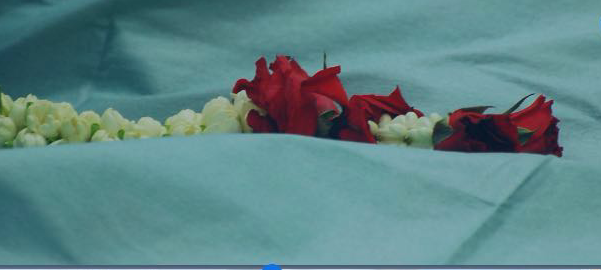
Lost in my own thoughts, as I entered home this evening, there it was…. A beautiful red flower kept on the table. I was greeted with a big hug by my five years old son. He gifted the flower to me, said “I love you mumma” and ran off to play. This has been our secret ritual for as long as I can remember. Every evening, he brings a flower for me and tells me that he loves me the most.
 
I guess, today this was just what I needed. It helped me to bring back the much needed perspective in my life. It reminded me that love is of utmost importance in our lives. Love makes us stronger to deal with everything else that life has in store for us. Life is not easy and all of us are struggling in some way or the other. What we need to remember is that while each of us is served with our share of problems, we are also given blessings in the form of people who love us. They are the ones who make life worth living for. They are the ones who make it worth fighting for. They are also the ones who make us realize that there is more positive in this world than negative can ever be.
 
On some days, we just have to look a bit harder.