Date Archives March 2024

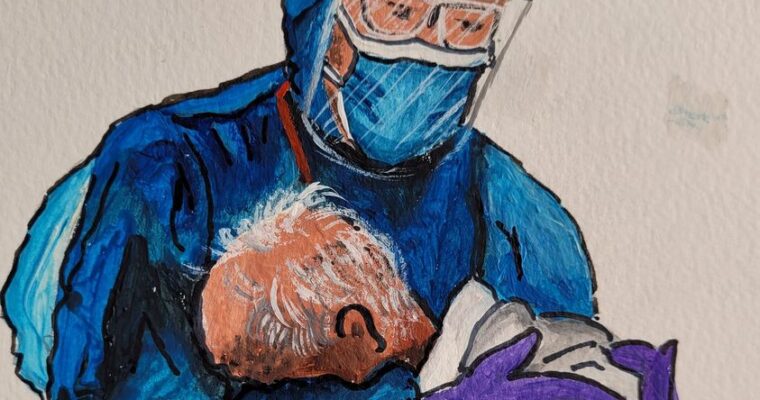
Hope and healing

©️Dr. Aparna Govil Bhasker

One of the most powerful stories that Homo Sapiens have passed on from generation to generation over thousands of years, is the story of “hope”. “Hope” is our true super-power. Hope can work miracles. Without “hope”… well… everything will be … “hopeless”…(no prize for guessing that)!

Hope is unique to our species. No other animal can boast of being able to feel this magical emotion. Human children are born brimming with hope. One just needs to look into those innocent eyes to feel it. However, with time, this reservoir of hope starts diminishing. As we grow up, few of us become childishly optimistic, some lean towards realism and many turn a tad pessimistic.

Like in everything else, “hope” is a very important ingredient in the potion of healing too. It is a lifesaving elixir for the patient and serves as a vital anchor for the anxious family members. It is no secret that patients who lose hope have poorer outcomes as compared to those who do not. A lot has been written about the role of “hope” in ailing patients and their families, however not much has been said about the significance of “hope” in doctors. It is simply assumed the doctors are the most “hopeful” of all adult humans. Can you imagine a doctor who is “not hopeful”?

As doctors, we start our professional careers by training on dead people (That’s not very high on hope score!). By the time we complete our medical training, we have already seen more sickness and death than any normal human would in their entire lifetime. We frequently witness the fragility of life and very often have to bow down to the forces of nature. Yet, as paradoxical as it seems, we have to dispense “hope” in every prescription that we write.

Does the reservoir of “hope” diminish in doctors as they age or does it increase? This is a million-dollar question. Doctors are like old wine. They are said to get better with age and experience. As years pass by, we see that many more people live through their sicknesses and regain their health, as compared to those who enter the doors of a mortuary. We come across many patients who defy all odds and overcome the worst of diseases. And though we spend a lot of time studying complications, we all know that complications are rare and rare things happen rarely. Thanks to advances in medical science, today most people are living twice as long as they were living a hundred years ago. Not only are they living longer, they are living healthier and looking better too. There is every reason to be hopeful.

However, the true measure of hope for a doctor lies in how they navigate challenging situations. Every healthcare professional encounters difficult cases at some point in their career. These could encompass complex medical scenarios, cases with uncertain prognosis, difficult decision making, ethical dilemmas, emotionally charged relatives, legal threats etc.

We can never have all the answers when it comes to complex case scenarios, but years of experience engrave subtle patterns in our minds, aiding us in anticipating the clinical trajectory of a specific patient. Our minds weave together a tapestry of various stories and clinical situations, forming a powerful network of interconnected experiences and insights that significantly enhance our clinical ability. Many times, we are not able to pinpoint the exact pathology, but these interwoven stories serve as valuable reference points, enabling us to recognize patterns, identify key indicators, and make informed decisions in patient care. So, when an experienced doctor exudes hope, it signifies a profound understanding and confidence rooted in years of experience and learning. Hope is not just an abstract emotion in medicine, hope is entrenched in a blend of evidence and experience.

Sometimes the inability to achieve desired results despite best efforts can lead to feelings of frustration and failure. At times, coping with their own emotions can be quite overwhelming for doctors and the idea of “hope” can feel very elusive. Well, doctors are human too and can be as emotional and vulnerable as everyone else. Also, though the doctor patient relationship is often gratifying, the weight of responsibility always lies on the doctor’s shoulders and it can become a tad burdensome at times. At such times, just like we write prescriptions of “hope” for our patients, we need to understand the value of rejuvenating ourselves also from time to time. We also need to understand that battles are never won by lone warriors, it usually takes an army to defeat the enemy. On days when our “hope” reservoir is running low it makes perfect sense to take a break and let someone else take charge.

In the realm of medicine, hope emerges as a vital thread. Despite the challenges doctors continue to dispense hope, navigating through complexities with resilience and compassion. Empowered by knowledge and years of experience, hope transcends being merely a destination; and becomes a continual journey shared by patients and healers alike.

EMPATHY AND OBJECTIVITY- A DELICATE BALANCE

©️Dr. Aparna Govil Bhasker

As doctors, we love evidence-based medicine! Most of us believe in the old adage- “In God we trust. All others must bring data.” We are deeply impacted by impact factors and the graph of our pride rises in direct proportion to the number of times our research papers are cited in the literature. Today, we have journals sprouting by the dozens and thousands of research papers being published every year. We go around the world, brainstorming with colleagues and trying to make sense of these infinite numbers in an attempt to solve the mystery of human health and disease. Though we are always trying to apply the evidence to generate best practices, many times during heated discussions in conferences it all boils down to- “What would you do (WWYD) if this was your wife? WWYD if this was your mother? And saving the best for the last…… drumroll please!!….. WWYD if this was your (you guessed it right!) ….. mother-in-law?”

The biggest irony faced by medical practitioners is that while data guides clinical practice, statistics get severely skewed when viewed from the perspective of the patient and their family. The universally acceptable 0.1% adverse event rate is a one hundred percent catastrophe when the life of a loved one is on the line. Randomized controlled trials (RCT) fall terribly short when we have to break bad news to a patient’s family. Unfortunately, RCTs can’t feel the pain or the disappointment. In real life, numbers are just numbers and they have no feelings. At such times, emotions overrule evidence leading us back to the timeless question- “Doctor, what would you have done if this was your own family member?”

Medicine is probably the only profession with a direct impact on a person’s life and death. An average person would probably make life and death decisions once or twice in their entire life. Some may never have to do it at all. Doctors are professionals who have to make these difficult choices on a daily basis. We have to remain objective while everyone is panicking and remain calm in the midst of chaos. We have to keep our head on our shoulders and our heart tucked a little away. We are bound by oath to take risks on behalf of others. Well, we all know that taking a risk is a risky affair and things can go either way. We have the impolite job of being realistic and setting the expectations right. Sometimes we have to say things that people may not wish to hear. And sometimes when we say things, people may choose not to hear. At the end of the day, we have the challenging task of keeping hope alive too, for hope can be a stronger potion than any medicine in the world.

Striking a balance between objectivity and empathy is like navigating a ship through turbulent seas. If either side is lost or if there’s an excess of one, it could tip the balance and sink the ship. Published literature, studies, trials, data and numbers can at best guide clinical practice to some extent. However, rattling off numbers can never provide solace to a suffering family. The practice of medicine is beyond that and the healing potion must contain the right dose of empathy to be effective.

Some of us can overdose on empathy too. Excessive emotional involvement in every patient’s case can lead to burnout and compassion fatigue. Overwhelming empathy can be quite exhausting and we need some degree of professional detachment and objectivity to navigate the medical maze effectively. This brings me back to the WWYD question. Throughout my career, I’ve been taught to treat patients as I would my own family. While we hold our loved ones dear, treating every patient as kin would lead to an emotional roller coaster. Trust me, it’s not good for any of the stake holders.

The journey of a doctor is a delicate balance between objectivity and empathy. We begin our careers armed with a solid foundation in evidence-based medicine and data-driven practices. With experience, we come to appreciate the necessity of complimenting these with empathy and a profound understanding of the humane aspect of healthcare.

When science marries compassion, the journey of healing begins. Those who find this equilibrium our blessed and experience immense gratification and fulfilment in their professional lives. For others, it remains a work in progress. It’s challenging, yet attainable. It’s not easy, yet possible. It is a continuous journey of growth and learning, shaping us into better healers every day.

Embracing Authenticity: A Surgeon’s Journey Beyond Conformity

©Dr. Aparna Govil Bhasker

The field of surgery has long been associated with images of masculinity – the stereotypical strong, authoritative and dominating figure giving orders in the operating room. These perceptions, however, fail to capture the true essence of surgical prowess and the diverse skill set that contributes to success in the field. In reality, effective surgical practice encompasses a range of qualities, including precision, empathy, kindness, collaboration, adaptability and maintaining equanimity during surgery.

I embarked on my surgical journey 21 years ago as the lone woman in a department dominated by men. Not much has changed in the last two decades. Whether it is at the hospital or at a surgical conference, number of women surgeons can still be counted on fingertips.

When I first entered the field of surgery, the prevalent male culture around me felt rather intimidating. Those days there were no support networks and hardly any female mentors to look up to. The prospect of potential professional and social isolation, coupled with the fear of being underestimated, fuelled my determination to meticulously refine my foundational skills in laparoscopic and bariatric surgery. I worked really hard through those years and today, I take pride in being acknowledged among highly skilled surgeons. Yet, the realization dawned that sheer technical proficiency does not always equate to success. In the realm of professional success, factors extending beyond technical expertise assume a crucial role. Many individuals consciously craft an image or aura around themselves, projecting a specific persona aligned with perceived notions of success.

I quickly realized that attempting to adopt a borrowed male aura for success was not only impractical but also counterproductive for me. Authenticity emerged as a fundamental principle in my professional life. I needed to remain true to myself. Success, I discovered, wasn’t about conforming to preconceived notions or adopting a facade. Instead, it was about embracing and refining my own unique strengths and qualities.

In this realization, I found the freedom to cultivate a professional identity that resonated with my authentic self. It allowed me to leverage my inherent skills, communicate with sincerity, and project a genuine image that reflected not societal expectations, but my own values and capabilities. By embracing authenticity, I discovered a more fulfilling and sustainable path to success, one that didn’t require the compromise of my true identity.

Gradually, I began to forge my own path. Infusing a feminine touch and cultivating a culture of care in every aspect of my work became my signature. I wasn’t concerned about being a woman in what is traditionally considered a man’s world. While I learned valuable lessons from my male colleagues, particularly in assertiveness and financial literacy, I realized that success didn’t necessitate adopting a masculine persona. Success, I discovered, hinges on core skills and authenticity, coupled with a touch of luck.

Authenticity, an often-underestimated asset, becomes paramount in our pursuit of professional and personal success. Embracing and staying true to oneself, despite the existing gender dynamics, is not only empowering but a key component. As women surgeons, it is essential to bring one’s unique qualities, perspectives, and approaches to the forefront, challenging the preconceived notions of what a surgeon should be. As more and more women break through the barriers of tradition, they must realize that femininity need not be sacrificed for success in the operating room or in life.