Posts tagged inspiration

When failure is not an option

My husband and I recently binge-watched “Made in India- A Titan Story”. The eloquently told six-episode series chronicles the journey of Titan and its visionary leader, Xerxes Desai. It takes you through the highs and lows of building one of India’s most iconic watch brands and keeps you gripped till the very end.

It is a story of innovation, risk-taking and institutional patience.

But most of all, it is a story about having the “freedom to fail”.

Every time Xerxes Desai failed, he celebrated that freedom. Failure wasn’t an embarrassment; it was a stepping stone to the next breakthrough.

Since then, I have been thinking about- the freedom to fail.

Almost every profession is given the luxury of failure.

Entrepreneurs are encouraged to “fail fast.”

Scientists spend years failing before they finally discover something.

ISRO learnt invaluable lessons from the failures of Chandrayaan-2 before Chandrayaan-3 scripted history.

Historically, politicians have failed with astonishing regularity. I mean look at the world around us today. Do we need anymore evidence for their failures?

And then there is medicine…
It is probably the only profession in the world where failure is not an option.

Not because doctors are superhuman.
Not because we never make mistakes.
But because the consequences of failure are measured on a very different scale.

In business, failure may cost money.

In politics, it may cost votes.

In sport, it may cost a trophy.

But in medicine, it can leave behind unbearable pain, a permanent disability, a grieving family and sometimes, a tombstone.

That is a burden every doctor carries from day one.

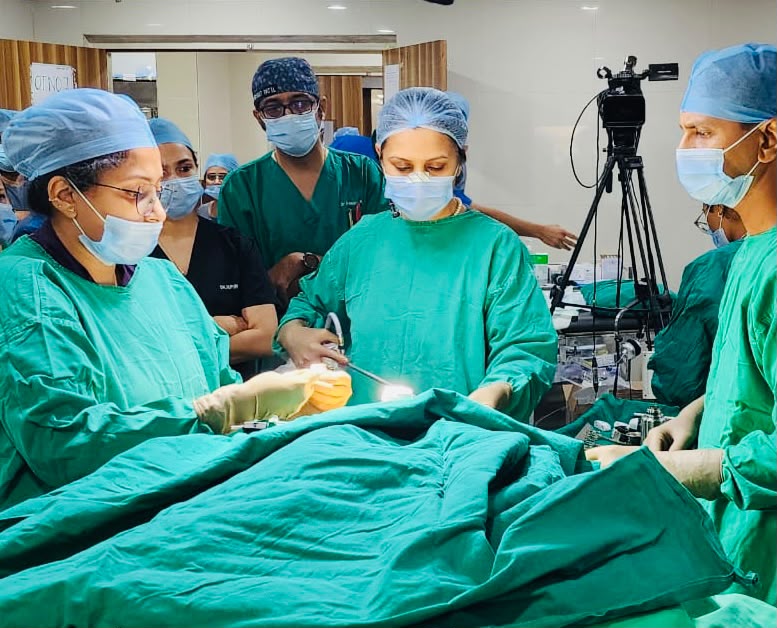
People often ask me whether surgery becomes easier after nearly two decades.

Technically, yes.

Emotionally, never.

I still pause before every operation. I still prepare obsessively. I still replay difficult cases in my mind. I still pray every time before a surgery.

Because when someone lies unconscious on an operating table, they have surrendered complete control with absolute trust. They have placed their life in our hands.

That privilege can never become routine.

We are never given the freedom to fail. And yet, as doctors we obsessively devote our lives to studying failure.

We learn from our own mistakes, and from those of others. We continuously question, refine, teach and learn—because everything we do in medicine is ultimately aimed at reducing failure.

We spend our entire careers trying to prevent something we can never completely eliminate.

Perhaps that is the paradox of medicine.

And perhaps that relentless pursuit is both the privilege and burden of being a doctor!

Happy Doctors Day!
THE SILENT STRUGGLES

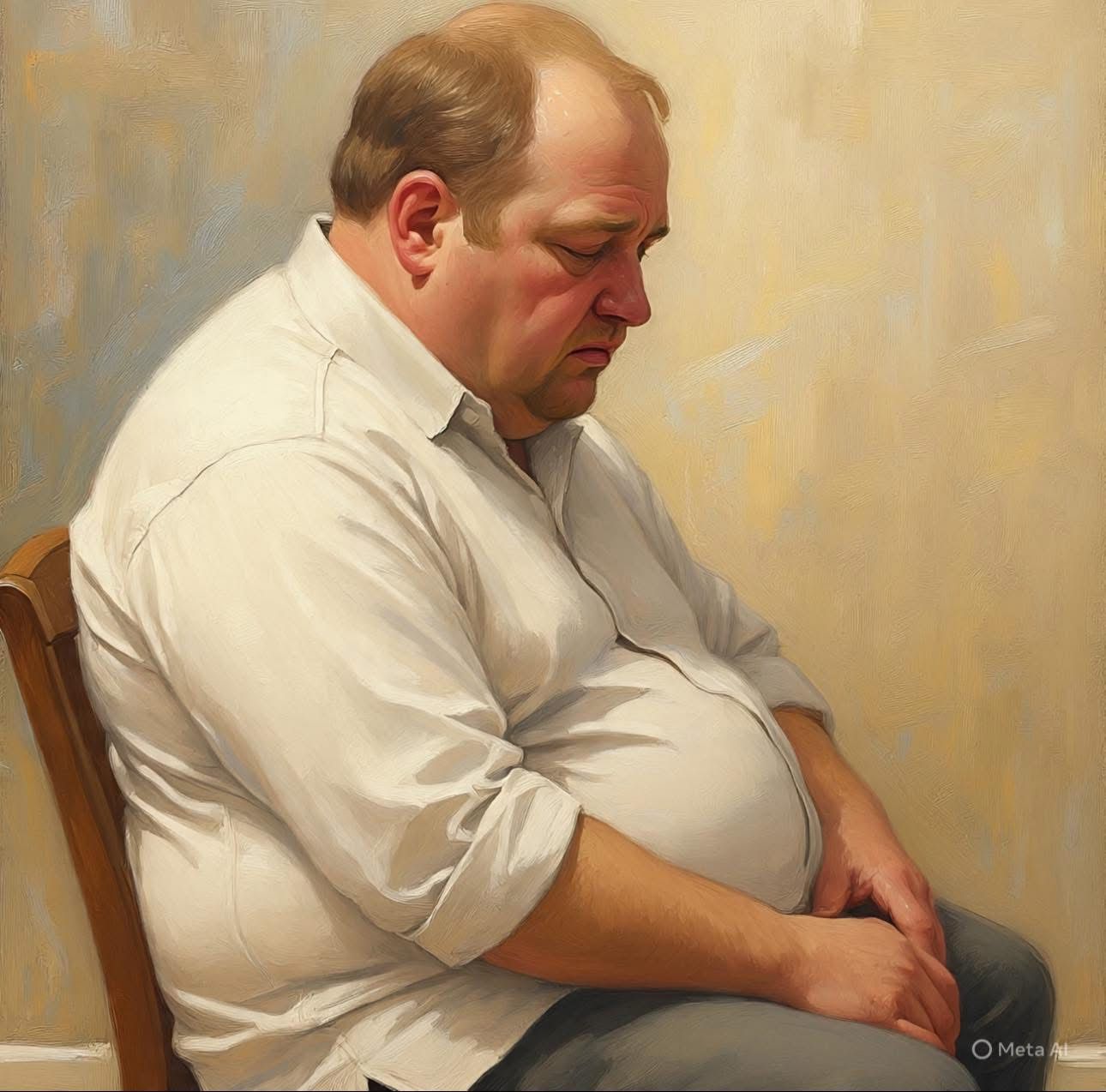
Yesterday, a 44-year-old man living with a weight of 182 kg broke down in tears during the consultation.

He did not cry because he was in any kind of physical pain. He cried because he felt utterly helpless—and scared. He cried because he could no longer breathe easily or walk without difficulty. Breathing and walking are basic, right? He cried because he felt he was failing as a father and as a husband, unable to support his wife and children the way he wanted to.

Every attempt to lose weight had ended in defeat. He felt like he was a burden on everyone. He felt that his life was over.

This is the hidden weight of obesity. It’s the part no one sees.

People living with obesity carry years of silent suffering. They are constantly mocked, judged, and dismissed. They are labelled as lazy, irresponsible, or lacking willpower. They live an entire lifetime with smirks, unsolicited advice, or silent disdain.

And yet what we see in our clinic is that most of them have tried—tried harder than we can imagine.

Here lies the paradox: society expects them to “do something” about their weight but offers little understanding of the disease or support. Instead, it adds layers of #shame, making an already difficult journey even more difficult.

It expects them to fight a complex battle alone and also pins the blame on them at every step of the way.

Obesity is more than a physical condition—it’s a complex and deeply emotional experience. What people with obesity often need is not more advice, but more #empathy.

Sometimes, just being treated with kindness and understanding can lift more weight than any scale ever could.

©️Dr. Aparna Govil Bhasker

PS- Image is AI generated

A page from a Doctor’s Diary

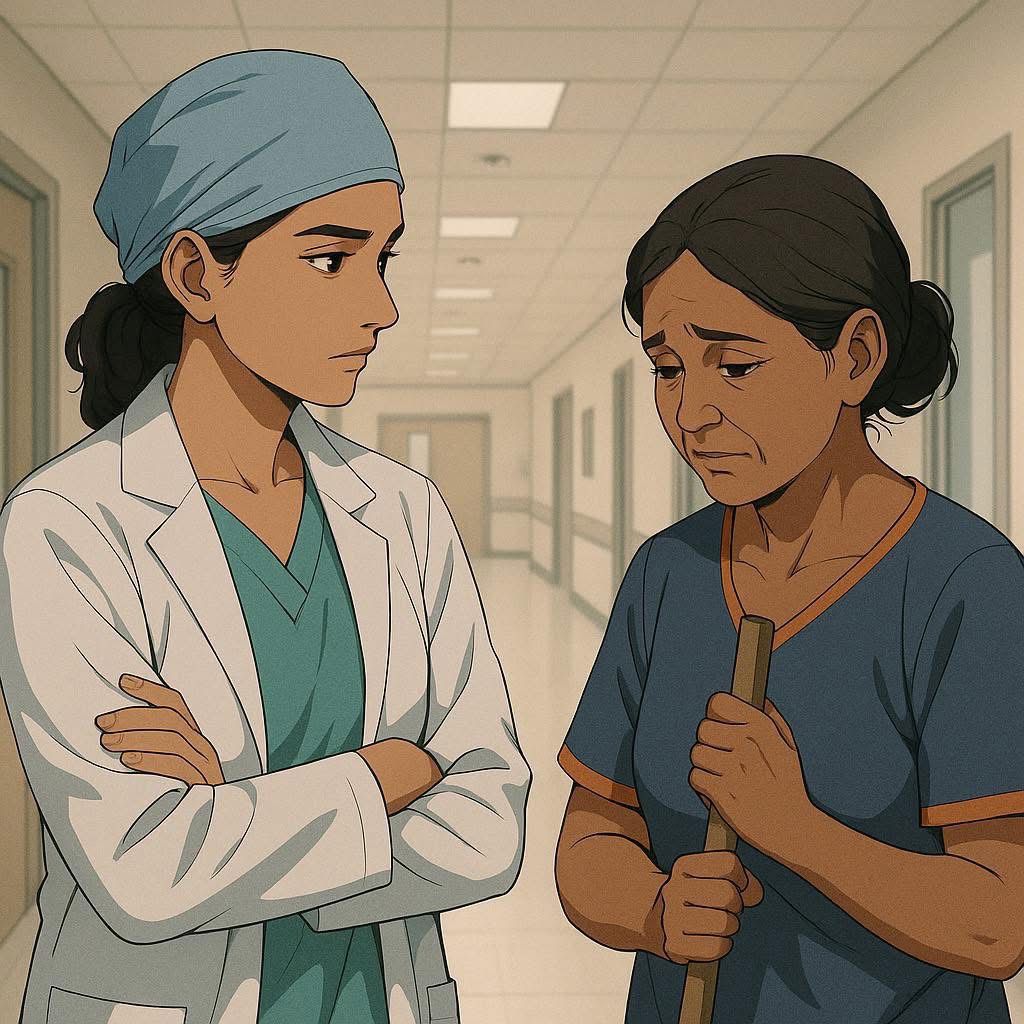
LOOKING THROUGH THE HOSPITAL CORRIDORS

Hospitals are places where life unfolds in its truest forms—birth, healing, pain, and sometimes loss. For most of us working in a hospital, our days are fast paced. They are measured in patient rounds, surgeries, emergencies, clinics, meetings, academics, audits and reports. In the middle of all this, it is easy to forget that the people who stand beside us, supporting the system in quiet ways, have their own stories too.

The other day, after finishing a surgery, I happened to overhear one of our support staff members speaking to someone about her married daughter. I was surprised—I had never realized she had a daughter who was already grown up and married. Almost playfully, I asked her if she was soon going to be a grandmother! Her face fell, and with sadness in her voice, she told me that her daughter had recently suffered a miscarriage.

I was taken aback. In that moment, I realized how little we often know about the lives of those who work around us. Even though her thoughts are constantly with her daughter and she grieves quietly, she continues to perform her duties without any fuss. We—the doctors, nurses, and medical teams—are at the forefront. But those who clean the wards, carry supplies, or ensure the smallest of tasks are done, often remain invisible in the system. And yet, they are so important to it—working with dignity while carrying burdens that most of us never see.

That brief exchange was a reminder to me that compassion cannot be limited to patients alone. It has to extend to everyone we encounter in these corridors. Sometimes, all it takes is a pause, a gentle question, or even silent acknowledgment that behind every uniform is a human being with joys, sorrows and unspoken battles.

As carers, we must remember: even carers need care at times. And perhaps the true spirit of healing begins not just in how we treat our patients, but in how we treat each other too.

Down The Memory Lane- My Speaking Journey

©️Dr. Aparna Govil Bhasker

Last week, my son had one of his first serious #publicspeaking assignments at school. As always, he wanted to set a benchmark for himself. With no siblings for comparison, he turned to my husband and me, eager to hear about our speaking experiences—searching for something to measure himself against.

Just before leaving, he asked me, “How did you do in your first public speaking assignment as a child?”

That simple question took me down the memory lane, almost 40 years back. I remembered that the first time I went up on the stage in front of the whole school- ‘I Froze’! ……..My mother had put in so much effort—dressing me up in a beautiful outfit, making me rehearse my lines over and over—but in that moment my heart started pounding and my throat tightened. I just stood there, wordless and helpless.

Things didn’t change much as I grew older. Speaking never came naturally. Making conversation was an effort always and in my primary years I still remember being labelled as a boring kid who was no fun. Conversations felt like a chore, and it was no surprise that no one was particularly eager to sit next to me because I barely spoke.

Later, when I moved to Mumbai after high school, I wasn’t fluent in spoken English, but that was no trouble for me at all. Silence was always my comfort zone. I was so at ease with silence that for almost six months, I hardly spoke at all.

….But life has a way of pushing us beyond our safe spaces.

In today’s world, no matter what field you choose, public speaking isn’t optional—it’s essential. As a doctor, I have to teach, deliver lectures, present research at conferences, and speak at public awareness programs. And now, in 2025, making an impact also means stepping onto social media and create content—an idea that, for someone like me, has always felt daunting. I’ve always been camera shy and hated being on video.

My first public lecture as a doctor was nothing short of a disaster—riddled with awkward pauses, filled with “hums” and “ho’s”, and very shaky confidence. It fell flat.

But with every speaking opportunity, I improved—little by little, step by step. Today, I can hold my own on stage and pass as a decent speaker at any meeting. I know that there is still plenty of room to grow (just ask my 11-year-old son, who finds my videos painfully boring). He’s my toughest critic, and he doesn’t hold back! But as compared to before, I’ve evolved, and shed many inhibitions behind.

So, what changed?

It didn’t happen overnight. There was no magical transformation. It was a slow, organic process that unfolded over years.

Practice was key. Every opportunity, no matter how small, was a chance to refine, to cut out distractions, and to find my rhythm.

Observing other speakers played a crucial role. I watched them keenly—how they carried themselves, how they engaged their audience, how they used humour and pauses and tone to create impact. Every great speaker had something to teach, and I absorbed those lessons over time.

Expertise and #experience made a difference. When you know your subject inside and out, the words flow more easily.

Confidence took years to build. At first, I had to fake it. Then, I started feeling it. Now, I carry it with me.

But the real turning point was finding my own #Authenticity. The day I stopped trying to sound “perfect” and started embracing my own voice was the day everything changed. It didn’t matter if my voice was too soft or if I wasn’t the most polished speaker in the room. When I spoke from the heart, when I truly believed in what I was saying, people stopped noticing the imperfections. They just listened to what I was saying.

And now, as I watch my son step onto his own path, I know he will have his moments of doubt. He will stumble, just as I did. But I also know this—he will find his voice. He will shape his words. And one day, he will stand tall, speak with conviction, and own his space—just like I learned to do.

Because confidence isn’t about never being afraid. It’s about showing up, speaking up, and allowing yourself to grow- bit by bit- into the person you were meant to be.

Cheers!!

Beyond the prescription

Beyond the prescription

©Dr. Aparna Govil Bhasker

I’ve always enjoyed talking to my patients, and as much as I love surgery, I truly cherish my time in the OPD. However, the time available in the OPD is limited, and we need to cover a lot in those precious few minutes with each patient. As healthcare professionals, we often become laser-focused on providing well-meaning advice and delivering a neat looking prescription (a challenge in itself for any doctor! Thank God for the digital softwares!). By the end, we feel we’ve fulfilled our duty.

As our practice grows and the number of patients increases, the time spent with each patient tends to become shorter, or the waiting list grows longer. Both scenarios lead to decreased patient satisfaction. But it’s not just patient satisfaction that takes a hit—our own job satisfaction suffers too. Over time, frustration starts building on both sides, and we all know where that leads to.

In recent months, I’ve felt that tension growing within me. I began to question: if I wasn’t feeling satisfied with the consultations, what were my patients walking away with? As obesity care specialists, were we truly making a meaningful impact when it came to lifestyle changes and behavioural modifications? Despite spending nearly 40 minutes with each patient, it felt like something was missing, like we weren’t reaching the level of progress we aimed for. We were not getting through the way we wanted to.

Fortunately, I’m lucky to have friends who share a similar mindset. When I discussed my concerns with my friend Dr. Tejal Lathia a renowned endocrinologist, she highly recommended the Motivational Interviewing course by Prof. Miller and encouraged me to explore it. Although I’ve been in medicine for nearly 30 years and can confidently say I’m a skilled doctor and surgeon, I must admit I’ve never been formally trained in the art and science of communication.

As a bariatric surgeon and specialist in obesity care, I’ve come to realize that communication is the real game changer. We can perform the most advanced surgeries, but it’s only through consistent and effective communication that we can truly help our patients make lasting lifestyle changes. Without it, both doctor and patient can fall into a cycle of judgment, bias, and blame, which benefits no one.

Yesterday in the clinic, we tried the “person-centered” approach for the first time. “We went beyond seeing the deficits on the patient’s side (3 months post a bariatric operation) such as- staying up late in the night, skipping breakfast, feeling low on energy, avoiding exercise, and neglecting her prescribed supplements.” On a normal day, our usual approach would have been to tell what she was doing wrong, offer well-meaning advice, explain the associated health risks of future complications, give her a prescription and send her off, hoping she’d correct course and be on a better trajectory by her next visit.

However, the person-centered approach encourages curiosity. It teaches us to move beyond assumptions about what we think we already know and what we believe is needed. It invites us to engage in deeper conversations with our patients. “With some gentle prompting, this particular patient revealed that for the past six months, she had been burdened by intense guilt. A close relative’s health had deteriorated after being admitted to a hospital that she had recommended. The financial burden from the medical bills was overwhelming, and the relative’s daughter had to give up her full-time job to care for her mother. This guilt weighed heavily on my patient, robbing her of sleep and triggering a cascade of problems—waking up late, missing meals, low energy, and neglecting self-care. It was also preventing her from feeling or accepting any joy in her own life

She broke down in tears during our conversation, and we discussed the possibility of seeking help from a counselor. While she wasn’t entirely open to the idea, a seed had been planted. She seemed more receptive to make changes to her lifestyle and came up with some solutions on her own. More importantly, she felt understood, and we, as her healthcare team, felt like we had moved beyond simply judging her for not meeting our expectations.

This experience reminded us that as healthcare professionals working with chronic conditions like obesity, we can’t “fix” patients overnight. We can’t just hand out prescriptions and expect perfect adherence. We aren’t in a position to command or take charge of their lives. Our role is to guide them, safely and hopefully enjoyably, towards a destination we both desire. We must acknowledge that life happens to everyone—our patients are no exception.

For those living with obesity, these challenges are often compounded. In addition to everyday struggles, they also face the stigma and bias that come with societal expectations. Patients who have undergone bariatric surgery often feel the weight of taking what is perceived as a “shortcut,” along with the pressure of not meeting expectations, even after the surgery.

As healthcare providers, it’s crucial to make the most of the limited time we have with our patients. Sometimes, the connections we form matter more than the prescriptions we give. Kindness, empathy, and compassion are universally effective tools, often more powerful than any advice alone.

Incorporating motivational interviewing into our practice has the potential to transform not only the patient’s journey but also our own. By fostering deeper connections and helping patients uncover their own motivations, we empower them to make meaningful and lasting changes. As healthcare professionals, we should be open to learning and refining the art of communication at every stage of our careers. It’s not just about enhancing patient satisfaction—this approach brings greater fulfillment and satisfaction to us as doctors too. A well-communicated, empathetic consultation can be the difference between frustration and fulfillment for both parties, ensuring that the care we provide is as effective as the surgeries we perform.

I’m just beginning this journey, but I hope that by sharing my experiences, I can enrich my own path and perhaps make a small difference along the way.

PS: The image is AI generated.

Hope and healing

©️Dr. Aparna Govil Bhasker

One of the most powerful stories that Homo Sapiens have passed on from generation to generation over thousands of years, is the story of “hope”. “Hope” is our true super-power. Hope can work miracles. Without “hope”… well… everything will be … “hopeless”…(no prize for guessing that)!

Hope is unique to our species. No other animal can boast of being able to feel this magical emotion. Human children are born brimming with hope. One just needs to look into those innocent eyes to feel it. However, with time, this reservoir of hope starts diminishing. As we grow up, few of us become childishly optimistic, some lean towards realism and many turn a tad pessimistic.

Like in everything else, “hope” is a very important ingredient in the potion of healing too. It is a lifesaving elixir for the patient and serves as a vital anchor for the anxious family members. It is no secret that patients who lose hope have poorer outcomes as compared to those who do not. A lot has been written about the role of “hope” in ailing patients and their families, however not much has been said about the significance of “hope” in doctors. It is simply assumed the doctors are the most “hopeful” of all adult humans. Can you imagine a doctor who is “not hopeful”?

As doctors, we start our professional careers by training on dead people (That’s not very high on hope score!). By the time we complete our medical training, we have already seen more sickness and death than any normal human would in their entire lifetime. We frequently witness the fragility of life and very often have to bow down to the forces of nature. Yet, as paradoxical as it seems, we have to dispense “hope” in every prescription that we write.

Does the reservoir of “hope” diminish in doctors as they age or does it increase? This is a million-dollar question. Doctors are like old wine. They are said to get better with age and experience. As years pass by, we see that many more people live through their sicknesses and regain their health, as compared to those who enter the doors of a mortuary. We come across many patients who defy all odds and overcome the worst of diseases. And though we spend a lot of time studying complications, we all know that complications are rare and rare things happen rarely. Thanks to advances in medical science, today most people are living twice as long as they were living a hundred years ago. Not only are they living longer, they are living healthier and looking better too. There is every reason to be hopeful.

However, the true measure of hope for a doctor lies in how they navigate challenging situations. Every healthcare professional encounters difficult cases at some point in their career. These could encompass complex medical scenarios, cases with uncertain prognosis, difficult decision making, ethical dilemmas, emotionally charged relatives, legal threats etc.

We can never have all the answers when it comes to complex case scenarios, but years of experience engrave subtle patterns in our minds, aiding us in anticipating the clinical trajectory of a specific patient. Our minds weave together a tapestry of various stories and clinical situations, forming a powerful network of interconnected experiences and insights that significantly enhance our clinical ability. Many times, we are not able to pinpoint the exact pathology, but these interwoven stories serve as valuable reference points, enabling us to recognize patterns, identify key indicators, and make informed decisions in patient care. So, when an experienced doctor exudes hope, it signifies a profound understanding and confidence rooted in years of experience and learning. Hope is not just an abstract emotion in medicine, hope is entrenched in a blend of evidence and experience.

Sometimes the inability to achieve desired results despite best efforts can lead to feelings of frustration and failure. At times, coping with their own emotions can be quite overwhelming for doctors and the idea of “hope” can feel very elusive. Well, doctors are human too and can be as emotional and vulnerable as everyone else. Also, though the doctor patient relationship is often gratifying, the weight of responsibility always lies on the doctor’s shoulders and it can become a tad burdensome at times. At such times, just like we write prescriptions of “hope” for our patients, we need to understand the value of rejuvenating ourselves also from time to time. We also need to understand that battles are never won by lone warriors, it usually takes an army to defeat the enemy. On days when our “hope” reservoir is running low it makes perfect sense to take a break and let someone else take charge.

In the realm of medicine, hope emerges as a vital thread. Despite the challenges doctors continue to dispense hope, navigating through complexities with resilience and compassion. Empowered by knowledge and years of experience, hope transcends being merely a destination; and becomes a continual journey shared by patients and healers alike.

EMPATHY AND OBJECTIVITY- A DELICATE BALANCE

©️Dr. Aparna Govil Bhasker

As doctors, we love evidence-based medicine! Most of us believe in the old adage- “In God we trust. All others must bring data.” We are deeply impacted by impact factors and the graph of our pride rises in direct proportion to the number of times our research papers are cited in the literature. Today, we have journals sprouting by the dozens and thousands of research papers being published every year. We go around the world, brainstorming with colleagues and trying to make sense of these infinite numbers in an attempt to solve the mystery of human health and disease. Though we are always trying to apply the evidence to generate best practices, many times during heated discussions in conferences it all boils down to- “What would you do (WWYD) if this was your wife? WWYD if this was your mother? And saving the best for the last…… drumroll please!!….. WWYD if this was your (you guessed it right!) ….. mother-in-law?”

The biggest irony faced by medical practitioners is that while data guides clinical practice, statistics get severely skewed when viewed from the perspective of the patient and their family. The universally acceptable 0.1% adverse event rate is a one hundred percent catastrophe when the life of a loved one is on the line. Randomized controlled trials (RCT) fall terribly short when we have to break bad news to a patient’s family. Unfortunately, RCTs can’t feel the pain or the disappointment. In real life, numbers are just numbers and they have no feelings. At such times, emotions overrule evidence leading us back to the timeless question- “Doctor, what would you have done if this was your own family member?”

Medicine is probably the only profession with a direct impact on a person’s life and death. An average person would probably make life and death decisions once or twice in their entire life. Some may never have to do it at all. Doctors are professionals who have to make these difficult choices on a daily basis. We have to remain objective while everyone is panicking and remain calm in the midst of chaos. We have to keep our head on our shoulders and our heart tucked a little away. We are bound by oath to take risks on behalf of others. Well, we all know that taking a risk is a risky affair and things can go either way. We have the impolite job of being realistic and setting the expectations right. Sometimes we have to say things that people may not wish to hear. And sometimes when we say things, people may choose not to hear. At the end of the day, we have the challenging task of keeping hope alive too, for hope can be a stronger potion than any medicine in the world.

Striking a balance between objectivity and empathy is like navigating a ship through turbulent seas. If either side is lost or if there’s an excess of one, it could tip the balance and sink the ship. Published literature, studies, trials, data and numbers can at best guide clinical practice to some extent. However, rattling off numbers can never provide solace to a suffering family. The practice of medicine is beyond that and the healing potion must contain the right dose of empathy to be effective.

Some of us can overdose on empathy too. Excessive emotional involvement in every patient’s case can lead to burnout and compassion fatigue. Overwhelming empathy can be quite exhausting and we need some degree of professional detachment and objectivity to navigate the medical maze effectively. This brings me back to the WWYD question. Throughout my career, I’ve been taught to treat patients as I would my own family. While we hold our loved ones dear, treating every patient as kin would lead to an emotional roller coaster. Trust me, it’s not good for any of the stake holders.

The journey of a doctor is a delicate balance between objectivity and empathy. We begin our careers armed with a solid foundation in evidence-based medicine and data-driven practices. With experience, we come to appreciate the necessity of complimenting these with empathy and a profound understanding of the humane aspect of healthcare.

When science marries compassion, the journey of healing begins. Those who find this equilibrium our blessed and experience immense gratification and fulfilment in their professional lives. For others, it remains a work in progress. It’s challenging, yet attainable. It’s not easy, yet possible. It is a continuous journey of growth and learning, shaping us into better healers every day.

All You Need is Love and Flowers

Dr Aparna Govil Bhasker
 
There are good days and then there are the bad days. How much ever we wish for life to follow a logical course, every day the sun rises with new challenges. Some that can be tackled, some that are pushed under the carpet and some that may really bring us down. 
 
This morning was one such morning when I woke up not feeling at ease. Believe me, when we are not at ease, nothing around us is at ease. Small issues appear far bigger than they are and everything is just more challenging and convoluted than it usually is. While on usual days multi-tasking is a breeze, on days like this, there cannot be a bigger burden. Handling home, hospital, surgeries, patients and kids at the same time can drive one to the verge of insanity. However, like most of us, today I also did not have much choice but to just grit my teeth and somehow get through the day.
 
Lost in my own thoughts, as I entered home this evening, there it was…. A beautiful red flower kept on the table. I was greeted with a big hug by my five years old son. He gifted the flower to me, said “I love you mumma” and ran off to play. This has been our secret ritual for as long as I can remember. Every evening, he brings a flower for me and tells me that he loves me the most.
 
I guess, today this was just what I needed. It helped me to bring back the much needed perspective in my life. It reminded me that love is of utmost importance in our lives. Love makes us stronger to deal with everything else that life has in store for us. Life is not easy and all of us are struggling in some way or the other. What we need to remember is that while each of us is served with our share of problems, we are also given blessings in the form of people who love us. They are the ones who make life worth living for. They are the ones who make it worth fighting for. They are also the ones who make us realize that there is more positive in this world than negative can ever be.
 
On some days, we just have to look a bit harder.

AGE IS JUST A NUMBER

By- Dr. Aparna Govil Bhasker

I am a Mumbai girl and nothing defines Mumbai better than its local trains. Over the last few months, I have gradually shifted to using local trains a lot more than my car, which to be honest is more of a burden than convenience, in this over crowded city. Trains are undoubtedly faster when one has to get to multiple hospitals in a single day. Deep down I also feel happy about indirectly reducing my overall carbon footprint and doing my bit for the future generation.

Local train journeys in Mumbai can be quite entertaining and I have come to enjoy them mostly. (Except for the times when one may get crushed to near death!) Very often there are small time vendors selling their goods to the passengers. On one such day, I observed an old lady who walked with the support of a stick. She was extremely frail and bent over. Her head kept shaking with the slightest of movement. She must be in her eighties nearing ninety for sure. As I saw her boarding the train, I thought of getting up and giving her my seat. However, I was in for a pleasant surprise. As she entered the train compartment, she stabilized herself on her stick and took out a dozen colourful bracelets from a worn out bag to sell to the passengers. Now, I am not very fond of jewellary but that day, I felt compelled to buy that bracelet. I paid ten rupees and kept it in my bag, knowing fully well that I will never wear it.

A few days later, I saw her again. Bent over her stick, with her head shaking all the time, there she was. Once again, I felt compelled to buy one of the bracelets. The third time this happened, I saw a glint of recognition in her eyes and a tiny hint of a smile. As she glanced at my empty wrists, none of us needed to say anything.

It has been 3 months since I saw her last. Every time I am in that train, my eyes look for her. I wonder if she is well, as I have no way of knowing her whereabouts.

However, the bracelet has found its permanent place as it lies in my bag. I am not superstitious but it is my lucky charm. A charm that reminds me that age is just a number and it is always possible to earn a respectable living till our last breath. Every time I open my bag, the shiny bracelet looks up at me and inspires me to go on, to work hard and to live life to its best potential. And one day, when I close my eyes forever, I will lie there peacefully knowing that I gave it my best, always.

#HerStory #inspiration #motivation #draparnagovilbhasker

THE GIRL IN THE HIJAB

“THE GIRL IN THE HIJAB”

By- Dr. Aparna Govil Bhasker

It was midnight as I stepped out of Mumbai airport. I had had a busy week at work. This was a week that pulled me down in many ways. Certain incidents in the week kept me wondering about the lot of women in our country. How women not only fail to question certain norms, but feel compelled to conform to outdated traditional values even if it comes at a heavey price that they may have to pay.

It was midnight and I desperately wanted to get home at the earliest and get some rest. At the prepaid taxi counter I was informed that I will be getting a “woman driven cab”. As I stepped out to find the cab, I was pleasantly surprised to see this young girl in Jean’s and shirt and a hijab that covered her head. She greeted me with a warm smile and we started our journey together. “Mam, I am not very familiar with the roads of Mumbai, please do guide me”.

At 12.30 am in the night, I was being driven home by a girl in a hijab who was crazy about driving cars and was completely okay with driving around the city alone, in the dark hours of the night without a care. I asked her if her family was okay with her work and she just said that, it didn’t really matter… she just loved to drive.

Normally when I sit in a cab, first thing I do is to ask the cabby to switch off the music. But, yesterday, while I felt emotionally depleted, her energy was infectious and it changed something inside me. I needed a sign to tell me that all is not wrong with this world and there is a lot to be hopeful for. She loved Bollywood music. We kept the music on and chatted along the way. At the end of the journey, I told her that I was proud of her for being so brave and a million dollar smile lit up her face.

It lifted my spirits as I realized that women across the world are breaking barriers one step at a time. The journey is long and the destination very far, but it is heartening to meet such lovely women for whom breaking barriers comes naturally. They make us hope that all is not wrong with the world and it indeed is going to be a better place in future. May their tribe grow.

I guess inspiration is all around us, we just need to open our eyes and hearts to find it.

#HerStory #Priyadarshini #womendrivencabs #wethewomen #womenempowerment #motivation #inspiration #womenofindia